Nifty 50 is at a crucial point as crude oil, earnings, FII flows, global rates and geopolitics shape India’s stock market. Here’s what investors should watch.
There is one number Indian investors check before almost anything else every morning: Nifty 50.
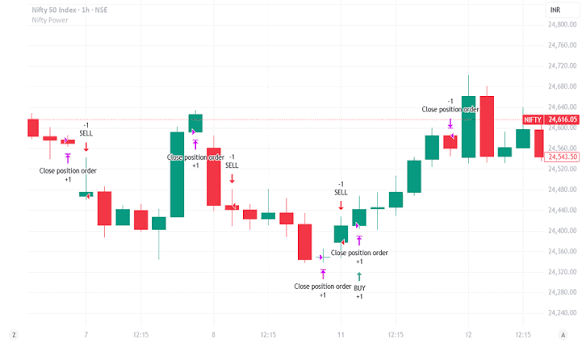
But Nifty is not just a number flashing on a trading screen. It is a daily scorecard for India’s largest listed companies—and increasingly, a reflection of everything happening around them: crude oil, interest rates, foreign flows, corporate earnings, the rupee, geopolitics and global markets.
And right now, Nifty is at an interesting point.
On August 13, 2026, the Nifty 50 closed at 24,395.85, down 0.16%, while the Sensex gained 0.15%. Elevated crude prices and Middle East tensions continued to weigh on sentiment, even as strong corporate earnings and easing concerns around US rates provided some support.
So the real question isn’t simply, “Will Nifty go up tomorrow?”
The better question is:
What forces are deciding where Nifty goes next?
Nifty Is More Than an Index
The Nifty 50 represents 50 major companies listed on the National Stock Exchange.
But its importance goes much further.
When Nifty rises, investors often interpret it as improving confidence in India’s corporate and economic outlook.
When it falls, the reasons can be very different:
- Foreign investors may be selling.
- Crude oil may be rising.
- Global markets may be weak.
- Interest-rate expectations may change.
- Corporate earnings may disappoint.
- Geopolitical tensions may increase.
That’s why blindly watching the index level can be misleading.
A 200-point move doesn’t tell you the story.
The reason behind the 200-point move does.
Why Nifty Is Struggling to Make a Decisive Move
The current market is being pulled between two opposing forces.
On one side, there are positive factors.
Corporate earnings remain an important source of support, and some sectors are showing strong individual-stock momentum. Global expectations around US monetary policy have also provided some relief.
On the other side, crude oil and geopolitical uncertainty are creating pressure.
Brent crude has been trading around the high-$80s, raising concerns about India’s inflation and fiscal outlook because India remains heavily dependent on imported crude.
This creates a tug-of-war.
Strong earnings are pulling Nifty higher.
Higher oil and geopolitical risk are pulling it lower.
Until one side becomes significantly stronger, volatility can remain elevated.
The 24,000–25,000 Battle
For traders, Nifty’s immediate technical zones have become particularly important.
Recent market analysis has identified the 24,200–24,000 region as an important support zone, while the 24,900–25,100 area remains a significant resistance zone.
Think of it like a cricket match.
Nifty is currently playing between two boundaries.
If buyers successfully defend the lower zone, confidence can return.
If the index breaks decisively above the upper zone, momentum could strengthen.
But if support breaks, traders may become more defensive.
This is why market participants are watching price action closely rather than assuming that the next move will automatically be bullish.
Crude Oil Could Become Nifty’s Biggest Headwind
For Indian investors, crude oil is never just another commodity.
It directly affects India’s import bill.
Higher oil prices can put pressure on:
Inflation → currency → corporate costs → margins → interest rates → valuations.
That chain is important.
Imagine India suddenly has to spend substantially more on imported crude.
The country’s import bill rises.
The rupee can come under pressure.
Transportation and input costs may increase.
Inflation expectations can rise.
And if inflation remains uncomfortable, expectations around monetary policy can change.
That eventually reaches the stock market.
This is why investors should watch Brent crude alongside Nifty, rather than treating them as separate stories.
FII Selling vs Domestic Buying
Another major factor is the battle between foreign and domestic capital.
Foreign Institutional Investors can quickly move money between markets based on:
- US interest rates
- Dollar strength
- Emerging-market valuations
- Geopolitical risk
- Global economic expectations
Domestic investors operate differently.
Mutual funds, SIPs, insurance companies and other domestic institutions provide a more persistent source of liquidity.
This has changed the structure of the Indian market.
Even when global investors become cautious, domestic capital can provide support.
That doesn’t mean Nifty cannot fall.
It means India’s market has a deeper internal source of demand than it had years ago.
Earnings Are Now the Real Test
Eventually, the market has to answer one question:
Are corporate profits growing fast enough to justify current valuations?
This is where Nifty’s next phase could become interesting.
The index may look expensive or cheap depending on the earnings trajectory.
If earnings accelerate, today’s valuation can become more reasonable.
If earnings disappoint, even a market that looked reasonably valued can suddenly appear expensive.
That’s why investors should pay attention to quarterly results rather than simply following the index.
Look beyond headline profit.
Check:
- Revenue growth
- EBITDA margins
- Cash flow
- Debt
- Management commentary
- Future guidance
- Order books
- Sector demand
The market eventually catches up with fundamentals.
Not Every Nifty Stock Is Moving Together
One of the most important things investors often miss is that Nifty is an average representation, not a uniform market.
Today itself showed this divergence.
While several sectors struggled, individual companies delivered strong moves following earnings or company-specific developments. Tata Motors, for example, gained sharply after strong quarterly results and positive demand expectations.
This creates an important lesson.
Nifty can fall while several stocks rise.
Nifty can rise while many stocks remain weak.
Therefore, investors should not conclude that every company is bullish simply because the index is green.
The IT Sector Has Become a Key Variable
Technology companies carry significant weight in India’s major indices.
That makes global technology spending and US economic conditions particularly important.
Investors are watching:
- AI spending
- US technology demand
- IT services growth
- Currency movements
- Global corporate technology budgets
The AI boom creates both opportunity and uncertainty.
On one hand, companies are spending more on artificial intelligence, cloud infrastructure and digital transformation.
On the other hand, investors are questioning whether traditional IT services companies can maintain their growth and margins as AI changes the way technology work is delivered.
For Nifty, this is an important long-term theme.
Banks Could Decide the Next Big Nifty Move
Financial stocks remain crucial because of their large influence on the index.
Banks are being watched for:
- Credit growth
- Deposit growth
- Net interest margins
- Asset quality
- Loan pricing
- RBI policy
- Corporate credit demand
Recent market commentary has also highlighted concerns around proposed changes to loan pricing rules and their potential implications for banks’ pricing flexibility and margins.
If banks perform strongly, they can provide significant support to Nifty.
If financial stocks weaken together, the index can struggle even when other sectors are performing well.
The Rupee and Dollar Are Quietly Watching Nifty
Another relationship investors should monitor is the rupee-dollar exchange rate.
A weaker rupee can create problems for import-heavy businesses, particularly when crude is simultaneously rising.
But exporters can benefit from favourable currency translation.
This means currency movements create winners and losers.
For Nifty investors, the combination to watch is:
Dollar + crude + US yields + FII flows.
If all four move against emerging markets simultaneously, Indian equities can face pressure.
If the dollar weakens, crude stabilises and global yields soften, risk appetite can improve.
What Could Push Nifty Higher?
Several developments could create a stronger bullish setup.
1. Crude oil cools down
Lower oil would reduce inflationary pressure and support the rupee.
2. Earnings improve
Stronger profits would provide fundamental support for valuations.
3. Foreign flows return
Sustained FII buying could strengthen market momentum.
4. Global markets remain stable
A calmer global environment would reduce risk premiums.
5. Nifty breaks resistance decisively
A sustained move above important resistance levels could attract momentum-based buying.
And What Could Trigger a Correction?
The opposite combination would be concerning.
Higher crude
Could increase inflation and import pressure.
Stronger dollar
Could encourage foreign investors to reduce emerging-market exposure.
Weak earnings
Could expose expensive valuations.
Geopolitical escalation
Could rapidly change investor sentiment.
Breakdown of major support
Could encourage technical selling.
This is why investors should prepare for multiple scenarios rather than making one rigid prediction.
Nifty Is Not the Economy—and the Economy Is Not Nifty
This distinction is incredibly important.
India’s economy can grow even when Nifty falls.
And Nifty can rise even when certain parts of the economy are struggling.
The stock market is a forward-looking mechanism.
Investors are constantly trying to price the next 6, 12 or 24 months.
So don’t make the mistake of thinking:
“India is growing, therefore Nifty must rise every month.”
Markets don’t work that way.
Growth matters.
But valuations, liquidity, expectations and sentiment matter too.
What Should a Retail Investor Do Now?
The answer depends on your time horizon.
If you’re a long-term investor
Don’t let every 100-point Nifty move change your investment strategy.
Focus on quality businesses, diversification and valuation.
If you’re a swing trader
Respect support and resistance and avoid taking positions simply because the index appears oversold or overbought.
If you’re an F&O trader
Risk management matters more than predicting direction.
The recent market environment can produce sharp intraday moves, particularly around expiry and major global developments.
If you’re a beginner
Don’t start trading simply because Nifty is volatile.
First understand position sizing, stop-losses and risk-reward.
The Nifty Dashboard Every Investor Should Build
You don’t need 50 indicators.
Start with seven.
Nifty 50 — overall market direction.
Bank Nifty — financial-sector strength.
Brent crude — inflation and import pressure.
US 10-year yield — global liquidity and valuation pressure.
Dollar Index — global risk appetite.
FII/DII flows — capital movement.
Corporate earnings — fundamental reality.
Put these together and you get a much clearer picture than simply looking at a candlestick chart.
The Bigger Picture
Nifty is currently caught between India’s structural growth story and a complicated global environment.
That’s what makes this market so fascinating.
India continues to offer long-term opportunities in:
- Manufacturing
- Defence
- Infrastructure
- Financial services
- Digital economy
- Healthcare
- Consumption
- Power
- AI and technology
But markets don’t move in straight lines.
There will be corrections.
There will be profit booking.
There will be geopolitical shocks.
There will be periods when valuations become uncomfortable.
The long-term opportunity can remain intact while the short-term market becomes difficult.
Final Takeaway: Don’t Just Watch Nifty—Understand It
Nifty 50 is currently around the 24,400 zone, with the August 13 session ending at 24,395.85.
But that number by itself tells us very little.
The real story lies underneath.
Crude is influencing inflation expectations.
Foreign flows are influencing liquidity.
Domestic investors are providing resilience.
Earnings are determining fundamental support.
Banks and IT are influencing index direction.
The rupee and dollar are reflecting global pressure.
Geopolitics is adding uncertainty.
That is the Nifty story investors should be watching.
Because successful investing isn’t about predicting whether the index will be green tomorrow.
It’s about understanding why the market is moving—and whether that reason changes your investment decision.
And in the current environment, one thing is clear:
Nifty may be the headline, but the real story is happening underneath it.