India’s stock market timing changed in August 2026. Learn what the new 3:40 PM F&O close and Closing Auction Session mean for traders and investors.
For years, Indian investors had one simple rule in their heads: the stock market closes at 3:30 PM.
That sentence is no longer enough.
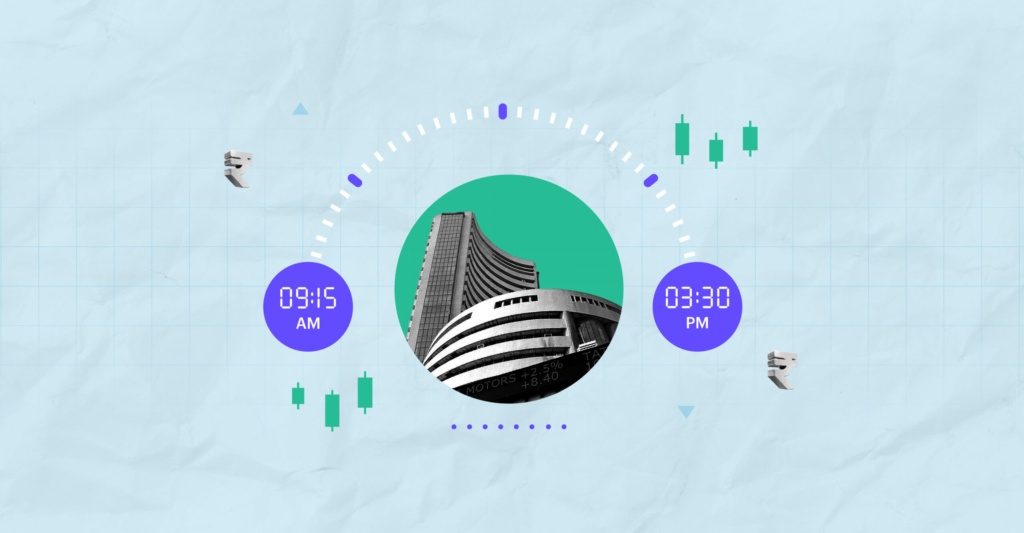
From August 3, 2026, the market’s end-of-day structure has changed, particularly for equity derivatives and the way closing prices are determined for eligible stocks. NSE has extended equity F&O trading by 10 minutes, with derivatives now closing at 3:40 PM, while the normal cash market continues to close at 3:30 PM. A new Closing Auction Session has also changed the way closing prices are established for eligible securities.
For a casual investor, ten minutes may sound insignificant.
For an intraday trader, option trader, arbitrage desk or fund manager, ten minutes can be a completely different story.
This is not simply a clock change.
It is a change in the market’s end-of-day architecture.
The Old 3:30 PM Habit Is No Longer Enough
For years, traders built their daily routine around a familiar sequence.
9:15 AM — market opens.
3:30 PM — cash market closes.
End of day.
That routine made it easy to understand when price discovery was effectively winding down.
The new framework separates different parts of the market more clearly.
The NSE’s published market timetable continues to show the normal/odd-lot market closing at 3:30 PM, while equity derivatives now have a later closing time. NSE has also introduced a closing session after the regular market close.
That means investors need to stop thinking of “market close” as one single event.
There are now different moments that matter.
And each one can have a different impact.
So, What Exactly Has Changed?
The most important change is in the equity derivatives segment.
NSE extended the trading time for equity futures and options from 3:30 PM to 3:40 PM, effective August 3, 2026. The opening time remains 9:15 AM.
At the same time, a Closing Auction Session has been introduced for eligible stocks.
The purpose is to make the end-of-day price discovery process more structured and reduce the problems that can arise from thin trading or sharp movements around the final minutes.
In simple language:
The market is no longer simply stopping at 3:30 PM and calling it a day.
The final part of the trading day now has a more defined structure.
Why Would Regulators Change Something That Already Worked?
Because markets have become much more complicated.
Trading volumes have exploded.
Algorithmic strategies have become more sophisticated.
Options activity has grown dramatically.
Index-linked products have become deeply integrated with the broader financial system.
And the closing price of a stock is not just another number.
It can influence:
- Mutual fund valuations
- ETFs
- Index funds
- Derivatives settlement
- Portfolio valuations
- Arbitrage strategies
- Institutional transactions
That makes the closing mechanism extremely important.
The objective is not necessarily to give traders more time to speculate.
It is about making the transition into the end of the trading day more consistent and improving price discovery. NSE’s communication around the F&O timing change specifically points to a smoother and more consistent end-of-day transition.
The Closing Price Is More Important Than Most Retail Investors Realise
Here’s something many beginners don’t think about.
Suppose a stock trades at ₹1,000 for most of the day.
At 3:29 PM, it suddenly trades at ₹1,020.
Which price should represent the day’s close?
That’s where closing-price mechanisms become important.
A closing auction can bring together buy and sell orders and help determine an equilibrium price rather than relying simply on the last few trades.
This matters because the closing price becomes a reference point for many financial products.
For institutional investors, the difference between ₹1,000 and ₹1,020 isn’t cosmetic.
Across a large portfolio, even a small price difference can translate into significant amounts of money.
What Does This Mean for F&O Traders?
This is where the change becomes particularly interesting.
Options traders now have an additional ten minutes of trading in equity derivatives.
That could affect the final phase of the trading session.
Imagine the Nifty is volatile at 3:25 PM.
Previously, traders had only a few minutes before the standard closing time.
Now, the derivatives market remains open until 3:40 PM.
That gives traders more time to:
- Adjust positions
- Hedge exposure
- Close short options
- Roll positions
- Manage risk
- React to late market movements
But there is a catch.
More time does not automatically mean more opportunity.
It can also mean more temptation.
A trader who planned to stop at 3:20 PM may now convince himself that one more trade is possible.
That is how discipline gets replaced by overtrading.
The New Rule Could Change the Final 30 Minutes
The final portion of the trading day has always been important.
Large institutional orders can arrive.
Global markets can move.
Corporate announcements can affect individual stocks.
Traders may square off positions.
Options hedging can increase.
The new structure could make the last part of the session even more important for active traders.
This doesn’t mean the market will become more volatile every day.
It means the microstructure of the final phase has changed.
And traders who understand that structure may have an advantage over those who continue following their old routines.
What About Normal Equity Investors?
For someone investing in stocks for five or ten years, the change is much less dramatic.
If you are buying shares of a company because you believe its earnings will compound over the next decade, whether the market closes at 3:30 PM or derivatives continue until 3:40 PM is unlikely to change your investment thesis.
That’s an important distinction.
Trading rules matter more to traders than long-term investors.
A long-term investor should still focus on:
- Earnings growth
- Valuation
- Debt
- Cash flows
- Management quality
- Competitive advantage
The timing change shouldn’t suddenly turn a long-term portfolio into an intraday trading account.
Mutual Funds and ETFs Also Need to Pay Attention
The closing-price mechanism matters beyond individual traders.
Mutual funds and ETFs use market prices to value their portfolios.
Changes in the closing process can therefore influence how certain securities are valued at the end of the day.
Industry participants have specifically highlighted the implications of the new closing mechanism for index funds, ETFs and arbitrage strategies.
For retail investors, this is a useful reminder:
Market infrastructure can influence your investments even when you never place an intraday trade.
You don’t need to understand every technical detail.
But understanding the broad structure can help you interpret unusual end-of-day movements.
Will This Create More Opportunities for Arbitrage?
Potentially.
Whenever two related markets have different trading windows or pricing mechanisms, sophisticated traders look for temporary price differences.
For example, if the cash market has closed but derivatives remain open, prices can continue adjusting in the derivatives market.
That creates an environment where professional traders can manage or hedge exposures differently.
But arbitrage isn’t free money.
It requires:
- Speed
- Technology
- Capital
- Low transaction costs
- Risk management
Retail traders should be careful about assuming that every difference between two prices represents an easy opportunity.
Professional desks have sophisticated systems watching these relationships in milliseconds.
The Biggest Psychological Change May Be for Retail Traders
The most interesting impact may not be technical.
It may be psychological.
For years, 3:30 PM represented a hard mental boundary.
Now that derivatives remain open until 3:40 PM, some traders may extend their trading day without extending their discipline.
That’s dangerous.
More market hours can create the illusion of more opportunities.
But more opportunities also create more chances to make mistakes.
A trader who already struggles with overtrading doesn’t need another ten minutes.
They need a better trading plan.
A Better Way to Use the New Market Structure
Instead of asking:
“How can I trade those extra ten minutes?”
Ask:
“Does my strategy actually benefit from those ten minutes?”
If you’re an intraday trader, define your rules in advance.
For example:
- When will you stop initiating new positions?
- When will you square off?
- What happens if volatility spikes near the close?
- Will you trade the final ten minutes?
- What is your maximum daily loss?
- Will you avoid trades without a clear setup?
The clock should support your strategy.
Your strategy shouldn’t be controlled by the clock.
What Long-Term Investors Should Do
For investors, the answer is surprisingly simple:
Don’t change your investment plan just because the market timetable changed.
If you invest through SIPs, mutual funds or direct equity with a long-term horizon, continue focusing on your financial objectives.
Don’t start checking prices at 3:39 PM just because derivatives are still trading.
Don’t confuse market activity with investment opportunity.
A market can be extremely active without being attractive.
The Bigger Story: India’s Market Infrastructure Is Evolving
The timing change is part of a larger transformation taking place in India’s capital markets.
Indian markets are becoming:
- More electronic
- More algorithmic
- More institutional
- More derivatives-driven
- More interconnected
As participation grows, market infrastructure must evolve as well.
The introduction of new closing mechanisms and changes to trading windows show that exchanges and regulators are increasingly focused on how prices are formed, not simply on how many trades take place.
That is an important development for a market that has grown enormously in both size and sophistication.
What Investors Should Remember From August 2026
You don’t need to memorise every technical rule.
Remember these four points.
First: the normal cash market continues to close at 3:30 PM.
Second: NSE equity derivatives now trade until 3:40 PM.
Third: a new Closing Auction Session changes the end-of-day price-discovery process for eligible securities.
Fourth: the change matters far more to active traders and market professionals than to long-term investors.
That’s the practical takeaway.
The Final Takeaway
India’s stock market is not simply changing its clock.
It is changing the way the final minutes of trading work.
For traders, that means new rules to understand.
For brokers and institutions, it means systems and processes must adapt.
For mutual funds and ETFs, the closing-price mechanism deserves attention.
And for long-term investors, it is mostly a reminder that market infrastructure is evolving underneath their portfolios.
The biggest mistake would be to treat the extra ten minutes as an invitation to trade more.
The smarter approach is to understand why the change happened and whether it actually affects your strategy.
Because in the stock market, knowing when to trade is useful.
But knowing when not to trade can be even more valuable.