The Dollar Index (DXY) is impacting stocks, gold, crude oil, and the Indian rupee in 2026. Learn why investors are closely watching the dollar again.
The Dollar Index Is Quietly Becoming the Most Important Chart in Markets
Most retail investors track:
- Nifty
- Sensex
- Gold
- Bitcoin
- Crude oil
But institutional investors?
They watch something far more powerful:
The Dollar Index (DXY)
Because when the dollar moves sharply, it impacts almost everything:
- Stock markets
- Gold prices
- Crude oil
- Bond yields
- FIIs flows
- Emerging markets
- The Indian rupee
- Global liquidity
And in 2026, the Dollar Index is once again becoming the center of global financial attention.
A stronger dollar is creating pressure across emerging markets, while central banks worldwide are struggling to manage inflation, currency weakness, and capital outflows simultaneously.
For Indian investors, understanding the Dollar Index is no longer optional.
It’s becoming essential.
What Is the Dollar Index (DXY) in Simple English?
Let’s simplify this first.
The Dollar Index (DXY) measures the strength of the US dollar against a basket of major global currencies:
- Euro
- Japanese Yen
- British Pound
- Canadian Dollar
- Swedish Krona
- Swiss Franc
If DXY rises:
- The dollar is strengthening globally.
If DXY falls:
- The dollar is weakening.
The index was created in 1973 after the Bretton Woods system ended.
Why the Dollar Index Matters So Much
Think of the dollar like the “main engine” of the global financial system.
Most global trade still happens in dollars:
- Oil
- Commodities
- International debt
- Trade settlements
So when the dollar becomes stronger, it changes global money flow everywhere.
It’s similar to water pressure in a building.
If pressure changes at the main supply line, every floor gets affected.
Similarly:
- A stronger dollar tightens global liquidity.
- A weaker dollar improves global risk appetite.
That’s why DXY influences nearly every major market.
🧠 What You Should Remember
The Dollar Index is not just a currency chart.
It reflects:
- Global risk sentiment
- Capital flows
- Interest rate expectations
- Inflation concerns
- Liquidity conditions
Why the Dollar Index Is Rising Again in 2026
Several major factors are supporting dollar strength globally.
1. Rising US Bond Yields
This is currently one of the biggest drivers.
US Treasury yields have surged due to:
- Inflation fears
- Strong economic data
- Expectations of delayed Fed rate cuts
Reuters recently reported that rising US yields are putting pressure on emerging market currencies, including the rupee.
Why does this strengthen the dollar?
Because higher yields attract global capital into US assets.
Investors naturally move money toward:
- Safer returns
- Higher yields
- Dollar-denominated assets
This increases dollar demand globally.
2. Geopolitical Tensions Are Boosting Safe-Haven Demand
Global uncertainty has increased sharply due to:
- Middle East tensions
- Oil market volatility
- Trade fragmentation
- Global political instability
During uncertain times, investors often rush toward:
- US dollar
- US Treasuries
- Safe-haven assets
This pushes DXY higher.
3. Strong US Economic Data
The US economy has remained more resilient than expected.
Strong:
- Jobs data
- Consumer spending
- GDP numbers
…have delayed aggressive Fed easing expectations.
And when markets expect higher US rates for longer:
- The dollar strengthens further.
4. Emerging Market Weakness
A stronger dollar itself creates pressure on emerging markets.
This becomes a feedback loop:
- Dollar rises
- Emerging markets weaken
- Capital exits EMs
- Dollar strengthens more
India, Brazil, Indonesia, and other emerging economies often feel this pressure simultaneously.
🧠 What You Should Remember
DXY usually rises when:
- US yields rise
- Global fear increases
- Fed stays hawkish
- Investors seek safety
Why the Dollar Index Matters for India
This is where things become very important for Indian investors.
India is deeply connected to global capital flows.
So when DXY rises sharply:
- FIIs often sell Indian equities
- Rupee weakens
- Crude oil imports become expensive
- Inflation pressure rises
That’s exactly what markets are witnessing now.
1. Rupee Weakness
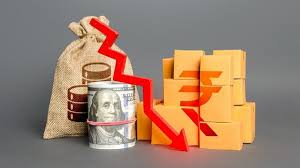
India imports most of its crude oil in dollars.
When DXY rises:
- Dollar becomes expensive
- Rupee weakens
- Import costs rise
Reuters recently reported the rupee touching near-record lows amid higher oil prices and rising US yields.
2. FII Outflows Increase
Foreign investors compare global opportunities constantly.
If US bonds offer attractive returns with lower risk:
- FIIs often reduce exposure to emerging markets.
This affects:
- Indian equities
- Debt markets
- Currency stability
Several analysts note that rising DXY frequently precedes FII outflows from India.
3. Crude Oil Becomes More Expensive
Oil is priced globally in dollars.
So when:
- DXY rises
- Rupee weakens
…India’s oil import bill increases further.
This creates pressure on:
- Inflation
- Fiscal deficit
- Fuel prices
Times of India recently highlighted how rising oil prices are impacting India’s macro environment.
4. Imported Inflation Increases
A stronger dollar makes imports expensive.
This impacts:
- Electronics
- Machinery
- Chemicals
- Semiconductors
- Consumer goods
Eventually:
- Inflation spreads through the economy.
🧠 What You Should Remember
For India:
A sharply rising Dollar Index usually creates macro pressure.
Especially through:
- Rupee weakness
- Oil inflation
- FII outflows
How the Dollar Index Affects Stock Markets
This relationship is extremely important.
Rising DXY Usually Hurts Emerging Markets
Historically:
- Strong dollar = weaker emerging markets
- Weak dollar = stronger emerging markets
Because liquidity shifts toward the US.
That’s why Indian markets often struggle during sharp DXY rallies.
Which Sectors Get Hurt Most?
Import-Dependent Businesses
These include:
- Airlines
- Paint companies
- Electronics firms
- Oil marketing companies
Their costs rise when the dollar strengthens.
High-Valuation Tech Stocks

Higher DXY often coincides with:
- Higher bond yields
- Lower liquidity
This pressures growth-stock valuations globally.
Which Sectors Benefit?
Some exporters benefit because:
- Their dollar earnings become more valuable.
Potential beneficiaries:
- IT services
- Pharma exporters
- Specialty chemicals
But if global growth weakens too much, even exporters may eventually suffer.
🧠 What You Should Remember
Markets don’t just react to DXY levels —
they react to:
Why the dollar is strengthening.
That distinction matters enormously.
Dollar Index and Gold: The Inverse Relationship
Gold and the dollar often behave like rivals.
Why?
Because gold is priced globally in dollars.
When DXY rises:
- Gold becomes expensive globally
- Demand weakens
- Prices often fall
Reuters recently reported gold slipping amid a stronger dollar and reduced hopes of rate cuts.
But there’s nuance.
If dollar strength is driven by fear and crisis:
- Gold may still rise as a safe haven.
Markets are never linear.
Dollar Index and Crude Oil
Oil and DXY also share an important relationship.
Historically:
- Strong dollar often pressures commodity prices.
Because commodities become costlier for non-dollar economies.
But geopolitics can override this relationship temporarily.
For example:
- Middle East tensions
- Supply disruptions
- OPEC cuts
…can push oil higher even during dollar strength.
That’s exactly what markets are witnessing currently.
Why Smart Investors Track DXY Daily
Professional investors monitor DXY because it provides early macro signals.
It helps them anticipate:
- FII flows
- Currency pressure
- Sector rotation
- Commodity trends
- RBI policy environment
Many institutions treat DXY as a global liquidity indicator.
Because in a dollar-dominated financial system:
- Liquidity drives markets.
Common Mistakes Retail Investors Make About DXY
Mistake 1: Ignoring Global Macro Trends
Many investors focus only on Indian charts.
But India is now deeply integrated into global markets.
Ignoring DXY means missing a major macro driver.
Mistake 2: Thinking DXY Only Matters for Forex Traders
Wrong.
DXY affects:
- Stocks
- Gold
- Crude oil
- Inflation
- FIIs
- EMIs
Almost everything eventually connects back to the dollar.
Mistake 3: Panic During Every DXY Spike
Not every dollar rally becomes a crisis.
Context matters:
- Is it driven by growth?
- Fear?
- Inflation?
- Bond yields?
Understanding the reason matters more than the move itself.
Mistake 4: Ignoring RBI’s Challenges
A rising DXY creates policy headaches for central banks globally.
The RBI must balance:
- Inflation
- Currency stability
- Growth
- Liquidity
All simultaneously.
🧠 What You Should Remember
Smart investing is no longer just about stock picking.
It’s about understanding:
- Global liquidity
- Macro cycles
- Currency trends
- Bond markets
And DXY sits at the center of all four.
The Bigger Picture: Why the Dollar Still Dominates the World
People often assume AI or crypto will replace the dollar quickly.
Reality is different.
The dollar still dominates:
- Global reserves
- Trade settlement
- Commodity pricing
- International borrowing
That’s why DXY movements continue influencing nearly every major economy.
Even India.
Even emerging markets.
Even gold and crypto.
Final Thoughts: The Dollar Index Is the Market’s Hidden Steering Wheel
Most investors look at:
- Nifty
- Sensex
- Bitcoin
- Gold
But the Dollar Index quietly influences all of them underneath.
When DXY rises sharply:
- Liquidity tightens
- Emerging markets struggle
- FIIs turn cautious
- Rupee weakens
- Inflation pressure rises
And in 2026, those forces are once again colliding together.
The key lesson?
If you want to become a smarter investor, stop watching only stock prices.
Start understanding the dollar too.
Because in global finance —
the dollar still sets the rhythm for almost every market on earth.