The Indian rupee is hitting record lows in 2026 due to rising crude oil, US bond yields, and FII outflows. Learn what the rupee crash means for investors.
The Rupee Crash Is No Longer Just a Forex Story
Most people notice the rupee only while checking:
- Petrol prices
- Foreign travel costs
- iPhone prices
- Dollar exchange rates
But when the Indian rupee starts crashing rapidly, it becomes much bigger than a currency issue.
It starts affecting:
- Stock markets
- Inflation
- Home loan EMIs
- Gold prices
- FIIs flows
- Government finances
- Everyday household expenses
And right now, the rupee is under serious pressure again.
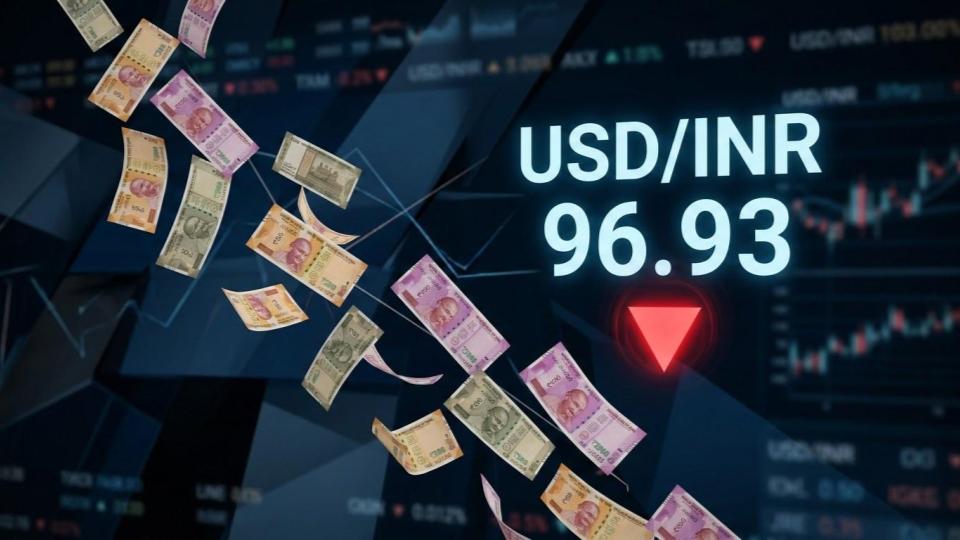
The Indian currency recently slipped to fresh record lows near ₹97 per US dollar, becoming one of Asia’s weakest-performing currencies in 2026.
For many Indians, this feels confusing.
India remains one of the fastest-growing economies in the world.
So why is the rupee still weakening so aggressively?
The answer lies in a dangerous combination of:
- Rising crude oil prices
- Strong US dollar
- Foreign investor selling
- Global geopolitical tensions
- Rising US bond yields
And understanding this matters far more than most retail investors realize.
Understanding the Rupee Crash in Simple Terms
Let’s simplify this first.
Imagine India as a shopkeeper.
To buy oil, electronics, machinery, and foreign goods, India needs US dollars.
But when:
- Dollar demand rises sharply
- Foreign money exits India
- Imports become expensive
…the rupee weakens against the dollar.
That’s essentially what’s happening now.
The rupee is not collapsing because of one single event.
It’s weakening because multiple macroeconomic pressures are hitting India simultaneously.
Why the Rupee Is Falling So Fast in 2026
Several powerful forces are driving the current currency weakness.
1. Crude Oil Prices Are Exploding Higher
This is probably the biggest reason.
India imports nearly 85% of its crude oil needs.
And crude oil prices have surged sharply due to the ongoing US-Iran geopolitical conflict. Brent crude recently climbed near $111–115 per barrel.
Why does this hurt the rupee?
Because India must buy oil in US dollars.
So when oil prices rise:
- India needs more dollars
- Dollar demand increases
- Rupee weakens further
It becomes a vicious cycle.
Think of it like a household whose monthly expenses suddenly double while income remains unchanged.
Pressure builds quickly.
🧠 What You Should Remember
India’s heavy dependence on imported oil makes the rupee extremely vulnerable whenever crude prices spike globally.
2. The US Dollar Has Become Extremely Strong
The second major problem is the strength of the US dollar itself.
Global investors are moving money toward:
- US Treasury bonds
- Dollar assets
- Safe-haven investments
Why?
Because global uncertainty has increased sharply.
Whenever fear rises globally:
- Investors buy dollars
- Emerging market currencies weaken
And the rupee is getting caught in that storm.
3. Rising US Bond Yields Are Hurting Emerging Markets
US Treasury yields have surged recently due to:
- Inflation fears
- Expectations of Fed rate hikes
- Higher global borrowing costs
Reuters reported that the US 30-year bond yield recently hit its highest level since 2007.
Why does this matter for India?
Because foreign investors compare returns globally.
If US bonds offer high “safe” returns:
- FIIs pull money from emerging markets like India
- Capital flows reverse
- Rupee weakens further
This is exactly what markets are witnessing right now.
4. FIIs Are Selling Aggressively
Foreign investors have reportedly withdrawn over $22 billion from Indian assets during this period of market stress.
When FIIs sell Indian equities:
- They convert rupees into dollars
- Dollar demand rises
- Currency pressure intensifies
This explains why:
- Rupee weakness
- Stock market volatility
- FII outflows
…are all happening together.
🧠 What You Should Remember
The rupee crash is not just an “India problem.”
It is part of a larger global macro cycle involving:
- Oil
- Dollar strength
- Bond yields
- Geopolitical uncertainty
Why the Rupee Crash Matters for Ordinary Indians
Many people think currency markets only matter to traders in Mumbai or New York.
That’s completely wrong.
A falling rupee quietly affects everyday life across India.
1. Imported Goods Become Expensive
India imports:
- Crude oil
- Electronics
- Semiconductors
- Industrial equipment
- Luxury products
A weaker rupee increases the cost of all these imports.
That means:
- Phones become expensive
- Fuel costs rise
- Appliances cost more
Eventually, inflation spreads across the economy.
2. Petrol & Diesel Prices Rise
This is the most visible effect.
Higher crude oil + weaker rupee = expensive fuel imports.
Even if oil prices stabilize globally, a weak rupee can still keep petrol prices elevated domestically.
3. Foreign Education & Travel Become Costlier
Families paying for:
- US universities
- International travel
- Overseas healthcare
…feel the pressure immediately.
A weaker rupee means:
- Higher tuition costs
- Costlier dollar remittances
- Expensive vacations abroad
4. Inflation Starts Creeping Everywhere
Transportation costs rise first.
Then:
- Food inflation rises
- Logistics costs increase
- Business expenses climb
Eventually:
- Consumers spend less
- Economic growth slows
🧠 What You Should Remember
The rupee crash doesn’t stay inside forex markets.
It eventually enters:
- Your fuel bill
- Grocery bill
- EMI
- Investments
- Lifestyle expenses
How the Rupee Crash Is Affecting Indian Stock Markets
Indian equities have already started reacting nervously.
The Sensex recently dropped sharply while Nifty slipped below key levels amid concerns around:
- Rupee weakness
- Rising bond yields
- Crude oil
- FII selling
Which Sectors Get Hurt Most?
Aviation
Airlines suffer because:
- Fuel costs surge
- Dollar-denominated expenses rise
Paints & Chemicals
These sectors depend heavily on imported raw materials.
Consumer Electronics
A weak rupee increases import costs for gadgets and appliances.
Startups & Tech
Global risk aversion reduces funding appetite.
Higher yields also pressure tech valuations.
Which Sectors May Benefit?

Some exporters may benefit because:
- Their dollar earnings become more valuable in rupee terms.
Potential beneficiaries include:
- IT services
- Pharma exporters
- Certain specialty chemical companies
But even these gains can become temporary if global growth slows sharply.
🧠 What You Should Remember
A falling rupee creates both:
- Risks
- Opportunities
The key is understanding which businesses gain from currency movements and which suffer.
Is India Heading Toward ₹100 per Dollar?
This is the big question everyone is asking now.
Some analysts believe the rupee could weaken toward:
- ₹98
- Even ₹100 per dollar
…if oil prices remain elevated for longer.
But it’s important to understand something:
RBI is not trying to make the rupee “strong forever.”
The RBI’s real goal is:
- Prevent panic
- Reduce volatility
- Smooth disorderly moves
That’s why the central bank has been intervening intermittently by selling dollars.
A controlled depreciation is manageable.
A panic-driven collapse is dangerous.
What Smart Investors Are Doing Right Now
Professional investors are becoming much more macro-focused.
They are closely watching:
- Crude oil prices
- US bond yields
- Dollar index
- RBI commentary
- FII flows
Some are increasing exposure to:
- Export-oriented companies
- Dollar-earning businesses
- Gold
- Defensive sectors
Others are reducing exposure to:
- Highly leveraged companies
- Import-heavy businesses
- Overvalued growth stocks
The market environment is changing quickly.
Common Mistakes Retail Investors Make During Currency Crises
Mistake 1: Ignoring Macro Signals
Many investors only track stock charts.
But currencies often signal stress before equities react fully.
Mistake 2: Panic Selling Everything
Not every rupee decline becomes a financial crisis.
Context matters enormously.
Mistake 3: Assuming RBI Can Fully Control Markets
RBI can smooth volatility.
But global macro forces often overpower short-term interventions.
Mistake 4: Thinking “Weak Rupee Is Always Good for IT”
It’s more nuanced.
Global recession fears can still hurt demand even if currency benefits exporters.
🧠 What You Should Remember
The smartest investors focus not just on stocks —
but on liquidity, currencies, and macro trends too.
Because everything eventually connects.
The Bigger Reality: India Is Becoming More Tied to Global Markets
One important shift is happening quietly.
Indian markets are no longer isolated.
Today:
- Oil prices in the Middle East
- US inflation numbers
- Treasury yields
- Dollar strength
…can influence Dalal Street within minutes.
This is the new reality of global investing.
And the rupee often becomes the first warning signal when global stress rises.
Final Thoughts: The Rupee Crash Is a Macro Warning Signal
The falling rupee is not just a currency story.
It’s a reflection of:
- Global geopolitical tensions
- Energy market stress
- Capital flow shifts
- Inflation fears
- Rising global interest rates
And in 2026, these forces are colliding together at the same time.
The key lesson?
Smart investors don’t ignore currencies anymore.
Because when the rupee weakens sharply, it eventually impacts:
- Markets
- Inflation
- Businesses
- Consumers
- Government policy
And perhaps most importantly —
investor psychology itself.