Discover how retail investors and SIPs are transforming India’s stock market, reducing dependence on FII flows, and reshaping long-term investing.
For decades, one number decided the mood of Dalal Street.
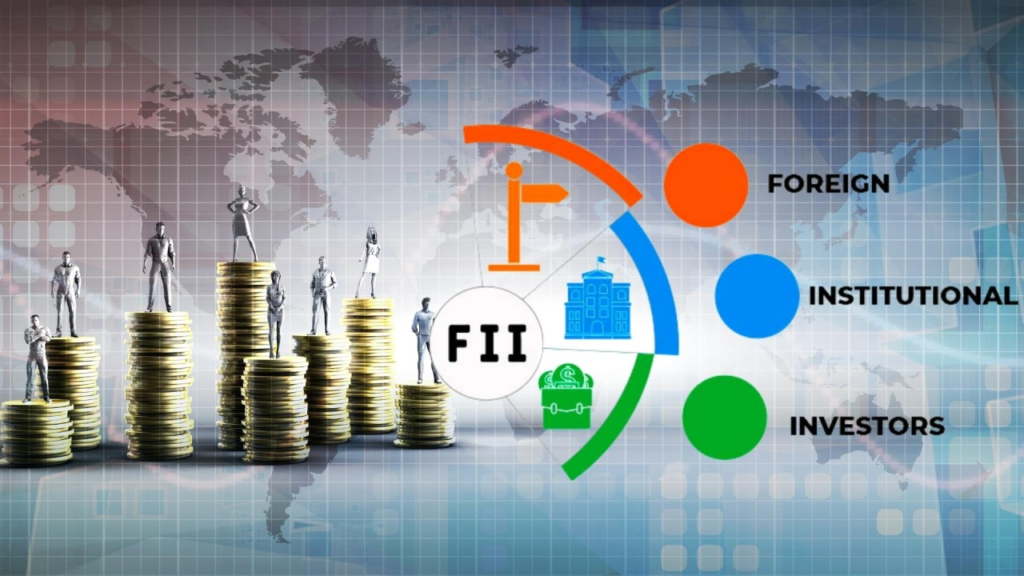
Foreign Institutional Investor (FII) flows.
If FIIs bought Indian stocks, markets rallied.
If FIIs sold, panic spread across trading terminals.
But something remarkable has changed over the past few years.
Today, India’s stock market is no longer driven only by foreign money. Domestic investors—through mutual funds, SIPs, insurance companies, pension funds, and direct equity investments—have become an equally powerful force.
This isn’t just another market trend.
It is one of the biggest structural changes in the history of India’s capital markets.
And it could define the next decade of investing.
The Old Market vs The New Market
Ten years ago, every investor waited for the daily FII data.
Heavy foreign buying meant optimism.
Heavy foreign selling often triggered market-wide corrections.
Today, the story is different.
Even during periods when foreign investors reduce their exposure, domestic institutional investors (DIIs) and retail investors continue buying through SIPs and mutual funds.
Instead of collapsing, the market often absorbs the selling pressure.
This shows how India’s financial ecosystem has matured.
The market is gradually becoming more self-reliant.
The Silent Revolution Called SIP
Every month, millions of Indians invest automatically through Systematic Investment Plans (SIPs).
They don’t stop because of elections.
They don’t stop because of global wars.
They don’t stop because interest rates change.
Their investments continue every month.
This disciplined flow of capital creates stability that didn’t exist a decade ago.
Unlike institutional money that can move rapidly across countries, SIP investments are consistent.
They provide long-term support to Indian equities.
This is one reason why market corrections are increasingly finding buyers.
India’s Financial Behaviour Is Changing
The biggest change isn’t in the market.
It’s in people.
Earlier generations focused mainly on:
- Fixed deposits
- Gold
- Real estate
Today’s investors are increasingly choosing:
- Mutual funds
- ETFs
- Direct equities
- Digital investment platforms
Young professionals now begin investing much earlier in life.
Financial literacy has improved.
Mobile investing has made participation easier than ever.
This cultural shift is creating one of the largest retail investor bases in the world.
Technology Has Made Investing Democratic
A decade ago, opening a trading account involved paperwork and multiple visits.
Today, investors can:
- Open a Demat account online.
- Complete KYC digitally.
- Start a SIP in minutes.
- Buy shares through smartphones.
- Track portfolios in real time.
Technology has reduced barriers and made investing accessible across cities, towns, and even rural India.
The stock market is no longer limited to financial professionals.
It has become part of everyday financial planning.
Why Global Investors Still Believe in India
Despite periodic volatility, India continues attracting long-term global capital.
Several factors support this confidence:
- Strong economic growth.
- Rising middle-class consumption.
- Manufacturing expansion.
- Digital transformation.
- Government infrastructure spending.
- Stable banking system.
Even when FIIs sell temporarily because of global uncertainty, many continue viewing India as one of the world’s strongest long-term growth markets.
This balance between domestic and foreign participation strengthens the overall market.
What This Means for Investors
The market is becoming more resilient.
Short-term volatility will continue.
Global events will always influence sentiment.
But India’s growing domestic investor base provides an important cushion during uncertain periods.
For long-term investors, this means focusing less on daily headlines and more on business quality.
The companies that continue growing earnings are likely to attract capital regardless of short-term market movements.
The Risks Investors Shouldn’t Ignore
A stronger domestic market doesn’t eliminate risk.
Investors should remain aware of:
- High valuations.
- Global recession risks.
- Inflation.
- Geopolitical tensions.
- Corporate earnings slowdowns.
Strong markets still experience corrections.
The difference is that corrections increasingly attract long-term investors rather than widespread panic.
Disciplined investing remains more important than chasing momentum.
The Bigger Picture
India’s stock market is entering a new phase.
It is no longer dependent on one source of capital.
Domestic institutions, retail investors, pension funds, insurance companies, and global investors are all contributing to market growth.
This diversified ownership makes the financial system stronger.
It also reflects a broader transformation taking place in India’s economy.
As incomes rise and financial awareness improves, investing is becoming a habit rather than a luxury.
That may prove to be the biggest market story of this decade.
The real viral trend in today’s market isn’t a single stock or a blockbuster IPO.
It’s the rise of the Indian investor.
Millions of people are investing systematically, thinking long term, and participating in the country’s economic growth like never before.
Markets will continue to rise and fall.
Foreign investors will continue buying and selling.
Global events will continue creating uncertainty.
But one trend appears increasingly clear:
India’s stock market is being powered from within.
And that could be one of the strongest foundations for long-term wealth creation.