Cabinet Reshuffle 2026: Understand why investors are watching political changes, key ministries, economic reforms, and the potential impact on India’s stock market.
A Cabinet Reshuffle Isn’t Just Political News. For Markets, It Can Signal the Government’s Next Economic Priorities.
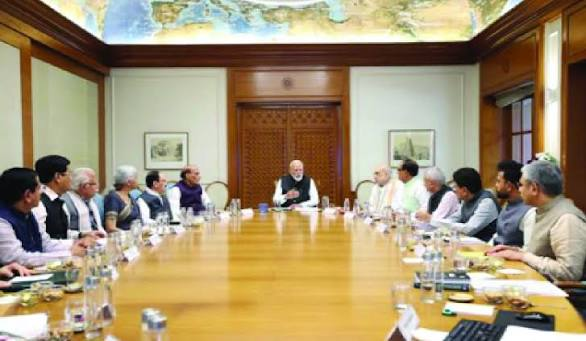
When most people hear the words “Cabinet Reshuffle,” they think of politics, elections, and new ministers taking charge.
But investors see something different.
They ask questions like:
Will infrastructure spending increase?
Will economic reforms accelerate?
Will new ministers push manufacturing, digital India, or financial reforms?
Because in financial markets, leadership changes often influence investor sentiment long before policies are announced.
With discussions around a possible Union Cabinet reshuffle gaining momentum ahead of the upcoming Parliamentary session, markets are closely watching every development. While cabinet changes are a normal part of governance, they can offer important clues about the government’s priorities for the months ahead.
For investors, this isn’t about political speculation.
It’s about understanding where policy, spending, and reforms could be headed next.
Why Does a Cabinet Reshuffle Matter to Financial Markets?
Think of the government as the management team of a large company.
When a company appoints a new CEO or changes key executives, investors immediately begin evaluating what could change.
Will there be a new growth strategy?
Will investments increase?
Will operations improve?
Governments work in a similar way.
When important ministries change leadership, investors look for signals about future policy direction.
Although long-term national policies rarely change overnight, the pace of implementation and sectoral focus can shift.
That’s why markets pay close attention.
Which Ministries Matter Most to Investors?
Not every ministry affects markets equally.
Certain portfolios have a much greater impact on business confidence and economic growth.
Finance
Responsible for taxation, fiscal policy, public spending, capital markets, and the Union Budget.
Commerce & Industry
Shapes manufacturing, exports, industrial policy, and ease of doing business.
Road Transport & Highways
Influences infrastructure spending and construction activity.
Railways
A key driver of capital expenditure, logistics, and engineering companies.
Defence
Important for defence manufacturers, aerospace companies, and indigenous production initiatives.
Power & Renewable Energy
Critical for energy transition, solar projects, and electricity infrastructure.
Changes in these ministries often receive the closest attention from investors and corporate leaders.
Markets Usually Care More About Policies Than Personalities
A cabinet reshuffle may generate headlines.
However, markets generally react to policy continuity rather than individual appointments.
Investors ask questions such as:
Will infrastructure spending continue?
Will fiscal discipline remain intact?
Will manufacturing incentives expand?
Will reforms accelerate?
If the overall economic agenda remains stable, market reactions are often measured.
Consistency is something investors value highly.
Infrastructure Could Stay at the Centre of the Growth Story
Over the past few years, India has invested heavily in:
Highways.
Railways.
Airports.
Ports.
Urban development.
Logistics.
These investments have supported sectors such as:
Cement.
Steel.
Capital goods.
Construction.
Engineering.
Logistics.
A cabinet reshuffle may provide clues about whether this infrastructure-led growth strategy will continue at the same pace.
Many analysts believe infrastructure will remain a long-term priority because it supports employment, manufacturing, and economic productivity.
Manufacturing and ‘Make in India’ Remain Key Themes
India has been working to strengthen domestic manufacturing through initiatives aimed at boosting production and reducing import dependence.
Several industries are benefiting from this focus, including:
Electronics.
Semiconductors.
Mobile phones.
Defence equipment.
Renewable energy.
Automobile components.
If these priorities continue after the reshuffle, manufacturing companies could remain in focus for investors.
Long-term industrial policy often matters more than short-term market sentiment.
Capital Markets and Financial Reforms
India’s financial markets have expanded rapidly in recent years.
Retail investor participation has reached record levels.
Mutual fund investments continue growing.
The IPO market remains active.
Corporate fund-raising has accelerated.
Investors will closely watch whether financial sector reforms continue, particularly those related to capital markets, banking, and financial inclusion.
Stable policy can strengthen investor confidence over time.
Global Investors Prefer Stability
Foreign Institutional Investors (FIIs) monitor political developments across all major economies.
However, they generally place greater emphasis on:
Policy consistency.
Economic reforms.
Fiscal discipline.
Ease of doing business.
Growth prospects.
A cabinet reshuffle that reinforces long-term economic priorities is often viewed positively by global investors.
Markets typically dislike uncertainty more than change itself.
What Should Investors Avoid?
Political news often creates emotional reactions.
Investors should avoid making investment decisions based solely on speculation.
Instead, focus on:
Official policy announcements.
Budget allocations.
Sector-specific reforms.
Corporate earnings.
Economic indicators.
Long-term investment success usually comes from analysing business fundamentals rather than reacting to daily headlines.
Which Sectors Could Be in Focus?
If the government’s current development agenda continues, several sectors may remain closely watched:
• Infrastructure
• Railways
• Defence
• Capital Goods
• Banking
• Manufacturing
• Renewable Energy
• Logistics
• Digital Infrastructure
The actual performance of these sectors will depend on execution, order flows, and broader economic conditions rather than cabinet changes alone.
The Bigger Picture: Governance and Growth Go Together
A cabinet reshuffle is part of the normal functioning of a government.
Its significance lies not only in who takes charge but also in the priorities they pursue.
Investors understand that economic growth depends on many factors:
Private investment.
Consumer demand.
Exports.
Global conditions.
Government policy.
Political leadership is one piece of that larger puzzle.
Understanding the broader picture helps investors avoid overreacting to short-term developments.
Final Thoughts: Watch the Policies, Not Just the Headlines
Cabinet reshuffles often dominate news cycles for a few days.
Markets, however, have a longer memory.
They eventually focus on execution.
Will projects move faster?
Will reforms continue?
Will investment increase?
Will businesses gain confidence?
These questions matter far more than the names on a ministerial list.
For investors, the most valuable approach is to stay informed, avoid speculation, and focus on long-term economic trends.
Because markets ultimately reward policy execution—not political headlines.
Investor Reflection
The next time you hear about a cabinet reshuffle, don’t ask,
“Who got which ministry?”
Ask,
“What does this tell us about the government’s economic priorities for the next few years?”
That question often provides far more valuable investment insight.