What happens in Washington rarely stays in Washington — especially when the US Federal Reserve adjusts interest rates. And on 10 December 2025, the world held its breath yet again.
With inflation refusing to cool and the US job market showing visible cracks, the US Fed December 2025 rate cut of 25 basis points wasn’t just another policy update — it was a signal, a warning, and a recalibration rolled into one.
If you’re an investor, a student of economics, or simply someone tracking how global markets shape your daily financial life, this development matters more than you think.
And in today’s deep-dive, we’ll unpack everything — what the Fed did, why it did it, and what it means for India, global markets, and YOU.
Let’s break it down, human to human — no jargon, no robotic explanations.
📌 US Fed December 2025 Rate Cut: What Exactly Happened?
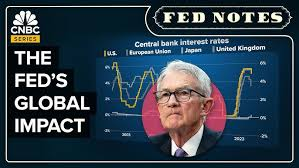
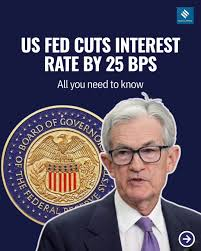
The Jerome Powell–led Federal Open Market Committee (FOMC) voted to cut the US benchmark interest rate by 25 basis points, bringing the rate down to a range of:
👉 3.50% to 3.75%
This marks the third consecutive rate cut — following similar cuts in September and October 2025.
In the FOMC statement, the committee explained:
“In support of its goals and in light of the shift in the balance of risks, the Committee decided to lower the target range for the federal funds rate by 1/4 percentage point to 3-1/2 to 3-3/4 per cent.”
In simple terms:
The Fed believes the risks to the US economy are rising, and a rate cut could help soften the blow.
Why Did the Fed Cut Rates Again?
Let’s make this simple.
Think of the US economy like a car driving uphill.
- Inflation is the heavy luggage slowing it down.
- A weakening job market is the engine overheating.
- Global uncertainties are the windy weather.
The Fed is trying to shift gears so the car doesn’t stall.
Two big reasons pushed the Fed into action:
1️⃣ Inflation Is Still Too High
Even after months of tight policy, US inflation remains stubborn.
Jerome Powell pointed directly at an unusual culprit:
rising goods prices due to Trump-era import tariffs.
Tariffs increased the cost of imported goods → companies passed it on → consumers paid more → inflation rose.
In Powell’s own words from October 2025:
“Inflation has picked up due to rising goods prices, driven by tariffs on foreign imports.”
2️⃣ The Job Market Is Losing Steam
One year ago, employers were fighting to hire. Today, they’re stepping on the brakes.
According to the US Bureau of Labor Statistics (BLS):
- Unemployment hit 4.4% in September 2025
- Only 119,000 jobs were added, partly impacted by the federal government shutdown
This is the slowest hiring pace in months — and the Fed cannot afford to ignore it.
The US labor market is like a pressure cooker that has cooled down — now the worry is under-cooking, not over-heating.
H3: Key Takeaway
The December rate cut isn’t about boosting growth — it’s about preventing further damage and keeping the economy from sliding into recession.
📌 The October 2025 Fed Meeting: The Road to December’s Cut
If December’s cut felt expected, that’s because October laid the foundation.
On 29 October 2025, the Fed cut interest rates by 25 basis points to a range of 3.75%–4.00%.
This was a big deal because:
- It was the second cut of the year, after nearly a full year of rate stability.
- The move came despite a US government shutdown, which weighed heavily on hiring and business activity.
- Powell insisted that a December cut was not guaranteed, yet markets still priced it in aggressively.
His surprising statement:
“A further reduction in the policy rate at the December meeting is not a foregone conclusion.”
Fast forward to December — and here we are.
Why Does the Fed Keep Cutting?
Because the US economy in late 2025 is flashing conflicting signals — the economic equivalent of mixed messaging in a relationship:
- Prices are still too high → demands caution
- Jobs are slowing → demands support
- Consumers are losing confidence → demands relief
- Corporate activity is uneven → demands calibration
The Fed is stuck in the middle, juggling inflation control and employment stability, its two official mandates.
Think of it like trying to keep a rooftop wedding tent steady during a storm — pull too hard on one side, and the other side collapses.
H3: Summary
October’s policy decision was the Fed testing the waters.
December’s cut confirms the direction.
The real question now is — how far will this easing cycle go?
📌 The Fed’s Delicate Balancing Act Explained Simply
The best way to understand the Fed’s situation is through a relatable analogy.
Imagine running a kitchen:
- The stove (inflation) is too hot.
- The gas supply (job market) is becoming weaker.
- The guests (investors) are impatient.
- And the recipe (monetary policy) needs constant tweaking.
Cutting interest rates is like lowering the flame so the dish doesn’t burn — but doing it too much may leave everything undercooked.
And Powell knows this.
The Fed is operating in manual mode, not autopilot.
Every new economic data point — jobs, wages, inflation, GDP — influences the next move.
What the Labour Data tells us
- Unemployment rising → bad
- Job additions slowing → worse
- Shutdown effects lingering → concerning
The Fed is essentially preventing a slow softening from turning into full economic weakness.
H3: Summary: The Fed’s Mindset
The Fed is not trying to stimulate the economy.
It is trying to prevent a slowdown from becoming a slump.
📌 What Markets Are Expecting in 2026
Financial markets are already looking past December.
According to CME FedWatch:
- There was an 87% probability of a 25 bps December cut
- Some investors even expected a larger 50 bps cut
Now the real suspense is around 2026.
Powell leaves office as Fed Chair in May 2026, and Kevin Hassett is widely seen as the frontrunner to succeed him.
This could shift future policy in unpredictable ways — especially if the US political landscape changes direction.
Market participants are already asking:
- Will 2026 bring more cuts?
- Will the Fed pause again?
- Will the economy respond positively, or weaken further?
At this moment, there are no guaranteed answers — and that’s what keeps investors awake at night.
📌 How Global Markets, Especially India, Reacted
Even though the US cut rates, Indian markets opened under pressure, largely due to:
- Persistent foreign institutional selling (FII outflows)
- Global uncertainty
- Domestic news around corporate developments
- A volatile rupee
Analysts noted:
- Nifty and Sensex struggled to pick up momentum
- Banking and IT stocks reacted cautiously
- Metals showed selective strength
- A split vote within the Fed created further uncertainty
- Trump criticised the rate cut, adding political angle to market sentiment
In simple words:
The rate cut helped global sentiment, but India’s markets had their own worries.
📌 What This Means for You (as an Indian Reader)
Several practical implications:
1. Dollar vs Rupee
A rate cut can weaken the dollar → rupee may stabilise or strengthen temporarily.
2. Indian equity markets
Lower US rates often attract money into emerging markets → positive for Indian indices (medium term).
3. Borrowing costs
Global borrowing becomes slightly cheaper → good for Indian corporates with US exposure.
4. Gold prices
Rate cuts typically push gold higher → Indian gold buyers need to watch this closely.
5. Crypto
Lower US rates usually fuel risk assets → crypto markets may see renewed optimism.