If you’ve ever tried to balance a monthly budget while prices keep rising, you’ll understand why central banks lose sleep over interest rates. Every tweak — even a tiny 25 basis point cut — can ripple across the world.
This week, the Fed interest rate cut 2025 arrived like a calm drizzle after months of economic humidity. A 25 bps cut, the third this year, might sound small, but markets reacted like someone lit a firecracker in a quiet room. US stocks jumped, small caps hit record highs, and global investors exhaled in relief.
But behind the celebration is a deeper story — one filled with disagreements inside the Federal Reserve, a tricky inflation-growth puzzle, and hints about what 2026 may look like.
This article breaks everything down with clear explanations, real-world metaphors, and India-relevant insights, so you truly understand why this Fed move matters — even if you’re sitting in Bengaluru, Mumbai, Delhi, or Hyderabad.
Let’s dive in.
What Exactly Happened at the Latest Fed Meeting?
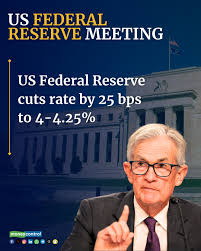
The Federal Reserve wrapped up its two-day meeting with a decision that was anticipated — but not unanimously supported:
👉 A 25 basis point rate cut, bringing the federal funds rate to 3.50%–3.75%.
This marks the third cut of the year, signaling that the Fed is cautiously stepping back from the intense tightening cycle of the last few years.
But here’s the twist:
Fed officials were divided. Very divided.
Why the Disagreement?
Inside the Fed boardroom, opinions were split across three camps:
- Team “Hold Steady” — Led by Chicago Fed’s Austan Goolsbee and Kansas City Fed’s Jeff Schmid
They wanted no cut at all. Their argument:
Inflation isn’t comfortably low yet. - Team “Cut Moderately” — The group that voted for the 25 bps cut
Their argument:
The economy is cooling just enough; a small cut supports growth without overheating. - Team “Cut Aggressively” — Fed governor Stephen Miran, who preferred a 50 bps cut
His view:
Why wait? Growth headwinds are real; let’s send a stronger signal.
It’s almost like ordering food with friends: one wants spicy, one wants mild, and one wants extra cheese. In the end, you settle for something everyone can tolerate.
Why This Split Matters
This level of divergence inside the Fed means one thing:
👉 The economy is at a crossroads.
Inflation has been easing but is still not perfect.
Growth has been steady but shows signs of fatigue.
Unemployment is low but edging up.
Basically, the Fed is trying to fix a leak without soaking the floor.
🧠 What You Should Remember
The 25 bps cut isn’t just a number — it’s a compromise. The Fed is cautious, divided, and trying to keep growth alive without letting inflation misbehave again.
Why Did the Fed Cut Rates — and Why Now?
When the Fed Chair Jerome Powell stepped onto the stage, his tone was calm but firm:
The Fed is in a “challenging position”, juggling its two key mandates —
- Price stability (keep inflation low)
- Maximum employment (keep people working)
And right now, these two goals are pulling in opposite directions — like a tug-of-war at a school sports day.
Inflation: Better But Still Sticky
Inflation has cooled significantly from its peak. But some categories — particularly services — remain stubborn.
Think of inflation like trying to lose weight. The first few kilos drop quickly. But the last little belly fat? That’s the nightmare.
That’s where the Fed is right now.
Growth Is Slowing
The US economy isn’t in recession territory, but the momentum is fading:
- Wage growth is easing
- Consumer spending has softened
- Businesses are delaying investments
- Borrowing remains expensive for SMEs
By cutting rates, the Fed is giving the economy a small energy drink — not too strong, just enough to stay alert.
Global Factors Also Play a Role
The world economy is slowing. Europe is fragile. China is unpredictable. Emerging markets are volatile.
A mild US slowdown can tip global trade into risk territory.
Remember: When the US sneezes, the world gets a cold. When it coughs? Markets panic.
🧠 What You Should Remember
The Fed cut rates because the economy needed a gentle nudge. Inflation isn’t perfect, growth is cooling, and global uncertainties make even a small cut significant.
How Did the Markets React? (Spoiler: They Celebrated)
The moment the Fed’s decision hit the screens, the markets lit up.
S&P 500 Surged Near Record Highs
The benchmark index closed just shy of a new all-time high — signaling strong investor confidence.
Why the excitement?
- Lower rates mean cheaper borrowing
- Cheaper borrowing boosts corporate profits
- Higher profits strengthen stock valuations
In simple terms:
Lower rates → Happier markets.
The Russell 2000 Hit an All-Time High
Small-cap stocks — often sensitive to rate changes — rallied to a historic peak.
Why does this matter?
Small caps are like the middle-class entrepreneurs of the stock world. When they thrive, it means the domestic economy is breathing easier.
Global Ripple Effect (Including India)
When the Fed cuts rates:
- US bond yields fall
- Dollar weakens
- Emerging markets (including India) attract more inflows
- Nifty and Sensex get a liquidity boost
For Indian investors, this is good news:
Foreign money loves India when global rates go down.
🧠 What You Should Remember
Markets cheered because a rate cut lowers financial stress and boosts growth prospects. Small caps skyrocketing is a sign investors believe the economy will stay resilient.
What Did the Fed Project for 2025 and 2026?
Alongside the rate announcement, the Fed released its Summary of Economic Projections (SEP) — basically their forecast diary.
The 2025 Outlook
Here’s what the Fed sees:
- Moderate economic growth
- Inflation gradually trending toward target
- Rate cuts will continue — but slowly
Growth won’t be explosive, but stable enough to avoid recession.
Only One Rate Cut in 2026
The most headline-grabbing projection?
👉 The Fed expects just one interest rate cut in 2026.
This is unchanged from its September forecast — showing that even though the economy is cooling, the Fed isn’t planning a full pivot to cheap money.
What This Means for Borrowers, Businesses, Investors
- Borrowing will be cheaper in 2025
- But don’t expect ultra-low rates again
- Businesses need to plan for a “higher for longer lite” environment
- Investors should prepare for steady, not explosive, bull runs
In short:
The Fed is cautious but optimistic.
🧠 What You Should Remember
The Fed expects a slow, controlled easing cycle. There’s no rush to cut sharply — and 2026 may see only one reduction.
What Does This Mean for You (Especially If You’re in India)?
Whether you’re an investor, entrepreneur, student, or working professional — global interest rate changes impact your financial life.
Here’s how:
1. For Investors in Indian Stocks
Fed cuts → weaker dollar → stronger emerging markets → more FPI inflows.
Expect:
- Higher liquidity
- Stronger mid-caps & small-caps
- A push toward Indian tech, fintech, and infra stocks
2. For NRIs
If you hold:
- US mortgages
- US student loans
- Business credit lines
— interest costs may soften slightly.
3. For Indian Borrowers
Indian banks watch the Fed closely.
If global rates fall, RBI has more room to ease later.
This can eventually mean:
- Better home loan rates
- Easier business financing
- Lower personal loan EMIs
4. For Entrepreneurs & Startups
Lower global rates mean more venture capital and PE activity returning to growth themes.
2026 could be a revival year for:
- SaaS
- EVs
- Deep tech
- MSME lending
- Consumer brands
5. For Students Planning to Study Abroad
A softer dollar + lower international borrowing costs =
👉 Your foreign education bill becomes a little lighter.
🧠 What You Should Remember
Whether you invest in India, borrow in the US, or run a business, Fed cuts trickle down to you. Global liquidity affects home loans, EMIs, markets, and startup funding.
The Bigger Picture — Is the Fed Signaling the End of Tightening?
Not exactly.
The Fed is relaxing, not pivoting.
This cut does not mean:
- Inflation is fully solved
- The Fed is moving to cheap-money mode
- Rate cuts will become frequent
Instead, think of this as:
👉 A gradual cooling-off after a long workout.
The Fed wants economic stability without inviting the inflation monster back into the room.
🧠 What You Should Remember
The tightening cycle is softening, not ending. The Fed wants balance — slow inflation, steady growth, stable jobs.
CONCLUSION & CTA
The latest Fed interest rate cut of 25 bps is more than a routine policy move — it’s a signal. A signal that the world’s most influential central bank believes the economy needs a gentle hand, not a heavy one.
But the disagreement among Fed officials also hints at uncertainty. The road ahead is neither smooth nor predictable — and 2026’s forecast of just one rate cut shows that caution is the new mantra.
What do you think?
Do you feel central banks — including the RBI — should be more aggressive in cutting rates, or is caution the safer path right now?
Share your thoughts — your view might help someone else make a smarter decision.