India’s new criminal law allows courts to compel journalists to reveal sources. Here’s why it’s raising serious concerns about press freedom and democracy.
Imagine a journalist uncovering a major corruption scandal — with solid evidence, verified leads, and confidential sources who trust them with their lives.
Now imagine that same journalist being legally compelled to reveal those sources, or face criminal penalties.
That’s the growing fear in India’s media community after the implementation of the new criminal laws, which have quietly introduced provisions that can force journalists to disclose confidential sources during investigations.
The issue goes beyond journalism — it’s about the soul of a democracy, where the right to know and the freedom to report are cornerstones of public accountability.
The primary keyword — new criminal law in India — represents not just a legislative shift, but a deeper question:
➡️ Are we protecting justice, or silencing truth?
⚖️ What the New Criminal Law Actually Says
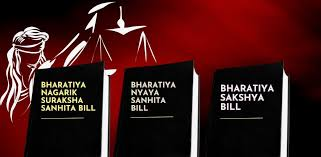
India recently overhauled its colonial-era criminal codes — replacing the Indian Penal Code (IPC), Criminal Procedure Code (CrPC), and Indian Evidence Act with the following:
- Bharatiya Nyaya Sanhita (BNS) – replaces IPC
- Bharatiya Nagarik Suraksha Sanhita (BNSS) – replaces CrPC
- Bharatiya Sakshya Adhiniyam (BSA) – replaces Evidence Act
While these were meant to “modernize” India’s legal system, some sections in these laws have raised alarm bells among journalists and legal experts.
Specifically, Section 127(2) of the Bharatiya Sakshya Adhiniyam (BSA) allows the court to compel disclosure of a source if it deems it “necessary in the interest of justice.”
On paper, this sounds reasonable — but in practice, it opens a Pandora’s box.
🧠 Why This Clause Is Controversial
Journalists depend on confidential sources — whistleblowers, insiders, or individuals who risk everything to expose wrongdoing.
If the law forces disclosure:
- Whistleblowers will stop coming forward
- Investigative journalism will shrink
- Government accountability will weaken
- Public trust in media will decline
Freedom of the press isn’t about giving journalists special privileges — it’s about protecting the public’s right to know.
Under the new provision, even if a source exposes corruption or misconduct, the journalist can be legally pressured to name them — effectively silencing future informants.
📜 A Look Back: How It Worked Earlier
Under the old Indian Evidence Act, 1872, Section 15(2) recognized that journalists could refuse to disclose sources to protect public interest and freedom of the press.
Courts traditionally respected this right, balancing it against the needs of justice.
Now, the Bharatiya Sakshya Adhiniyam has removed that protection, replacing discretion with compulsion.
This seemingly small change carries massive consequences.
🧩 Key Takeaway:
“Freedom of speech isn’t just about speaking — it’s about protecting those who make speaking possible.”
📢 What It Means for Indian Journalism
1. Fear of Retaliation
Whistleblowers — from government officials to corporate insiders — depend on anonymity.
If journalists are seen as unsafe, the entire ecosystem of investigative reporting collapses.
2. Chilling Effect on Press Freedom
Even if no journalist is actually forced to reveal a source, the threat of legal compulsion itself acts as a deterrent.
Editors may self-censor. Newsrooms may avoid sensitive stories.
3. Blurred Lines Between Law and Power
While the law claims to protect “justice,” it also grants broad powers to authorities.
Without clear safeguards, the interpretation can tilt toward suppression rather than transparency.
🧠 What You Should Remember
Laws shape freedom — but how they’re used shapes trust.
The real question isn’t whether the law can compel disclosure, but whether it should.
🇮🇳 How Other Democracies Handle Source Protection
Let’s see how the world’s major democracies balance press freedom and justice:
| Country | Protection for Journalists | Remarks |
|---|---|---|
| United States | “Shield Laws” in 49 states protect journalists from revealing sources | Federal courts respect press independence |
| United Kingdom | Courts rarely compel disclosure; public interest takes priority | Judges weigh risks to free expression |
| Canada | Journalists can refuse to disclose unless the public interest clearly outweighs it | Requires judicial oversight |
| France / Germany | Strong constitutional protection for journalistic sources | Disclosure allowed only in extreme criminal cases |
| India (New Law) | Allows compulsion “in the interest of justice” | No clear definition of “interest,” leading to ambiguity |
🧭 Why “Disclosure” Can Undermine Democracy
Think of a democracy like a cricket team.
The players (citizens) rely on the umpire (media) to ensure fair play and call out no-balls.
If the umpire starts playing under pressure from the team captain (the state), the match loses its credibility.
Journalists are the umpires of democracy — they ensure transparency.
Forcing them to reveal their sources doesn’t just endanger individuals — it corrupts the spirit of accountability itself.
🔍 Real-World Example: The Cobrapost and Tehelka Legacy
In India’s history, exposés like Operation West End (Tehelka) or Cobrapost sting operations revealed deep-rooted corruption — powered by confidential sources.
Had such laws existed then, those stories might never have seen the light of day.
🧠 Key Takeaway
“Truth needs protection — not permission.”
⚙️ Balancing Justice and Freedom: Is There a Middle Path?
Yes, but it requires clarity and intent.
To protect both justice and journalism, India can:
- Define “interest of justice” clearly — to prevent misuse
- Require judicial oversight — before compelling any journalist
- Create a Press Shield Law — modeled after the U.S. or EU
- Include a Whistleblower Protection clause — for vulnerable informants
- Allow limited, case-by-case exceptions — only in national security or terrorism cases
A democracy that trusts its people must also trust its press.
💬 Voices from the Media and Legal Community

- Editors Guild of India and Press Club of India have expressed grave concern, calling this “a setback to freedom of expression.”
- Legal experts warn it could “turn journalists into informants for the state.”
- Civil society organizations are demanding amendments and a clearer definition of judicial oversight.
The government, on the other hand, defends the law as necessary for justice and national security, claiming it won’t be misused.
But as history shows — the power to compel is often the power to control.
🌐 Public Trust at Stake
In an era of fake news and disinformation, credible journalism is India’s last line of defense.
Undermining its integrity could leave citizens more vulnerable to propaganda and political manipulation.
Freedom of the press isn’t a luxury — it’s a democratic necessity.
🧠 Final Thought
A free press isn’t anti-national — it’s anti-corruption.
When the law silences the messenger, truth becomes collateral damage.
📣 Call to Action
Do you believe journalists should have the right to protect their sources — even in legal investigations?
Share your views below 👇
Because every democracy deserves an honest debate about where freedom ends and control begins.