Tariff Turbulence On Cards? Why US Stocks Are Jittery, Bitcoin On Slippery Slope
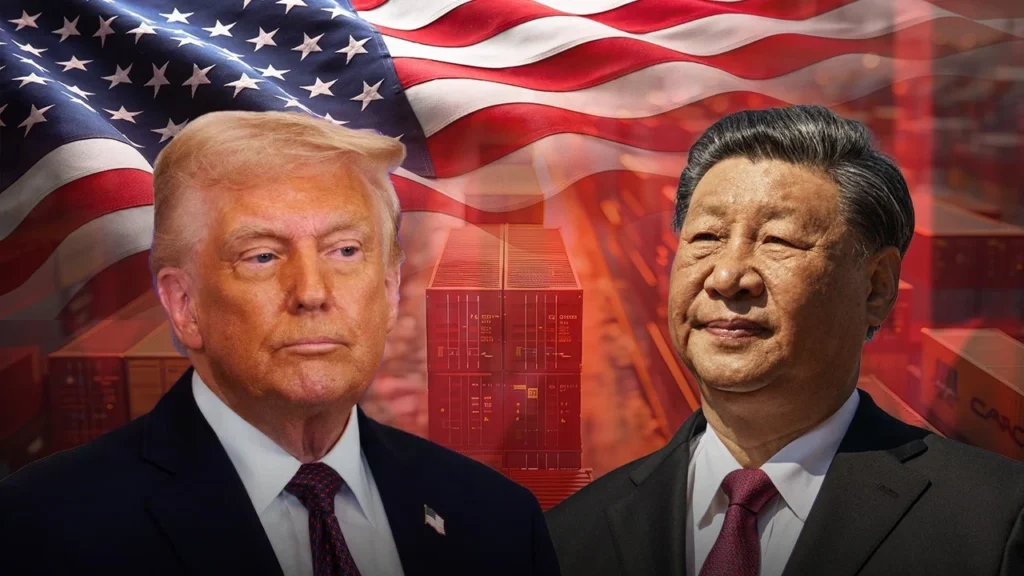
The Wall Street was jittery and cryptocurrency market slumped on Tuesday, as China sharpened its rhetoric against the United States with a vow to “fight till the end” if Washington raises the tariffs.
The ratcheting up of trade tensions between the world’s two largest economies has affected sentiments at the Wall Street, with all three main indices falling in early trade.
US Market Indices Take a Hit
The Dow Jones Industrial Average slipped 0.2%, S&P 500 shed 0.5% and the Nasdaq Composite lost as much as 1%. This comes a day after the stock market had risen, following President Donald Trump’s comment that “all will be fine” with China.
The US market indices had slumped on Friday, after Trump threatened to raise China tariffs to as high as 100%.
Wall Street Strategists Sound a Note of Caution
Wall Street strategists are sounding a note of caution to investors looking to buy the dip following Friday’s sharp selloff in US stocks. Despite signs of openness to trade talks between the US and China, firms like Morgan Stanley, Evercore ISI, and JPMorgan Chase & Co. are warning that the volatility may be far from over.
According to these market watchers, lofty valuations, the US government shutdown, and ongoing trade uncertainty are combining to keep market sentiment on edge. The S&P 500, which has been in its fourth year of a bull market, appears increasingly vulnerable to a pullback.
Adding to the concern is the fact that the index has now gone 97 sessions without a 5% correction, significantly longer than its long-term average of 59 days, according to Bloomberg data. For many analysts, this signals that a retrenchment is overdue.
Cryptocurrencies Not Spared in Global Selloff
Meanwhile, cryptocurrencies were not spared in the global selloff. After a wave of historic liquidations, digital assets continued to slide, with Bitcoin, the largest cryptocurrency, slumping as much as 4% to around $111,200 on Tuesday morning.
Notably, Bitcoin has traditionally been seen as a spurt during periods of market uncertainty. However, this time it fell in tandem with equities. According to market watcher Deepak Shenoy, the downturn can be attributed to high levels of leverage in the crypto market.
“There was enough leverage taken by Bitcoin traders to make big bets,” Shenoy said on Monday. “When the price dropped, they all liquidated their assets in a chain reaction to cover the potential loss.”
He elaborated further in response to a comment by Helios Capital founder Samir Arora, who questioned why a non-equity asset like Bitcoin experienced an 8.4% decline amid US-China tariff tensions.
“Apparently, there’s enough leverage in the Bitcoin world that has an auto-sell model when prices fall. When leverage runs high, you just have to trigger a liquidation and it’s a domino effect,” Shenoy noted.
Impact on Indian Markets
The ongoing trade tensions between the US and China have significant implications for Indian markets. As a major trading partner with both countries, India’s economy is heavily influenced by global trade dynamics. Indian stock market news and trends are closely watched by investors and traders alike.
Investors looking to navigate these uncertain times can consider Nifty index levels and Sensex news to make informed decisions. Additionally, Q1 results and earnings of major Indian companies can provide valuable insights into the health of the economy.
Conclusion
In conclusion, the tariff turbulence between the US and China has significant implications for global markets, including India. As investors and traders, it is essential to stay informed about the latest developments and trends in the Indian stock market trends and global market analysis to make informed decisions.