Have you ever felt the allure of “learn trading, earn crores” ads while scrolling social media? For many Indians — moderately salaried professionals, students, middle-class families — that tone strikes a deep chord. The promise: skip years of grind, invest a few lakhs in a course, and ride the stock-market wave to financial freedom. But what if that promise is built on shaky ground — and risks your hard-earned money instead?
That’s exactly what the recent action by SEBI uncovered. In December 2025, the markets regulator issued a sweeping ban on Avadhut Sathe and his firm Avadhut Sathe Trading Academy Pvt Ltd (ASTAPL), impounding ₹546 crore as “unlawful gains”. Business Standard+2The Economic Times+2
In this blog post — from the perspective of someone who’s seen both the allure and the pitfalls of markets over years — I break down what exactly happened, why it matters, and what you as an aspiring retail investor should learn.
Who is Avadhut Sathe — and how big did his empire become?
From software engineer to “market mentor”
- Sathe began his career as an IT professional, having studied electronics engineering and earned a postgraduate diploma in software. He worked at firms such as Hexaware and spent time abroad (e.g., Singapore, US). India Today+2The Economic Times+2
- Over time, he pivoted to his long-time passion: investing and trading in equity markets. By framing himself as both a seasoned trader and a mentor, he tapped into the growing thirst for stock-market success in India — especially among first-time investors. India Today+2The Economic Times+2
Building ASTAPL — from a seminar to 17 branches
- What began modestly — reportedly a small seminar around 2008 — eventually grew into ASTAPL with as many as 17 branches across major Indian cities. India Today+1
- The courses were pitched in multiple languages (Hindi, Marathi, English), making them accessible to middle-class families and people from smaller towns. This inclusivity (and affordability, compared to expensive private coaching) helped ASTAPL scale quickly. India Today+1
- On social media, his reach was huge. His YouTube channel had reportedly over 9 lakh subscribers. India Today+1
Sathe positioned himself as a self-made trading guru — a familiar success story many found relatable. But as we’ll see, the regulatory reality was different.
Key takeaway: Sathe’s appeal lay in relatability — modest background, IT-to-trading transition, multilingual courses — making stock markets seem within reach for everyday Indians. But scale and popularity can sometimes cloak legal and ethical hazards.
What did SEBI find — and why did the crash happen?
Education or unregistered advisory? The thin (but critical) line
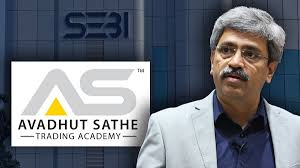
At first glance, ASTAPL labeled itself as a “trading academy” — in theory, offering market education. But SEBI’s investigation revealed a different story. The Times of India+2The Economic Times+2
- Live market sessions: Students were reportedly given specific buy/sell calls, trade entry and exit levels, stop-losses, targets, and even capital-allocation advice. Business Standard+2India Today+2
- Private communication: Such guidance wasn’t limited to public webinars; in closed WhatsApp groups and private sessions, actionable advice was being provided — behavior characteristic of an investment adviser, not a teacher. Business Standard+2India Today+2
- Tracking and inducement: Sathe even displayed his own trading positions live — a strong signal that the training was being used to influence actual trading behavior, not just impart theoretical knowledge. Business Standard+1
Under Indian securities laws, any entity offering advisory services — especially with stock-specific recommendations — must be registered with SEBI as an Investment Adviser (IA) or Research Analyst (RA). ASTAPL wasn’t. Business Standard+2Business Standard+2
By blending education with actionable advice, ASTAPL crossed a legal boundary. SEBI’s interim order clearly states that the services offered went far beyond general “market knowledge.” India Today+2Business Standard+2
The Numbers: ₹601 crore collected, ₹546 crore impounded
According to SEBI’s order:
- Since 2015, ASTAPL — led by Sathe — collected approximately ₹601.37 crore from over 3.37 lakh investors across India. The Economic Times+2Telangana Today+2
- Of this, SEBI determined that ₹546.16 crore were “unlawful gains,” and ordered these funds to be disgorged (i.e., returned to investors/held under lien). Business Standard+2The Economic Times+2
For context: this is possibly the largest sum ever seized from a finfluencer under Indian securities law. Many consider this a watershed moment in regulator-backed investor protection. The Times of India+2Business Standard+2
Key takeaway: The scale — hundreds of crores and lakhs of investors — shows this was not a small coaching misstep. It was a massive unregulated advisory network under the guise of education.
SEBI’s Action: What was ordered, and what changes now
What SEBI directed
- Immediate ban on Sathe, ASTAPL, and associated director (his wife) from securities-market activities: no buying, selling, advising, or acting as research analyst. Business Standard+2Business Standard+2
- Prohibition on using live market data, giving trade recommendations, or advertising past profits or success stories. Business Standard+1
- Freeze on bank accounts until ₹546.16 crore is placed under lien / fixed deposit under SEBI’s control. Business Standard+2The Economic Times+2
- Order to cease collection of any further course fees, and to stop all forms of advisory or research services, even if disguised as “courses.” Business Standard+2The Economic Times+2
Why this matters beyond just one case
SEBI’s move isn’t isolated — it signals a broader crackdown on the booming “finfluencer + trading academies” ecosystem in India. Regulators are drawing a firm line: if you give actionable advice without registration — even if dressed as “education” — you’re liable under the law. The Times of India+2The Economic Times+2
As one analyst aptly put it: this interim order is a wake-up call to anyone thinking of monetizing market hype through social media, courses, or coaching. The Economic Times+2The Economic Times+2
Key takeaway: The message is clear — popularity, flashy presentations, hundreds of thousands of followers do not grant license to give financial advice. Legal compliance does.
Why this matters — especially for retail investors
The risk of “social media money-guru syndrome”
For many ordinary Indians, people like Sathe offered hope — a path to break away from routine jobs, build wealth, fulfill dreams. The lure is strong: “If he can do it, I can too.” But that aspiration often blinds people to the reality that markets are volatile, unpredictable, and demand discipline.
What SAS (Sathe and ASTAPL) operated on was not education in the true sense — it was a marketing engine that sold hope, mixed with selective success stories, to push investors toward specific trades. That’s a dangerous cocktail.
Hidden losses, selective testimonials, and confirmation bias
SEBI observed that ASTAPL frequently advertised only profitable trades, showing testimonials from successful students — while losses were nowhere to be seen. Business Standard+2The Economic Times+2
If you judge a course solely by those cherry-picked wins, you’re getting a skewed picture. It’s like showing only best days from a football season and claiming the team is undefeated — deceptive, and misleading.
Regulatory clarity and protection
By taking this action, SEBI has helped define the boundary between education and advisory services in Indian markets. Retail investors now have a clearer idea: before you trust any course, figure out whether it’s just generic education or directly influencing trade decisions.
That clarity itself is a form of investor protection, especially for new entrants who may not distinguish between hype and legitimate guidance.
Key takeaway: Social-media-driven financial education can be appealing, but it often masks selective truths. Regulatory clarity helps protect beginners from impulsive financial decisions.
What this means for “Finfluencers” — and the future of market education

A wake-up call for all online educators and trading gurus
With Sathe’s ban, everyone running trading courses or investment-advisory services online — especially unregistered ones — is on notice. The rules are being enforced, and flashy marketing or testimonials will no longer shield them.
Regulatory tide is shifting — for the better
Just a few days before this action, SEBI relaxed educational-qualification requirements for legitimate Investment Advisers and Research Analysts: now, even graduates from non-finance fields (e.g., engineering, law) can register after passing certification exams. The Economic Times+1
What this means: India is welcoming legitimate, qualified advisers — not unregulated hype machines.
For legitimate educators: transparency and compliance will be key
If you’re thinking of starting a market-education platform or advising others in future — remember: proper registration, transparent disclosures, no selective success faking, and compliance with regulations will define success. Not flashy reels or overnight success promises.
Key takeaway: The future of financial education in India may lean toward legitimacy — and away from hype. Compliance, not clicks, will matter.
What everyday investors should learn — and do
If I were speaking directly to a friend stepping into markets for the first time, I’d say this:
- ✅ Check registration: Always verify whether a course or advisor is registered under SEBI as an Investment Adviser or Research Analyst before trusting actionable advice.
- 💡 Treat markets like a marathon, not a shortcut: There is no magic formula. Success in markets comes from discipline, diversified portfolios, realistic expectations, long-term thinking.
- 📚 Seek education — not tips: Generic courses on market mechanics, risk, diversification, valuation — that’s valuable. Short-term stock tips or “sure-shot trading calls” are a red flag.
- 🧊 Beware of hype cycles: Just because someone looks successful on YouTube or Instagram doesn’t mean their trading advice is safe or legal.
- 🛡️ Demand transparency: Ask for full disclosure — past losses, risk warnings, realistic expectation setting — not glossy profit reels.
Key takeaway: In stock markets, skepticism — not gullibility — is often your best shield.
Bigger Picture: What Sathe’s Crash Could Trigger
- Regulatory tightening: Expect more scrutiny of finfluencers, trading academies, and online advisory platforms. SEBI may increase audits, mandate disclosures, or even implement a registry for “financial educators.”
- Shift toward regulated advisory services: As compliance becomes essential, more investors may turn to registered IAs or RAs instead of relying on social-media educators. That’s a sign of maturing markets.
- Investor awareness and caution: The episode could help drive greater financial literacy — as people become more aware of what’s legitimate advice, and what’s marketing masquerading as mentorship.
Conclusion
The saga of Avadhut Sathe and ASTAPL wasn’t just about one man or one academy. It was a microcosm of a larger shift: from unregulated hype-driven “get-rich-quick” trading schemes to a more regulated, transparent, and investor-protection–oriented capital market in India.
If you ever find yourself tempted by glossy trading promises, remember this: markets are not magic, they are machinery. And machinery works reliably only when built on strong foundations — discipline, knowledge, regulation, and patience.
As SEBI tightens oversight and responsible firms emerge, you as a retail investor have the opportunity to demand integrity, ask tough questions, and build a portfolio — and a financial future — you own, not one sold to you through hype.
So next time you see an ad promising crores, pause. Ask: “Am I buying education — or unrealistic hope?”