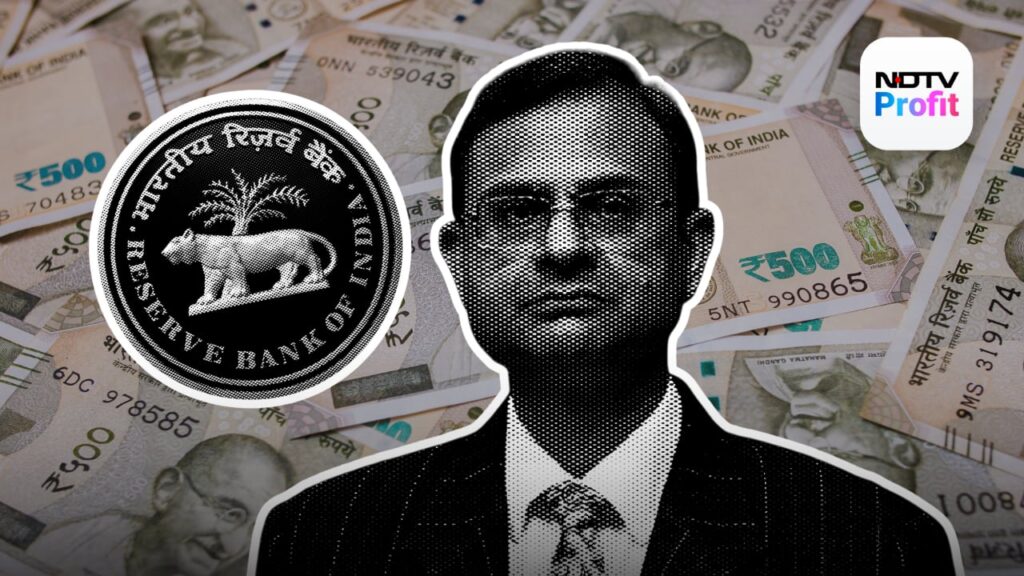
RBI Governor Sanjay Malhotra On Rupee Levels: No Red Line At 90 Or 91
In a recent exclusive conversation with NDTV Profit, RBI Governor Sanjay Malhotra provided clarity on the central bank’s approach to managing the rupee, emphasizing that there is no specific rupee level, including 90 to the dollar, that the RBI targets. This statement comes at a time when the Indian currency has been under significant pressure due to global economic factors and the strengthening US dollar.
The Governor’s statement underscores the RBI’s role in the foreign exchange market, primarily focused on ensuring orderly market conditions rather than defending a particular value of the rupee. This approach is crucial for maintaining the stability of the Indian economy, especially considering the impact of currency fluctuations on Indian stock market sentiment and the overall economic landscape.
Understanding the RBI’s Intervention Policy
The RBI intervenes in the currency market to prevent excessive volatility that could disrupt economic activity. This intervention is not aimed at achieving a specific exchange rate but rather to smoothen out large fluctuations that could have adverse effects on the economy. The Governor’s clarification is significant, as it indicates the RBI’s commitment to a flexible exchange rate regime, allowing market forces to determine the value of the rupee, with the central bank playing a supportive role to maintain stability.
This approach is in line with the practices of other major central banks, which also intervene in the foreign exchange market to mitigate extreme currency movements. However, the RBI’s actions are carefully considered to avoid perceptions of currency manipulation, which could attract unwanted attention from global trade partners and international financial institutions.
Implications for Indian Investors and Traders
For Indian investors and traders, the RBI Governor’s statement provides valuable insight into the central bank’s thinking on currency management. It suggests that investors should not speculate on the rupee reaching a specific level, such as 90 or 91 to the dollar, as a trigger for investment decisions. Instead, they should focus on the underlying fundamentals of the economy and the impact of global economic trends on the Indian currency.
Moreover, the emphasis on reducing volatility highlights the importance of risk management strategies for investors, especially in times of high uncertainty. Diversification and hedging against currency risks can be crucial for protecting investments and achieving long-term financial goals.
Global Economic Factors and the Rupee
The rupee’s value is influenced by a myriad of global economic factors, including interest rate decisions by major central banks, commodity prices, and geopolitical tensions. The strengthening of the US dollar, in particular, has been a significant factor affecting the rupee, as a strong dollar tends to weaken emerging market currencies.
Investors and traders should closely monitor these global developments, as they can have a profound impact on the forex market and, by extension, the Indian economy. The RBI’s stance on not targeting a specific rupee level underscores the complexity of managing a currency in a globally interconnected financial system.
Conclusion: Navigating Currency Markets with Insight
In conclusion, the RBI Governor’s clarification on the central bank’s approach to the rupee provides important context for Indian traders and investors. By understanding that the RBI’s intervention is aimed at reducing excessive volatility rather than defending a specific exchange rate, market participants can make more informed decisions. This insight, combined with a deep understanding of global economic trends and their impact on the rupee, is essential for navigating the complex and often volatile world of currency trading.
As the Indian economy continues to evolve and integrate into the global financial system, the management of the rupee will remain a critical aspect of economic policy. The RBI’s flexible approach, coupled with its commitment to maintaining stability and orderly market conditions, will be key to supporting the growth and development of the Indian economy in the face of global challenges.