Google’s Willow quantum chip claims quantum advantage—here’s what it means for you and India’s tech journey.
Imagine you’re trying to read a book, but someone tells you that a super-fast machine can read not only that book—but every possible variation of it—at the same time. That’s roughly the wow-factor behind the primary keyword: quantum advantage. And with Google’s announcement of its Willow quantum chip, we’re now inching far closer to that sci-fi-sounding future.
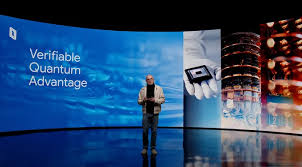
You might be thinking: “Great—what does this mean for me?” Whether you’re a tech-curious professional, a student fascinated by the next frontier, or someone simply tracking what will shape the digital economy in India and beyond, this breakthrough at Google’s quantum computing unit opens doors—and raises questions.
In this article I’ll walk you through what happened, why it matters, where we are in the journey, what to keep an eye on—and (yes) what it doesn’t mean yet. No tech-jargon overload, just friendly explanation from someone who’s been watching this space for years.
What Exactly Happened?
The Breakthrough in Simple Terms
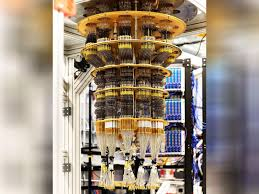
At its core: Google’s Quantum AI team unveiled the Willow chip, a quantum processor that can perform a benchmark calculation in under five minutes, which Google estimates would take the world’s fastest classical supercomputers about 10 septillion years (that’s 10^25 years) to match.
What makes this especially notable:
- It used a 105-qubit architecture (according to public sources).
- It showed that as more qubits are added, the error rate decreases—a long-standing problem in quantum hardware.
- It claimed to cross a key threshold in fault-tolerant quantum computing called “below threshold” error correction.
Why It Gets Called “Quantum Advantage”
One of the secondary keywords to understand here: quantum advantage (and of course related to it: quantum supremacy). To simplify:
- Quantum supremacy means a quantum machine does something that no classical machine can reasonably.
- Quantum advantage means a quantum machine does a useful task better than a classical one. F
Google’s claim with Willow lands somewhere in that territory. They’re saying: “Yes—we’ve done something classical machines cannot match in timeframe.” Whether it’s useful yet is a different matter, which we’ll cover later.
In plain terms, Google’s Willow chip crossed a milestone: much faster than classical for a special benchmark, and a long-standing hardware hurdle (error rate scaling) seems to be tackled.
Why This Matters—Beyond the Headlines
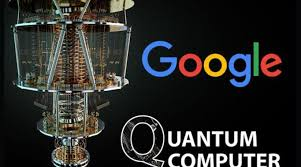
Big Picture Implications for Tech & India
- AI and Big Data: Quantum computers offer paths to generate new kinds of data sets, simulate materials or molecules, and accelerate AI training. Google explicitly mentions these.
- Industry & economy: If quantum systems become practical, sectors like pharmaceuticals (drug discovery), energy (fusion), finance (risk modelling) and materials (battery tech) co-benefit.
- India’s tech ecosystem: For India’s growing startup & research scene, this means quantum technology moves from theoretical labs to road-map reality. Indian talent, policy frameworks, academic curricula all need to gear up.
- Security & cryptography: One headline you’ll see: “Does this mean quantum will break all encryption now?” Short answer: not yet. But it accelerates the urgency for quantum-safe cryptography.
What’s Changed vs. What Hasn’t
What has changed: hardware progress is visibly moving. Error rates improving. Benchmarks achieved. Momentum.
What hasn’t yet: practical, wide-scale, commercial quantum applications are still years away. Many tasks still suit classical computing just fine.
The Willow breakthrough matters because it turns quantum computing a little less “future science” and a little closer to “near-term potential.” For India and globally, it signals we should start paying attention now—not ten years later.
How to Understand the Tech—Without Getting Lost
The “Cooking” Analogy
Think of classical computing like cooking with a single stove and pot. You can make a lot of dishes, but you can’t cook a hundred dishes at once unless you have many pots and stoves. Quantum computing is like a kitchen with super-pots that can cook multiple dishes simultaneously—not because they’re bigger, but because the cooking rules are fundamentally different (quantum superposition, entanglement).
Google’s Willow is saying: “We’ve got super-pots that not only cook multiple dishes, but they’re pretty stable, and we reduced the burnt outcomes (errors).”
Key Concepts Made Simple
- Qubit: The quantum version of a bit. Classical bit = 0 or 1. Qubit can be both (and more) via superposition.
- Error correction: Classical bits are stable; qubits are fragile. As you add more qubits, previously error rates ballooned. Willow shows scaling might now reduce error rates.
- Benchmarking task: Google used “random circuit sampling” (RCS) or similar tasks to test the quantum chip’s performance against classical.
- Real-world utility vs benchmark utility: Doing a benchmark better is exciting—but real utility means solving problems people care about.
Indian Reader’s Example
Let’s say you’re analysing weather patterns for monsoon predictions in India. With classical supercomputers, you might simulate thousands of variables, but some models remain too heavy. A quantum computer (future-stage) might simulate more variables, potential outcomes, and paths in a fraction of time—letting meteorologists issue more precise warnings. Willow is a step toward that kind of future, though it’s not yet doing monsoon modelling at scale.
Willow’s advance is less about cooking dinner faster and more about designing a whole new kitchen that may cook dinners we couldn’t even think of cooking before. The hardware move matters a lot.
What It Does Not Mean (Yet)—Avoiding Hype
Don’t Fall for These Over-claims
- “Quantum will replace all classical computers tomorrow.” Nope—classic still rules for daily tasks.
- “Your encrypted data is now vulnerable.” Not yet. Despite the jump, Willow can’t break major encryption standards.
- “Quantum business applications right now.” Not yet. Real-world quantum advantage for business is still a horizon.
Why Caution Is Needed
- The tasks solved by Willow are still benchmarks, not full end-user problems.
- Scaling remains enormous: to reach widespread use, you’ll need thousands or millions of logical qubits and extremely low error rates.
- Infrastructure, software, algorithms—all need to catch up. Hardware is just one piece.
Willow doesn’t mean quantum has “arrived” in everyday life. It means quantum is stepping into the “arriving” phase. The flights of fancy can wait—first we land the plane.
What This Means For You (As a Reader in India)
If You’re a Student or Young Professional
- Consider quantum computing basics in your learning path—understanding qubits, quantum algorithms, error correction will increasingly matter.
- Universities and institutes in India may ramp up courses, projects, internships in quantum tech.
- Start thinking multi-disciplinary: physics + computer science + mathematics ± domain (life sciences, energy, finance).
If You’re in Tech/Entrepreneurship
- Keep an eye on quantum-enabled startups and collaborations (India + global).
- Explore what quantum means for your domain: e.g., quantum in supply chain, materials, energy efficiency.
- Prepare the mindset: classical + quantum hybrids might be the norm for a while.
If You’re an Investor or Strategist
- View this as a signal: quantum is transitioning from “nice to have” to “must monitor.”
- But don’t chase quantum hype alone—look for companies with clear plans, partnerships, real use-cases.
- In India, watch government policy, quantum infrastructure development, talent ecosystem—these will determine local success.
Whether student, startup founder, or strategist, treat this moment as a “prepare now” phase. Quantum isn’t yet your daily tool—but it’s getting far closer.
What Comes Next? The Roadmap Ahead
Here are key milestones to track over the coming years:
- Better Logical Qubits: Moving from physical qubits to fault-tolerant logical qubits.
- Useful Quantum Algorithms: Algorithms that solve real domain-specific problems better than classical systems (e.g., molecular simulation for drugs, complex optimization).
- Hybrid Systems: Classical-quantum integrations where each does what it’s best at.
- Ecosystem Build-out: Quantum clouds, developer tools, India-specific quantum applications.
- Regulation & Security: As quantum grows, so do risks in cryptography, national security, intellectual property.
The journey ahead resembles a marathon: Willow’s a strong starting surge—but endurance, strategy and ecosystem will determine the finish.
Some Practical Tips for Futures-Minded Readers
- Start small and early: Even if you’re not coding quantum chips, read up on quantum principles, registers, gates—get fluent in the language.
- Build cross-skills: Quantum algorithms often draw from linear algebra, probability, graph theory—solid math pays off.
- Watch for Indian opportunities: Government grants, university programmes, industry collaborations may open doors.
- Be aware of spin: When quantum breakthroughs are announced, check whether it’s a benchmark or a real-world tool.
- Stay patient—but curious: The quantum timeline may feel slow, but being early pays off.
H3 Summary: Treat quantum like an “up-next” tech wave—not a flash mania. The smart people are already preparing while others are still marvelling.
Final Thoughts
The Willow chip from Google represents a very real quantum leap—not only in hardware spec sheets, but in the direction of what a quantum computer could become. For readers in India, this means it’s time to lift the curtain: quantum computing is no longer just hype—it’s edging into reality.
But remember: it’s not yet the magic wand that flips all computing challenges overnight. The practical uses, the mass applications, the full ecosystem—they’re still forming. What this means for you is: stay curious, stay prepared, and don’t wait for the wave to hit you—position yourself as part of the wave.
What part of quantum computing excites you the most—AI, materials science, cryptography, energy—or something else? Drop a comment below and let’s talk about what you see on the horizon.