“Discover how Piyush Pandey revolutionised Indian advertising with culture-rich storytelling, iconic campaigns and a legacy of creative empathy.”
Have you ever watched an advertisement and found yourself humming the jingle long after it ended? Or repeated a tagline so naturally that you barely noticed you’d adopted it into your everyday talk? That’s the power of framed storytelling—and no one in India captured that magic quite like the legendary advertising maestro Piyush Pandey.
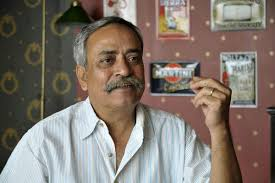
In this blog, we’ll explore the life, legacy and lessons of Piyush Pandey—how he transformed Indian advertising, injected cultural soul into brand communication, and left an imprint that goes far beyond the TV screen. The primary keyword here is “Piyush Pandey”, and we’ll weave in secondary and LSI keywords naturally as we go.
Whether you’re a young professional in marketing, a creative seeking inspiration, or simply curious how brands connect with hearts and minds—this piece is for you. Let’s dive in like two old friends caught in conversation, peeling back the layers of a man who made India speak its own brand language.
The Man Behind the Brand – Who Was Piyush Pandey?
From a simple profile sheet you’d miss in a crowd to becoming the voice of a nation’s brands, Pandey’s journey is like a favourite underdog story we all root for.
Early life & roots:
- Born in Jaipur in 1955 (some sources say), Pandey came from a family where creativity and discipline sat side by side.
- Before advertising, he dabbled in tea-tasting and even played domestic-level cricket for Rajasthan.
- In 1982, he joined the global agency Ogilvy India (originally Ogilvy & Mather) as a client-services executive.
Why he mattered:
- He understood that Indian audiences weren’t a monolithic English-speaking elite. They were vernacular, regional, emotional—and he gave them ads that spoke their language.
- He didn’t just produce campaigns, he rewrote the grammar of Indian advertising. As one colleague put it: “He changed not just the language … he changed its grammar.”
Major honours:
- Recipient of the civilian honour Padma Shri in 2016.
- Winner of the LIA Legend Award in 2024.
- Passed away in October 2025, at the age of 70, marking the end of an era.
Key takeaway:
Piyush Pandey’s is a story of transformation—from product-selling to people-connecting; from English to emotion-rich Hindi/vernacular; from the brand being king to the audience being the story.
The Signature Campaigns that Became Culture
Great advertising doesn’t just sell. It lingers. It becomes part of your vocabulary, your memory, your rituals. Pandey gave us many of those.
The Fevicol Coat That Wrapped India
The classic for the bonding adhesive brand Fevicol—horses, tension, that idea of “nothing can separate them”—became as much a cultural metaphor as an ad.
By rooting the creative in something India knows—stickiness, trust, relationships—Pandey made a product meaningful.
Cadbury’s “Kuch Meetha Ho Jaye”
With the chocolate brand Cadbury, Pandey didn’t just sell chocolate; he sold celebration, joy, emotion. That’s how brands transcend commodity status.
Asian Paints’ “Har Ghar Kuch Kehta Hai”
He made a paint job qualify as self-expression for the Indian household. The message: your home reflects you. Simple yet powerful.
The Vodafone Pug & The Election Slogan
- The iconic pug-dog campaigns for Vodafone reached pop-culture status.
- And the political waters were stirred when Pandey authored the slogan “Ab ki baar Modi sarkar” for the 2014 elections—showing his work extended beyond commercial brands into national narrative.
Key takeaway:
The magic wasn’t in the brand—it was in the story. Pandey wanted to see an Indian product not just advertised, but felt. He turned ads into moment-markers of culture.
The Method Behind the Magic – What Set His Approach Apart
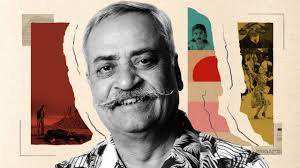
If Pandey’s campaigns had a blueprint, here are the cornerstones.
Listening to the Streets
He didn’t assume. He observed. He’d visit local chai-taps, scribble insights in a red diary at Ogilvy, and let vernacular life shape the pitch.
Language & Identity
Before, many Indian ads looked global—snazzy English, western tone. Pandey insisted on authenticity: ads that spoke Hinglish, that spoke Indian. e
Emotion Over Features
A table of features? Not enough. He pushed for emotional connection—why you feel rather than what you get. The bond, the home, the celebration.
H3: Mentorship & Culture
He didn’t hoard the spotlight. Under his leadership, Ogilvy India became a talent factory. He believed in building people, not just campaigns.
Key takeaway:
Behind the laughter-lines and moustache was discipline: of observation, of culture, of the craft. Pandey taught that creative work is stretched from the street to the script.
Why His Legacy Matters for You Today
Even if you’re not in advertising, Pandey’s principles carry lessons for any communicator, professional, or creative.
In Marketing & Branding
- Build stories, not specs. If your audience remembers why you exist, you win.
- Be context-sensitive. India is not one audience—it’s many worlds.
- Respect vernacular and roots. Your brand doesn’t have to sound global to succeed locally.
In Career & Creativity
- Real insight comes from observing real life: go beyond assumptions.
- Mentorship wins. The best leaders lift others.
- Adapt with humility. He transitioned from a client-services guy to global creative head—through curiosity and service.
In Life
- Be authentic. Pandey’s moustache, voice, charisma—they were him, not a mask.
- Leave something that lasts. The campaigns remain because they touched people’s daily lives.
- Embrace the ripple. Today’s small insight becomes tomorrow’s culture-shift.
Key takeaway:
Even if your job isn’t making ads, you’re telling stories—your brand (you), your team, your product. Pandey’s legacy is a master-class in that craft.
Seven Mistakes We Can Learn from—So We Don’t Repeat Them
Here are some anti-patterns that Pandey’s career implicitly warns us of.
- Ignoring the local voice — if you paste a global template, you risk being irrelevant.
- Feature-only messages — specs don’t stick; stories do.
- Skipping observation — assumptions blind you to real human truth.
- Leaders hogging the light — creativity thrives when shared.
- Being “safe” forever — evolution comes with risk; Pandey changed the game.
- Treating brands as commodities — they’re emotional equity.
- Forgetting legacy — short-term wins fade; impact endures.
Key takeaway:
Every misstep is a chance. Pandey turned many into stepping stones—and we can too, by noticing what didn’t work and choosing differently.
Final Reflections – The Era That Ended & the Milestone That Lives On

With Pandey’s passing in October 2025, the advertising industry lost a titan.Yet his legacy isn’t buried—it’s embedded in the visuals you’ve seen, the jingles you hum, the taglines you quote.
Why it matters globally:
- Indian advertising now speaks with a rhythm, a tone, a home-grown accent.
- Creatives across the world study his campaigns for how cultural authenticity matters.
- He proved that commercial work can still be meaningful.
For you, the reader:
- Let his story remind you: it doesn’t take being born a genius to make genius—it takes curiosity, empathy, craft.
- Let your “ads” (messages, projects, communications) feel rooted in someone’s life, not just your brief.
- Celebrate the small voice—perhaps whispered at a tapri or office stairwell—it might shape the big campaign of you.
Key takeaway:
Piyush Pandey may be gone, but his brand of human-first, culture-rich, heart-led storytelling lives on. And so can our versions of it.
CTA
What’s one advertisement you remember years later—and why? Drop it in the comments. Let’s talk about how it made you feel, what made it stick, and how we can apply that insight in our own lives. Share this post if it moved you. Let’s keep the legacy alive.