📌 Introduction: The Payment Habit We Didn’t Realise Was Changing
Think about the last time you paid a vegetable vendor, booked a cab, or ordered dinner. Chances are, you didn’t pull out a wallet. You scanned a QR code, tapped “Pay,” and moved on with life.
Now imagine doing the same — but on credit.
That’s exactly what the Google Pay Flex Axis Bank Credit Card brings to the table. It quietly changes how Indians borrow, spend, and repay — without changing the habit we’ve grown addicted to: UPI.
In a country where UPI already feels like muscle memory, Google Pay’s latest move blurs a powerful line — instant payments and formal credit. For some, it’s convenience. For others, a potential debt trap. For the ecosystem, it’s a defining moment.
Let’s unpack what this card really is, how it works, who it benefits, and where you should tread carefully.
📚 What Is the Google Pay Flex Axis Bank Credit Card?
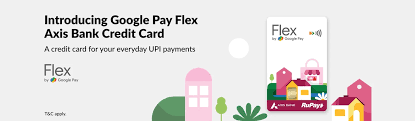
At its core, the Google Pay Flex is a co-branded digital credit card launched by Google Pay and Axis Bank, built on the RuPay network. What makes it different is not the credit itself — it’s how you use it.
Unlike traditional credit cards that require a swipe, tap, or card number entry, this one lets you:
- Scan any UPI QR code
- Pay like a regular UPI transaction
- But the money comes from your credit line, not your bank balance
Think of it as UPI with a safety net — or a temptation, depending on how disciplined you are.
Why This Matters in India
India has:
- 300+ million UPI users
- Millions who avoid credit cards due to complexity
- A young population comfortable with apps, not paperwork
This card doesn’t ask you to “learn credit.”
It quietly inserts credit into a system you already trust.
🧠 What You Should Remember
This isn’t a new payment method — it’s a new behaviour disguised as an old habit.
📚 How UPI and Credit Integration Works with FLEX
Traditionally, UPI meant instant debit. Your bank balance went down the moment you paid.
With FLEX:
- UPI stays the interface
- Credit card becomes the funding source
The Simple Flow
- Open Google Pay
- Scan a QR code
- Select Flex Credit as payment method
- Pay — rewards applied instantly
- Repay later as per credit cycle
No card numbers. No OTP overload. No wallet switching.
Why RuPay Matters Here
Because RuPay is deeply integrated with India’s payment infrastructure, it allows:
- Credit-linked UPI payments
- Wider merchant acceptance
- Lower transaction costs than global networks
This is India’s answer to “Why can’t UPI work like a credit card?”
🧠 What You Should Remember
The genius of FLEX is that nothing feels new, even though everything is changing underneath.
📚 Instant Rewards: The Psychological Hook
One of FLEX’s smartest features is instant cashback or rewards.
Traditional credit cards reward you later — at billing time. FLEX rewards you at the moment of payment.
Why does that matter?
Because instant gratification:
- Feels more real
- Encourages repeated use
- Reduces friction in decision-making
It’s the same psychology behind instant UPI confirmations — now applied to credit.
But here’s the catch:
Instant rewards can mask long-term costs if you overspend.
🧠 What You Should Remember
If rewards make you spend more than planned, they’re not rewards — they’re bait.
📚 Zero-Cost Digital Issuance: Credit Without Friction
Applying for a traditional credit card feels like:
- Forms
- Calls
- Waiting
- Rejections without explanation
Google Pay Flex changes that experience completely.
What Google Claims
- Zero joining fee
- Fully digital onboarding
- Virtual card issued in minutes
- Application inside Google Pay app
- Phased rollout with waitlist
For first-time credit users, this matters. It removes the fear of:
- Paperwork
- Sales calls
- Hidden clauses
But friction exists for a reason — it forces caution. When credit becomes too easy, misuse follows.
🧠 What You Should Remember
Easy credit is powerful. Too easy credit is dangerous without awareness.
📚 Pocket Money Feature: Teaching Kids Digital Discipline
Alongside FLEX, Google Pay launched Pocket Money, built on the UPI Circle framework.
This feature allows:
- Parents to set monthly limits (up to ₹15,000)
- Approve transactions individually
- Supervise children’s spending digitally
In an age where kids learn QR codes before algebra, this is significant.
It’s not just a feature — it’s a signal:
Digital finance education must start early.
🧠 What You Should Remember
Money habits are formed young. Digital supervision beats cash control.
📚 Merchant Tools and AI Advertising: Why Small Businesses Matter
Google Pay didn’t stop at consumers.
For merchants, new features include:
- Post-payment customer ratings
- AI-generated ads inside Google Pay for Business
- Better visibility after transactions
This creates a loop:
- Customers pay on credit
- Merchants get feedback and visibility
- Platform captures data and engagement
For kirana stores and small vendors, this could mean more sales, but also more platform dependence.
🧠 What You Should Remember
Every “free tool” costs data — merchants must weigh visibility against dependency.
📚 Risks You Must Understand (Especially for Indian Users)
SEBI and exchanges repeatedly warn Indian investors and traders about misuse of financial products. While FLEX is not a trading product, the psychology overlaps.
Common Risks
- Overspending because UPI doesn’t “feel” like credit
- Ignoring billing cycles and interest rates
- Treating credit as income
- Falling for “buy now, worry later” mindset
Data already shows:
- 9 out of 10 F&O traders lose money
- Average losses near ₹50,000
- Transaction costs eat profits silently
Different product — same human behaviour.
🧠 What You Should Remember
If you don’t track credit, credit tracks you.
📚 Regulatory and Consumer Awareness Notes (Simplified)
While platforms like Google Pay partner with regulated entities like Axis Bank and RuPay, users must remember:
- Credit products are regulated
- Complaints can be escalated via SEBI SCORES (where applicable)
- Always read risk disclosures
- Avoid unsolicited tips or guaranteed-return claims
- Never share OTPs, logins, or trading credentials
Convenience should never replace caution.
🧠 What You Should Remember
Digital finance works best when awareness travels faster than convenience.
📚 Impact on India’s Digital Payments Ecosystem
The Google Pay Flex Axis Bank Credit Card signals three big shifts:
- UPI is no longer just debit
- Credit is becoming invisible
- Platforms are becoming financial gateways
This could:
- Increase formal credit penetration
- Help small-ticket borrowers
- Normalize responsible borrowing
Or:
- Encourage impulse debt
- Blur spending accountability
- Create silent credit stress
The outcome depends not on technology — but on how Indians use it.
🧠 What You Should Remember
Technology doesn’t create habits. It amplifies existing ones.
📣 Final Thought & Call to Action
The Google Pay Flex Axis Bank Credit Card is neither good nor bad by default. It’s powerful — and power demands discipline.
If you treat it like:
- A budgeting tool → it helps
- A spending shortcut → it hurts
Before you scan that QR code on credit, pause and ask:
“Would I still pay if this came from my bank account today?”
💬 Would you use UPI on credit, or does it feel like crossing a line? Share your take.