Introduction to a New Era in European Defence
The landscape of European defence is undergoing a significant transformation. For 75 years, the continent has relied heavily on US power to underwrite its security. However, with the shifting priorities of the US, particularly under the presidency of Donald Trump, this premise is being questioned. The US’s National Security Strategy explicitly states that European countries must assume ‘significantly greater responsibility’ for their own defences, marking a major strategic shift.
The Rise of China and Its Implications for Europe
The US now views China as its primary long-term competitor, which means Europe must prepare for a future where US support is increasingly reduced, delayed, or politically conditional. The conflict with Iran has further distracted the US from the needs of its European allies, exposing the limits of Europe’s own military capabilities. This situation necessitates that Europe enhance its defence capabilities to deter potential aggressors, with Russia being a primary concern.
Europe’s Defence Spending and Capabilities
Since 2022, there has been a significant increase in European defence spending. The EU as a whole has reached the target of spending 2% of its GDP on defence, with the EU, UK, and Norway collectively spending about €485 billion annually, up from €305 billion in 2022. However, preparation must extend far beyond procurement. Deterrence in this decade requires political cohesion and whole-of-society resilience, not just hardware.
Russia’s Military Capabilities and Strategies
Russia’s army, despite being described as battered and exhausted, cannot be underestimated. Moscow has replenished its ranks and increased artillery shell production to over 4 million rounds a year, supplemented by imports from North Korea. Russia has adapted to attritional warfare, scaled up drone and missile production under sanctions, and embedded nuclear blackmail into its doctrine. This includes integrating cyber operations, sabotage, organised crime networks, and other forces into a continuum of conflict.
Europe’s Dependence on US Tech and Expertise
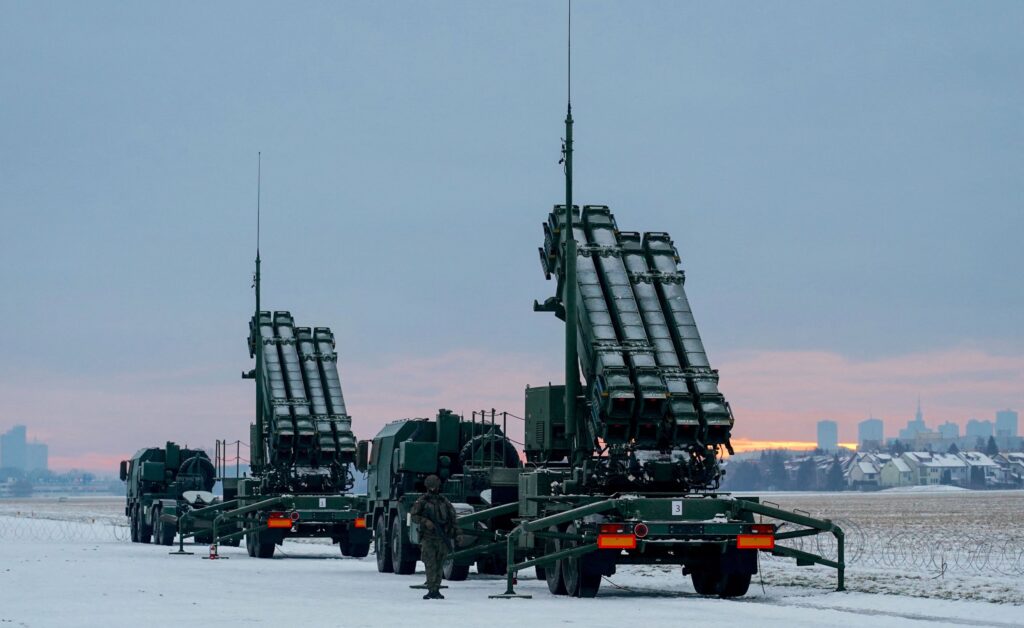
Europe still heavily depends on US technology and expertise, particularly in air and missile defences, which remain patchy across the continent. The UK has almost no land-based air defence coverage, and intelligence, surveillance, and reconnaissance are US-dominated. American satellite architecture provides much of Nato’s high-end real-time battlefield awareness, with Europe’s integration being fragmented and nowhere near the US scale.
Nuclear Deterrence and the Need for a European Doctrine
Nuclear deterrence is the most sensitive gap, with Britain and France maintaining credible strategic arsenals but no clearly defined European nuclear doctrine beyond the US umbrella. Russia, meanwhile, has tactical nuclear weapons designed for battlefield use, an escalation layer that the UK eliminated decades ago. If Europe were to fully replace the US, defence spending would need to hit 8 to 10% of GDP, which looks politically unrealistic.
Integrating Ukraine into European Defence Structures
The war in Ukraine has challenged the assumption that smaller, professional forces with advanced systems can compensate for scale. Drones and AI adaptation are now crucial, with Ukraine ahead of both Europe and the US in battlefield innovation. Integrating Ukraine more closely into European defence structures is not charity but strategic necessity, as it brings valuable experience and capabilities to the table.
Manpower and the Challenge of Sustained Combat
Manpower remains a challenge across Europe, with the problem not being an absence of capability but a shortage of depth—the ability to sustain combat over time. The British Army, for example, has fallen below 70,000 personnel, the smallest it has been since the eighteenth century, with nuclear deterrents absorbing roughly a quarter of the UK’s defence budget.
Political Will and Public Consent
Ultimately, Europe’s biggest vulnerability may not be hardware but political will. Deterrence requires sustained investment over years, likely at the expense of other priorities. It may require higher taxes or constrained welfare spending, issues that few European leaders have openly discussed with their publics. In places like the Baltics, Nordics, and Poland, proximity to Russia has created a ‘whole-of-society’ resilience culture, but elsewhere, the political class remains more comfortable with negotiation and compromise than with preparing people for a future conflict.
Conclusion and the Path Forward
Europe can deter Russia if investment continues and coordination deepens. However, the most dangerous period is before that threshold is reached. Russia may look to test Nato cohesion through cyber operations or calibrated military intimidation. Nuclear signalling would also likely intensify. Europe needs to prepare accordingly, continuing and increasing investment in manpower, air defence, munitions, and mobility, as well as enhancing intelligence integration and preparing its people. Economically, this is achievable, given that the combined economy of Nato’s European members is roughly five times larger than Russia’s in purchasing power parity terms, and their troops exceed Russia’s military by several hundred thousand. The issue is coordination, political resolve, and public consent.
For more information on European defence spending and its implications, or to understand the role of US security guarantees in European defence, visit our website. We also provide insights into Russia’s military capabilities and the importance of nuclear deterrence in the current geopolitical landscape.