The Murals of César Chávez: A Symbol of Cultural Heritage
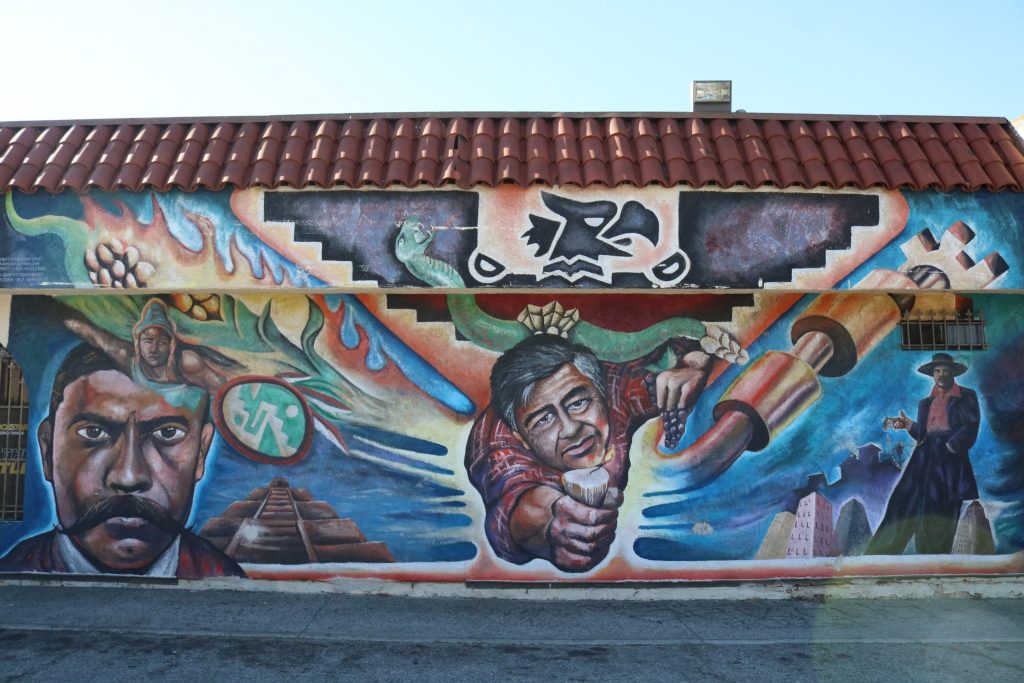
The murals of César Chávez have been a part of Eastside’s cultural landscape for decades, serving as a reminder of the Chicano movement and the struggle for farmworkers’ rights. However, recent allegations against Chávez have forced the community to re-examine his legacy and the murals that bear his name.
For J.D. ‘Zender’ Estrada, the artist behind many of the murals, the issue is not just about Chávez, but about the cultural heritage that the murals represent. ‘If you look at the murals in context, most of the murals have a lot to do with culture and struggle and resistance,’ Estrada said.
The History of the Murals
Estrada’s murals were commissioned by the Cesar Chavez Foundation in the 1990s, with the goal of highlighting the Chicano movement and its ties to the Eastside. The murals were painted on the sides of buildings, including the Maravilla Meat Market, and quickly became a part of the community’s cultural identity.
One of the murals, ‘Rescate,’ is considered a Vintage Original Art Mural (VAM) under the City of Los Angeles’s 2013 Mural Ordinance. This means that any major changes to the mural must first be approved by the City’s Department of Cultural Affairs, even if it is submitted by the artist themselves.
The Impact of the Allegations
The recent allegations against Chávez have sparked a debate about how to handle his legacy, including the murals that bear his name. Some have called for the murals to be removed or altered, while others argue that they should be preserved as a part of the community’s cultural heritage.
Estrada believes that any changes to the murals should be collaborative and handled with care to preserve the artwork’s original intent. ‘I would love to include the Filipinos that were all part of the struggle,’ Estrada said, referring to the Filipino farmworkers who initiated the historic 1965 Delano grape strike.
Estrada has been in contact with local officials to propose changes to his artworks that preserve their original intent and hopes that the offices will work with him to provide the resources he needs. ‘We need to step away from glorifying or putting them on pedestals,’ said Anabel Meza, a community member who believes that historical figures should be viewed in a more nuanced way.
The Future of the Murals
The future of the murals is uncertain, but Estrada is committed to preserving their cultural significance. ‘I would love to work with officials to restore the murals I have painted across the region in a meaningful way,’ Estrada said.
The Maravilla Meat Market, where one of the murals is located, has expressed its commitment to working with Estrada to determine the future of the mural. ‘Our murals are not random images. They are custom, commissioned works that represent history, culture, struggle, and identity,’ the market said in a statement.
As the community continues to grapple with the allegations against Chávez, it is clear that the murals will remain an important part of Eastside’s cultural heritage. Whether they are altered or preserved, the murals will continue to serve as a reminder of the struggle for farmworkers’ rights and the cultural identity of the community.
For more information on the Chicano movement and its impact on Indian American culture, visit https://sharemarketcoder.in/?s=Chicano+movement+and+Indian+American+culture. To learn more about the history of the murals and the artist behind them, visit https://sharemarketcoder.in/?s=history+of+the+murals+and+the+artist.