Airbus A320 grounding explained: Why EASA issued an emergency directive, how ELAC malfunction and solar radiation caused risks, and how it impacts India.
Imagine this.
You’re cruising at 35,000 ft in a modern Airbus A320 — the world’s most popular single-aisle aircraft — when suddenly the airplane dips nose-down for a moment.
No turbulence.
No warning.
Autopilot still ON.
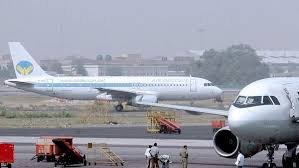
This shocking real-life event is exactly what triggered the global Airbus A320 grounding, an emergency directive issued by the European Union Aviation Safety Agency (EASA) that has forced airlines worldwide — including IndiGo, Air India, JetBlue and ANA — to pull thousands of planes for urgent fixes.
If you’ve been seeing headlines about A320 software update, ELAC malfunction, solar radiation glitches, or A320 flight cancellations, this article breaks it all down for you — clearly, simply, and with real-world examples that matter to Indian passengers too.
Let’s dive in.
✈️ Airbus A320 Grounding: What Exactly Happened?
EASA emergency directive
On Friday, aviation regulators across Europe and the U.S. dropped a bombshell:
👉 Up to 6,000 Airbus A320 family aircraft — half the global fleet — must be grounded until a critical flight-control fix is installed.
Why? Because an A320 recently did something no aircraft should ever do:
It pitched downward mid-flight without the pilots touching the controls.
And autopilot stayed engaged the whole time.
This wasn’t turbulence. It wasn’t pilot error.
It was a computer malfunction inside the aircraft’s Elevator Aileron Computer (ELAC) — a system that tells the plane’s wings and tail how to respond to pilot commands.
EASA’s statement was blunt and serious:
“If not corrected, this malfunction could cause unintended elevator movement, potentially exceeding the aircraft’s structural capability.”
That’s regulator-speak for:
Fix this before something catastrophic happens.
💡 What Triggered the A320 Software Upgrade? (The JetBlue Incident)
JetBlue A320 pitch-down
The timeline starts on October 30, 2025:
A JetBlue A320 flying from Cancun to Newark suddenly dipped nose-down while cruising smoothly above 35,000 ft.
Passengers experienced a sharp jolt — 15 were hospitalized.
The flight diverted to Tampa.
The culprit?
A corrupted ELAC computer caused by a software bug — made worse by intense solar radiation.
Airbus engineers later confirmed that the newest ELAC software update contained vulnerabilities. When exposed to high solar activity, some data bits flipped, causing incorrect flight-control inputs.
Think of it like this:
- Your phone freezes when overheated.
- Your computer crashes due to a corrupted file.
- Now imagine that happening to an airplane control computer mid-flight.
Scary? Yes.
Fixable? Also yes.
Once Airbus realized the root cause, they instructed every A320 operator worldwide to perform immediate checks.
What You Should Remember
Solar radiation didn’t break the plane — it corrupted specific data inside a sensitive flight-control computer. A rare event, but serious enough to require worldwide grounding until fixed.
🌞 How Solar Radiation Interferes With Aircraft Electronics
Secondary Keyword: Solar radiation aircraft systems
This part sounds like science fiction — but it’s real.
Former Qantas captain and PhD researcher Dr. Ian Getley explains what happened:
🌋 The Sun sometimes ejects massive bursts of plasma — called Coronal Mass Ejections (CMEs).
When these charged particles hit Earth’s upper atmosphere, they create electromagnetic disturbances.
Above 28,000 ft — the zone where A320s cruise — these disturbances can:
- Flip data bits inside electronic components
- Corrupt memory
- Interrupt control signals
- Confuse sensors
- Trigger incorrect flight-control commands
Aircraft systems are built with multiple layers of protection. But the latest ELAC software, fresh from an update, turned out to be more vulnerable than older versions.
So ironically, the newer system needed the most urgent fix.
What You Should Remember
Solar radiation doesn’t always cause aviation problems — but when it aligns with a software vulnerability, even a stable aircraft like the A320 can misbehave.
🛠️ What Fixes Are Required? (Software vs Hardware)
Secondary Keyword: A320 software update
The Airbus A320 family includes many generations — from classic A320ceo to modern A320neo.
That’s why not every plane needs the same fix.
Here’s how Airbus sorted the fleet:
✔ Older A320 aircraft
Need hardware replacement — swapping the vulnerable ELAC computer for a newer, protected one.
Time required:
⏱ 1–2 weeks (per aircraft)
✔ Newer A320 aircraft (mostly NEOs)
Need a software patch (quick install).
Time required:
⏱ 2–4 hours
Approximately 1,000 aircraft will need the longer hardware job — causing most of the flight disruptions.
What You Should Remember
Most planes will be fixed in hours — a minority will need weeks. But every plane must be patched before flying again, as mandated by EASA and FAA.
🇮🇳 How the Airbus A320 Grounding Impacts India
DGCA India A320 directive
India’s aviation market relies heavily on A320 family aircraft.
Out of 560 A320 family planes in India, around 200–250 are impacted — across:
- IndiGo
- Air India
- Air India Express
DGCA’s role?
Immediately after EASA issued its directive, the DGCA ordered all Indian airlines to complete the software/hardware modification before the next flight of each impacted aircraft.
Status in India (As per latest updates):
| Airline | Aircraft Impacted | Fixes Completed | Flight Impact |
|---|---|---|---|
| IndiGo | ~200 | 143 fixed | No major delays |
| Air India | 113 | 42 fixed | No cancellations, delays possible |
| Air India Express | 25–31 | 4 fixed | 8 flights delayed |
Airlines are racing to complete all work by Sunday evening.
What You Should Remember
India escaped large-scale flight cancellations because airlines acted early — and because most fixes only take a few hours.
🌏 Global Airlines Also Facing Delays & Cancellations
Secondary Keyword: global A320 disruptions
Here’s how the rest of the world is handling the Airbus A320 grounding:
🇺🇸 American Airlines
- 209 aircraft affected
- Most patches done within 48 hours
- Minor delays, no major cancellations
🇯🇵 All Nippon Airways (ANA)
- 30+ aircraft impacted
- 65 domestic flights cancelled
🇺🇸 Delta & United
Minimal impact — only a handful of A321neos affected.
🇪🇺 European carriers
Experiencing short-term disruptions, mostly on short-haul routes.
The disruption is global — but manageable.
What You Should Remember
This incident shows both the fragility of modern software-driven aircraft and the strength of global safety systems working together quickly.
🧪 Why ELAC Matters So Much (Simplified Explanation)
Secondary Keyword: ELAC malfunction
If you’re not a pilot, “Elevator Aileron Computer” may sound unfamiliar.
So here’s the simple version:
The ELAC controls:
- Pitch (nose up/down)
- Roll (left/right banking)
- Stability of the aircraft
- Processing pilot inputs
- Ensuring the aircraft stays within safe structural limits
If ELAC misreads data due to corruption from solar radiation, the aircraft may:
- Pitch down unexpectedly
- Give incorrect trim commands
- Override pilot inputs
- Exceed structural load limits
This is why regulators took an unusually strict action:
👉 Ground all affected A320s before next flight.
Not after a scheduled check.
Not within 7 days.
Not with temporary monitoring.
Before the next takeoff.
That shows how serious the risk was.
What You Should Remember
ELAC is like the brainstem of the aircraft’s control system. Even a small glitch can cause big consequences.
🔧 How Long Will the Airbus A320 Fix Take?
Secondary Keyword: A320 flight delays
⏱ Software Update
2–4 hours per aircraft
Can be done:
- Overnight
- Between flights
- During a technical stop
⏱ Hardware Replacement
1–2 weeks per aircraft
Requires:
- Maintenance hangar
- ELAC module replacement
- Post-installation testing
Global Timeline
Airbus expects:
- 80–90% of fixes completed within 72 hours
- Remaining older aircraft to be fixed in 1–6 weeks
What You Should Remember
You may face minor delays in the next week — but nothing close to the chaos caused by Boeing MAX groundings.
✈️ Is Flying the A320 Still Safe? (Short Answer: Yes)
Secondary Keyword: Airbus safety
Aviation operates on a principle:
“Fix problems before they become accidents.”
The A320 is still:
- One of the safest aircraft in the world
- Operated by hundreds of airlines
- Backed by redundant systems
- Under strict regulatory watch
This incident proved the system works:
- Fault detected
- Incident investigated
- Root cause discovered
- Worldwide directive issued
- Fix rolled out within days
That’s why no A320 operator grounded the full fleet voluntarily — only the affected aircraft.
📣 Conclusion: A Wake-Up Call for the Aviation Software Era
We’ve entered a strange new age in aviation.
Aircraft today are flying computers — sophisticated, efficient, but also vulnerable in new ways.
A tiny software vulnerability, triggered by a burst of solar radiation millions of kilometres away, was enough to shake global aviation for a weekend.
But here’s the positive:
Airlines, regulators, and manufacturers reacted within hours — not months.
Passengers weren’t kept in the dark.
Fixes rolled out immediately.
As passengers, the best thing we can appreciate is this:
Aviation safety is built not on perfection, but on rapid detection, transparency, and correction.
💬 CTA: Your Turn
Have you ever experienced unexpected turbulence or aircraft behaviour mid-flight?
Did the Airbus A320 grounding affect your travel plans?
Share your thoughts — your experience might help thousands of anxious travellers feel more confident.