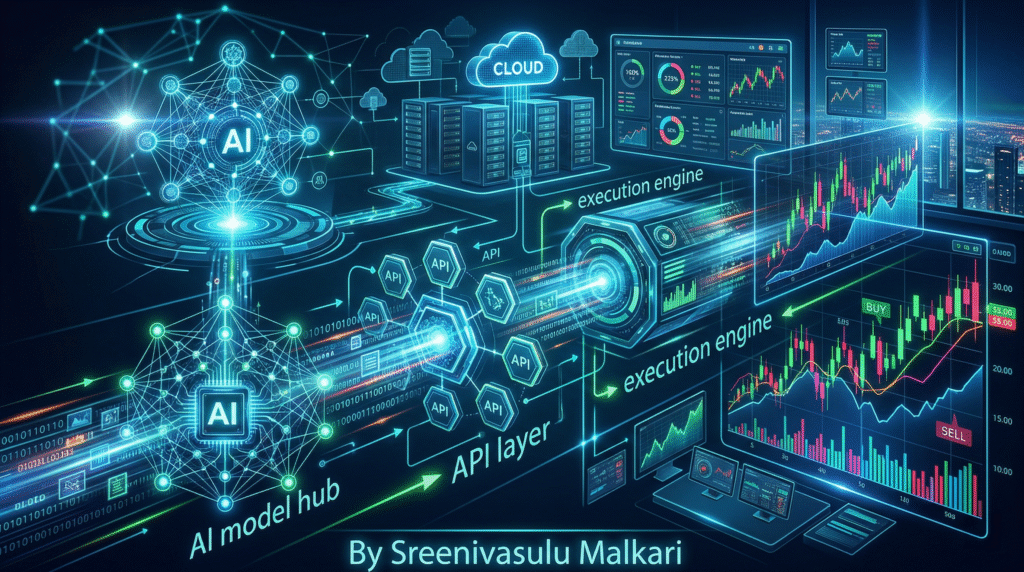
Introduction
Everyone is talking about AI in trading.
From retail investors to institutional desks, the conversation is dominated by:
- prediction models
- signals
- machine learning accuracy
But almost no one is talking about what actually breaks when AI meets real markets.
After 15+ years working on trading infrastructure, APIs, and high-volume market systems, I’ve seen this first-hand:
AI doesn’t fail because of models.
AI fails because of infrastructure, execution, and governance gaps.
The Illusion of Model Accuracy
In isolation, AI models can look impressive.
- 90–95% prediction accuracy
- strong backtests
- optimized strategies
But markets don’t operate in isolation.
They operate in:
- real-time
- high-volume
- latency-sensitive
- regulation-heavy environments
And this is where reality hits.
Where AI Actually Breaks in Trading Systems
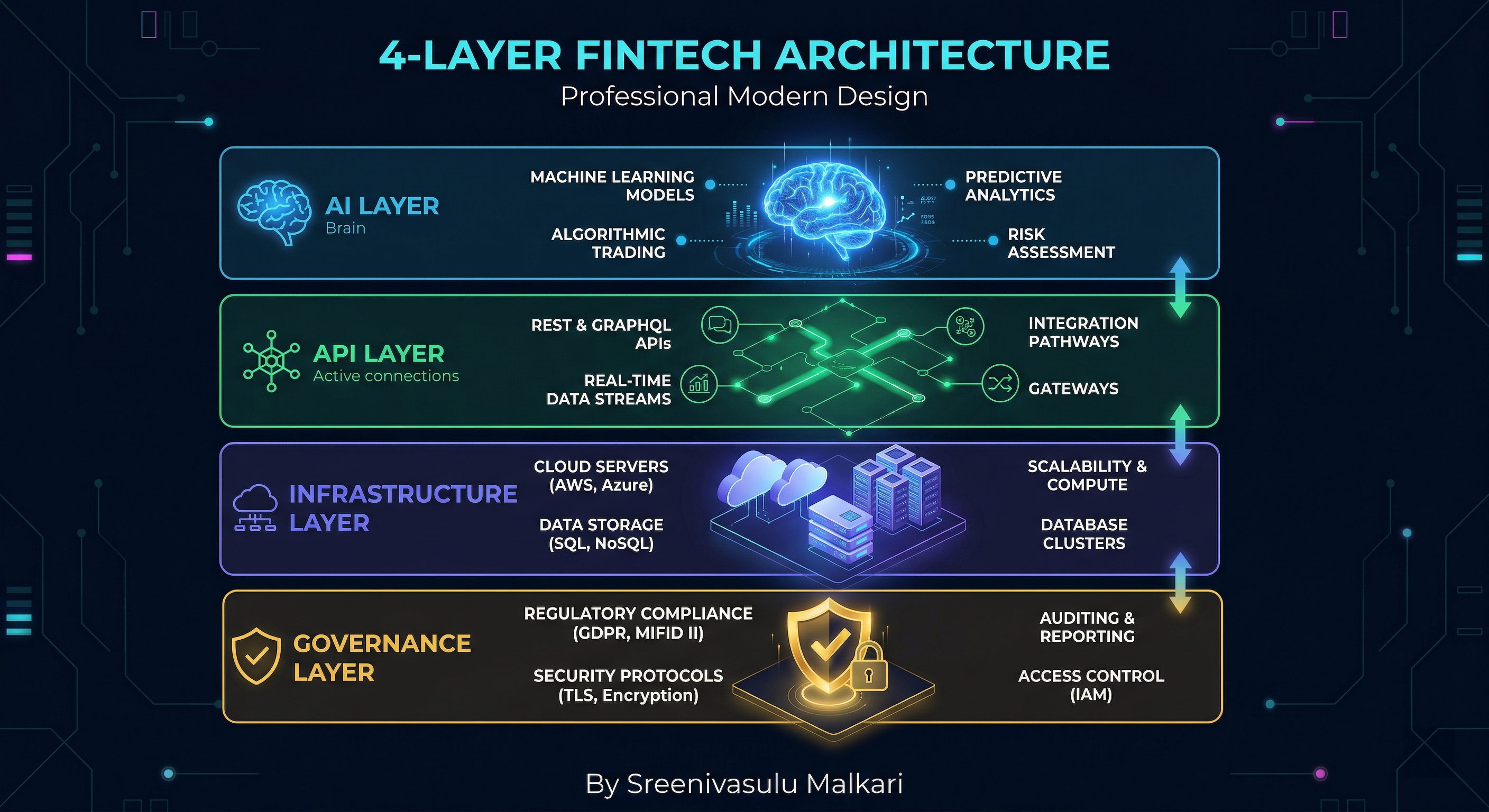
1. Execution Layer Failures
A model might generate the right signal.
But:
- order not executed
- partial fills
- slippage
- exchange rejection
👉 A 95% accurate model becomes irrelevant.
2. Latency Sensitivity
In trading systems:
0.1% latency variation = missed opportunity
Even milliseconds matter.
- delayed API response
- network jitter
- system overload
👉 The market has already moved.
3. API Reliability & Governance
Modern trading systems are API-driven.
If APIs fail:
- orders fail
- data becomes inconsistent
- systems desynchronize
Weak API governance can lead to:
- duplicate orders
- incorrect positions
- systemic risk
4. Infrastructure Constraints
AI systems need stable infrastructure.
But real-world systems face:
- traffic spikes
- volatility events
- hardware limits
- scaling challenges
During extreme market conditions:
systems don’t degrade gracefully — they break.
5. Regulatory & Compliance Gaps
In financial systems:
Compliance is not optional.
AI systems must align with:
- SEBI regulations
- exchange rules
- audit requirements
- risk controls
If not:
👉 the system is not just inefficient — it’s non-compliant.
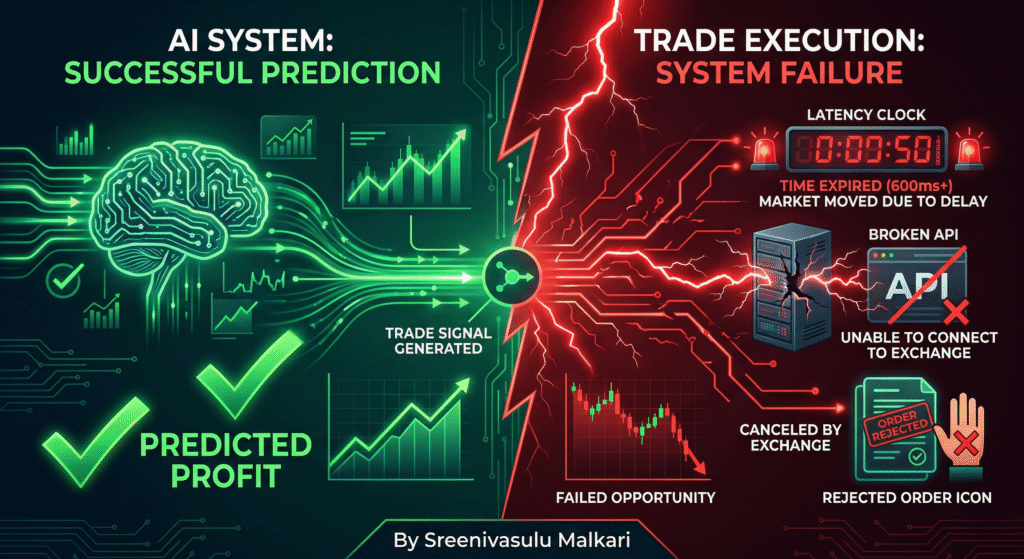
The Real Stack of AI in Trading
To understand this properly, think of AI in trading as a stack:
🔹 AI Layer
- predictions
- signals
- models
🔹 API Layer
- order execution
- market data
- integrations
🔹 Infrastructure Layer
- scalability
- reliability
- fault tolerance
🔹 Governance Layer
- compliance
- risk control
- auditability
The Core Insight
AI is only as strong as the system it runs on.
Not the model.
Not the algorithm.
But the entire system architecture.
Lessons from Real-World Systems
From working on high-volume platforms like:
- Kite (web & mobile)
- Kite Connect API ecosystem
- order lifecycle systems
A few truths stand out:
📌 Stability > features
📌 Execution integrity > prediction accuracy
📌 Governance > speed
The Future: AI-Native Financial Infrastructure
The next wave in fintech is not:
❌ Better trading apps
❌ More indicators
❌ Faster UI
It is:
✔️ AI-native trading infrastructure
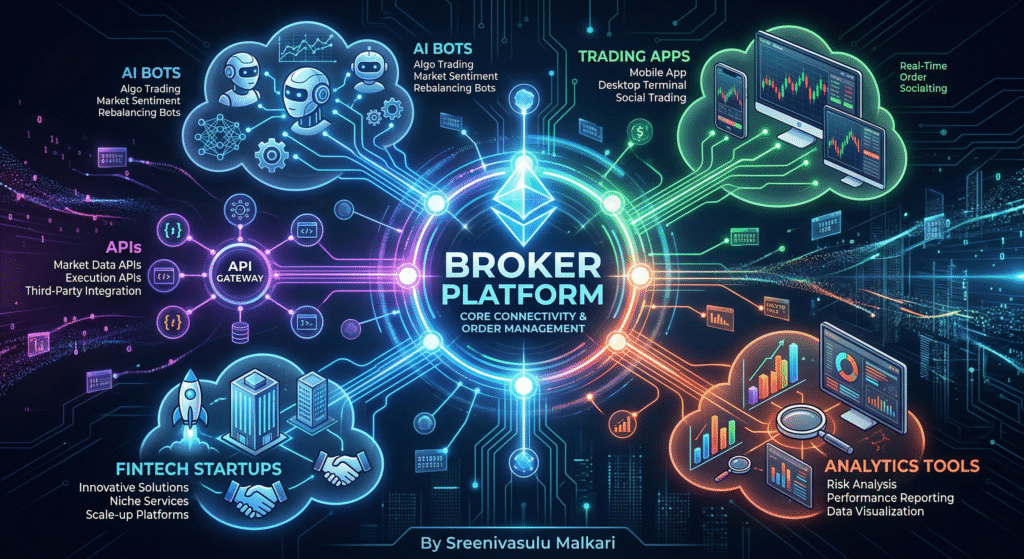
✔️ Broker-as-a-Platform ecosystems
✔️ API-first financial systems
✔️ Compliance-aware intelligent automation
Platform Thinking: The Real Shift
Just like cloud platforms enabled startups:
Broker platforms will enable AI-driven financial ecosystems.
The future is not:
building apps
It is:
building platforms others can build on
Closing Thought
Markets don’t reward ideas.
They reward execution.
And in AI-driven trading:
Execution is infrastructure.
Infrastructure is architecture.
Architecture is strategy.
If we want AI systems that truly work in financial markets:
👉 We must build systems that don’t just scale
👉 but survive real markets.