Explore BSE Mid-Cap & Small-Cap indices in 2025. Learn how to invest, spot high-growth stocks, and diversify your portfolio for maximum returns.

Have you ever felt like your investments are getting lost in the shadow of big corporations? If you’ve been tracking the BSE-500 Index, you may have noticed that companies with large market capitalization often dictate the index’s movement. For many retail investors and traders, this leaves smaller companies’ potential unnoticed. That’s where BSE Mid-Cap and Small-Cap indices come in — designed to shine a spotlight on smaller companies with significant growth potential.
In this article, we’ll explore how these indices work, why they matter, and how they can transform your investment strategy in 2025 and beyond. By the end, you’ll have a clearer understanding of whether mid-cap and small-cap stocks deserve a place in your portfolio.
What Are BSE Mid-Cap & Small-Cap Indices?
The Bombay Stock Exchange (BSE), one of India’s oldest and largest stock exchanges, created the BSE Mid-Cap and BSE Small-Cap indices to track companies with smaller market capitalization.
- BSE Mid-Cap Index: Represents companies that fall between large-cap and small-cap categories in terms of market capitalization. These companies often balance growth potential with moderate risk.
- BSE Small-Cap Index: Tracks the performance of the smallest publicly listed companies. While riskier, these stocks often offer explosive growth opportunities.
Unlike the BSE-500, which is dominated by large-cap companies and captures over 93% of the listed universe, the mid-cap and small-cap indices allow investors to follow trends in lesser-known but high-potential stocks.
Key Takeaway: If you only track BSE-500, you might miss high-growth opportunities hiding in smaller companies.
Why BSE Introduced Mid-Cap & Small-Cap Indices
The traditional BSE-500 Index is heavily weighted toward large-cap companies. While these companies provide stability, they can overshadow emerging businesses, making it hard to gauge the real market pulse for growing firms.
The creation of separate mid-cap and small-cap indices solves this problem by:
- Highlighting Growth Companies: Investors can identify fast-growing firms that might later evolve into large-cap giants.
- Reducing Large-Cap Bias: Smaller companies don’t get drowned out by the performance of market behemoths.
- Providing Benchmark for Funds: Mutual funds and ETFs targeting mid-cap and small-cap stocks now have a reliable benchmark.
- Encouraging Investment Diversification: Investors can tailor portfolios based on risk appetite and potential returns.
Human Analogy: Think of it like watching cricket — the big stars get all the TV coverage, but mid-tier and rookie players are often the ones making unexpected game-changing plays. Tracking them separately helps you spot the next superstar before the headlines do.
How BSE Mid-Cap & Small-Cap Indices Are Constructed
BSE carefully curates both indices using market capitalization and liquidity filters:
- Eligibility Criteria: Companies must meet minimum free-float and trading requirements to ensure investability.
- Weighting Method: Both indices use market-cap-weighted methodologies, meaning larger companies within mid- or small-cap space have slightly higher influence but remain within their segment.
- Periodic Review: BSE reviews the constituents semi-annually, allowing for promotion/demotion of companies as they grow or shrink in market capitalization.
Example of BSE Mid-Cap & Small-Cap Constituents
- Mid-Cap Example: Voltas, Jubilant FoodWorks, ABB India.
- Small-Cap Example: Camlin Fine Sciences, Orient Electric, Kajaria Ceramics.
These indices reflect the diverse nature of India’s economy, from manufacturing and services to consumer goods and tech.
Performance Trends: Mid-Cap vs Small-Cap
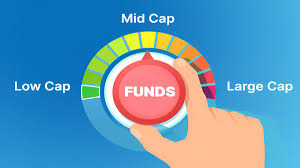
Historically, mid-cap and small-cap stocks outperform large-cap stocks during bullish markets due to their growth potential. However, they are more volatile:
- BSE Mid-Cap: Often shows steady growth with moderate risk. Returns can vary 12–18% annually during bullish phases.
- BSE Small-Cap: High reward but high volatility; returns can exceed 25% in strong markets but may suffer steep corrections during downturns.
Investor Tip: Diversifying across mid-cap and small-cap segments can help balance risk while capturing growth opportunities.
Benefits of Investing via BSE Mid-Cap & Small-Cap Indices
- Growth Potential: Smaller companies are often more agile, innovative, and faster-growing than established large-cap firms.
- Diversification: Adds variety to your portfolio, reducing reliance on large-cap performance.
- Transparency: Using BSE indices as benchmarks ensures performance tracking is straightforward.
- Investment Products: Mutual funds and ETFs tracking these indices make it easier for retail investors to participate.
- Inflation Hedge: Historically, equities, including mid-cap and small-cap, outperform inflation over long-term horizons.
Real-Life Analogy: Investing in mid- and small-caps is like planting saplings in a garden — they may need more care, but the yield can surpass mature trees in a few years.
Risks to Consider
While promising, mid- and small-cap investments come with risks:
- Higher Volatility: Prices can swing sharply in short periods.
- Liquidity Concerns: Small-cap stocks may have lower trading volumes.
- Economic Sensitivity: These companies are more affected by interest rate changes and economic downturns.
- Research Intensive: Picking the right stocks requires careful analysis of fundamentals and industry trends.
Key Takeaway: High returns come with high risk — understanding your risk appetite is crucial.
Strategies to Invest in Mid-Cap and Small-Cap Segments
1. Index Funds & ETFs
- Track the BSE Mid-Cap and Small-Cap indices directly.
- Diversified exposure reduces company-specific risk.
- Low-cost investment option compared to picking individual stocks.
2. Active Mutual Funds
- Managed by fund managers specializing in mid- or small-cap stocks.
- Can outperform indices through selective stock-picking, though fees are higher.
3. Direct Stock Investment
- Requires deep research and monitoring.
- Potentially higher returns if the right companies are chosen.
- Ideal for investors with medium-to-high risk tolerance.
Investor Insight: A combination of ETFs for stability and selective stock-picking for growth often works best.
Case Study: Mid-Cap Success Stories in India
- Voltas Ltd: Transitioned from mid-cap to large-cap over the last decade, driven by industrial growth.
- Jubilant FoodWorks: Expanded aggressively across India, benefiting from rising consumer demand.
- Kajaria Ceramics: Capitalized on India’s booming housing sector and rising infrastructure spending.
These companies illustrate how early investments in mid-cap stocks can deliver substantial long-term gains.
How to Read Index Movements for Better Decisions

Understanding index movements helps investors make informed decisions:
- BSE Mid-Cap Index Uptrend: Often signals broader economic growth and rising investor confidence in medium-sized companies.
- BSE Small-Cap Index Volatility: Short-term corrections are normal; avoid panic selling.
- Correlation with Large-Caps: Mid- and small-caps may outperform during bull markets but can underperform during corrections.
Tip: Use technical indicators like RSI, moving averages, and MACD alongside fundamental analysis for timing entry and exit.
Investing in 2025: Why Timing Matters
Economic factors influencing mid- and small-cap stocks include:
- Interest Rate Cuts: Lower borrowing costs boost growth for smaller companies.
- Government Policies: FDI inflows, infrastructure projects, and Make in India initiatives benefit mid-sized firms.
- Global Market Trends: Export-oriented small caps gain from weak rupee or global demand spikes.
- Sectoral Opportunities: Tech, manufacturing, consumer goods, and healthcare are leading mid-cap sectors.
Takeaway: Timing investments according to macro trends can amplify returns, especially in the small-cap segment.
Key Takeaways
- Mid-cap and small-cap indices allow you to explore hidden growth potential in India’s stock market.
- Diversification across indices helps balance risk and reward.
- Invest for the long term: Short-term volatility is common, but fundamentals drive sustained growth.
- Leverage ETFs and mutual funds if you lack time for deep stock research.
Remember: Even small companies can become tomorrow’s market leaders.