Nvidia leads AI chips, but Qualcomm and Alphabet are emerging as competitors. Explore market shifts, innovations, and investment insights.
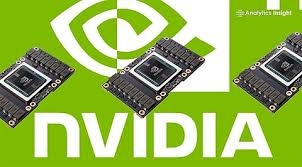
Artificial Intelligence (AI) has become the engine of modern technology, and at the heart of this revolution are the chips that power it. For years, Nvidia has reigned supreme in AI hardware, controlling nearly 90% of the market. Its GPUs are the engines behind everything from high-end gaming to crypto mining—and now, AI training and inference. But the landscape is shifting. Companies like Qualcomm and Alphabet are entering the fray, introducing new chips and technologies that could chip away at Nvidia’s dominance.
If you’ve been wondering whether Nvidia’s monopoly on AI hardware is safe, or if these new entrants might create meaningful competition, this deep dive will break it all down in clear, relatable terms.
Nvidia: From Graphics to AI Dominance
Nvidia’s journey to AI supremacy started long before ChatGPT put AI in the global spotlight. Originally known for its top-tier gaming GPUs, Nvidia’s hardware proved to be excellent at parallel computing—a perfect fit for AI workloads. Add its CUDA software platform to the mix, and you have a robust ecosystem that keeps developers and enterprises coming back.
Today, Nvidia’s Blackwell GPUs are the most coveted AI hardware in the world. They are the go-to solution for training complex AI models and powering large-scale data centers. The company’s control of approximately 85-90% of the $44.9 billion global AI chip market isn’t just luck; it’s the result of years of strategic innovation and ecosystem building.
Analogy: Imagine a cricket team that’s consistently won championships for a decade. Other teams may train hard, but the combination of skill, strategy, and teamwork keeps the champions at the top. That’s Nvidia in the AI chip world.
Key Takeaway:
Nvidia’s early adoption of GPUs for AI and its robust software ecosystem created a moat that’s tough to penetrate, but not impenetrable.
Qualcomm’s AI Chips: Energy-Efficient Disruption
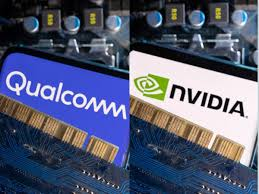
Qualcomm is stepping onto Nvidia’s turf with the AI200 and AI250 chips, expected to launch in 2026 and 2027, respectively. These chips are designed not to match Nvidia’s raw computational power but to excel in energy efficiency and practical application use.
Why it matters: Data centers aren’t just chasing speed—they care about electricity costs. Qualcomm claims the AI200 chip uses 35% less power than a comparable Nvidia GPU, making it attractive for businesses seeking performance without breaking the bank.
Example from India: Consider a data center in Bengaluru managing AI workloads for multiple clients. Switching to more energy-efficient chips could reduce operational costs significantly, allowing smaller companies to compete with larger AI enterprises.
Common Mistakes:
- Assuming lower-power chips can replace high-end GPUs for all AI tasks—they are optimized for inference, not heavy training.
- Ignoring infrastructure compatibility; deploying new chips requires software adaptation.
Key Takeaway:
Qualcomm’s AI chips may not dethrone Nvidia immediately, but they open opportunities for cost-effective AI deployments, especially in energy-conscious markets.
Alphabet’s Ironwood TPU: High-End Contender
Alphabet’s Ironwood Tensor Processing Unit (TPU) is targeting the other end of the spectrum: high-performance AI training. TPUs are designed specifically for training large AI models efficiently.
What makes Ironwood special: According to reports, Ironwood can match Nvidia’s Blackwell GPUs in performance while using a similar amount of power. Its architecture may also scale better in large data centers, making it a compelling alternative for enterprise AI workloads.
Potential impact: Meta Platforms is reportedly considering billions in investment for these TPUs. That alone signals industry confidence in Alphabet’s hardware capabilities.
Analogy: Think of Nvidia as the reigning marathon runner, Qualcomm as a sprinter optimized for short bursts, and Alphabet as a high-tech triathlete ready to challenge the endurance events.
Key Takeaway:
Alphabet may not topple Nvidia on its own, but Ironwood offers a credible high-end alternative, introducing competition in AI training efficiency and scalability.
A War on Two Fronts: Nvidia’s Moat Meets New Rivals
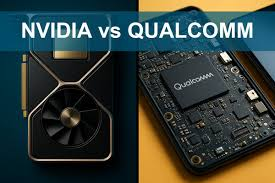
Nvidia is strong, but its chips aren’t flawless. Energy consumption, cost, and specific performance requirements leave gaps that competitors can exploit. Qualcomm and Alphabet are attacking Nvidia’s dominance from different angles:
- Qualcomm: Low-cost, energy-efficient inference chips for practical AI workloads.
- Alphabet: High-performance TPUs for scalable AI training in enterprise settings.
Even AMD, Nvidia’s long-time rival, is starting to gain traction. Its GPUs will be used to power ChatGPT via an agreement with OpenAI, illustrating rising demand for alternatives.
Investor insight: Investors often see Nvidia’s market share as intimidating, but the growing field of competitors suggests a landscape where innovation and cost efficiency can redefine leadership.
Key Takeaway:
While Nvidia’s moat is significant, targeted competition by Qualcomm, Alphabet, and AMD could gradually erode its dominance, especially as AI adoption grows globally.
Qualcomm’s Strategic Moves: Beyond Mobile
Qualcomm isn’t just entering AI; it’s expanding its ecosystem:
- The company recently announced a new AI Engineering Center in Riyadh to support HUMAIN’s 200 MW data center project starting in 2026.
- The integration of Alphawave technologies into its AI infrastructure strategy highlights Qualcomm’s commitment to enterprise AI solutions.
Why it matters: Qualcomm is no longer just a mobile chip manufacturer; it’s positioning itself as a full-stack AI hardware provider, ready to compete in global markets.
Example: For Indian AI startups, this could mean more options for affordable, scalable AI hardware without relying exclusively on Nvidia GPUs.
Key Takeaway:
Qualcomm’s diversified AI strategy signals its ambition to become a serious contender in the AI data center space, offering alternatives to Nvidia for enterprise clients worldwide.
Nvidia vs. Competition: What It Means for Investors
Nvidia’s competitors aren’t likely to sink its battleship overnight, but they do represent:
- Potential market share erosion: Even a few percentage points in data centers can affect revenue.
- Price and efficiency pressures: Customers may demand better performance-per-dollar or per-watt.
- Diversification for enterprises: Companies like Meta or OpenAI may adopt multi-vendor strategies to avoid reliance on a single supplier.
Investor takeaway: Monitoring Nvidia, Qualcomm, Alphabet, and AMD offers insight into how the AI chip market may evolve over the next five years. Strategic investments may require balancing Nvidia’s proven dominance with emerging competition.
Key Takeaway:
For investors, the rise of competitors in AI chips highlights opportunity and caution—Nvidia remains strong, but diversification and awareness of alternatives are crucial.
The Indian Perspective: AI Hardware and Local Impact
India’s AI ecosystem is growing rapidly:
- Bengaluru, Hyderabad, and Pune are hubs for AI startups and data centers.
- Energy-efficient chips like Qualcomm’s AI200 could reduce operational costs for local companies.
- Multi-vendor strategies may encourage Indian enterprises to explore AMD, Alphabet, or even Intel AI hardware for specific tasks.
Analogy: Imagine a cricket league where multiple new players join; each brings unique skills, and teams start strategizing differently. The game becomes more competitive, and past champions must adapt.
Key Takeaway:
Emerging AI hardware competitors globally can influence Indian AI deployment strategies, driving efficiency, innovation, and cost optimization.
The Road Ahead: Nvidia’s Competitive Edge
Despite growing competition, Nvidia maintains several advantages:
- Extensive developer ecosystem via CUDA and AI software platforms.
- Strong brand recognition and established partnerships with global tech giants.
- A broad portfolio of chips that serve diverse AI applications, from training to inference.
Competitors will take time to match this ecosystem, but their presence ensures that the AI hardware market remains dynamic, fostering innovation and efficiency.
Investor insight: Staying informed about product launches, partnerships, and market adoption rates will be key to navigating AI hardware investments successfully.
Key Takeaway:
Nvidia’s competitive edge is robust, but innovation by competitors ensures the market stays lively and opportunities for smart investment remain.
📣 Conclusion
Nvidia has dominated AI chips for years, but the landscape is evolving. Qualcomm brings cost-effective, energy-efficient solutions, Alphabet offers scalable high-performance TPUs, and AMD continues to carve out niche opportunities.
For investors and AI enthusiasts alike, this is an exciting era. Nvidia isn’t invincible, but its leadership will continue to shape the industry. At the same time, competition ensures innovation, efficiency, and choice for enterprises worldwide.
Reflection: Are you watching Nvidia purely as a market leader, or are you exploring the potential of emerging competitors like Qualcomm and Alphabet? The next big opportunity in AI hardware may lie beyond the obvious giant.