Tesla India sales remain slow; explore challenges, pricing, infrastructure, and Tesla’s strategy to boost EV adoption in 2025–26.
Electric vehicles are the future—but entering the Indian market is proving tougher than anticipated. Tesla, the global EV giant led by Elon Musk, launched in India in July 2025, yet sales remain sluggish. With just over 100 deliveries since launch, many wonder: what’s holding Tesla back, and can it turn things around?
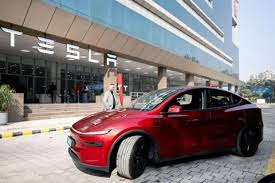
In this blog, we’ll dive into Tesla’s India strategy, sales challenges, pricing hurdles, infrastructure issues, and the steps the company is taking to gain traction in Asia’s third-largest automotive market.
Tesla India Sales
Tesla’s First Major Sales Hub: A Step Toward Growth
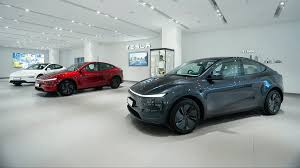
Tesla recently unveiled its largest Indian showroom and service hub in Gurugram. This facility is not just a showroom—it’s a combined experience center featuring:
- Customer engagement and test drives
- Home and supercharging stations
- On-site after-sales service and software support
By consolidating sales, charging, and service under one roof, Tesla aims to improve the overall customer experience, a key factor for new EV buyers in India.
Summary: Tesla’s Gurugram hub signals commitment to long-term presence, focusing on holistic EV ownership experience.
Why Tesla Sales Are Sluggish in India
Despite high expectations, Tesla sales in India remain modest compared to other premium EVs. Several factors contribute:
- High Upfront Prices:
Tesla’s Model Y is priced steeply for most Indian consumers, even in the premium segment. - Limited Awareness and Adoption:
EV penetration in India is still below 3% of passenger vehicle sales. Many buyers are cautious about switching from petrol or diesel. - Charging Infrastructure Gaps:
India has roughly 25,000 charging stations nationwide, creating a perception of range anxiety among potential buyers. - Strong Competition:
Brands like BMW, Mercedes, and BYD have launched EVs with aggressive pricing and festive tax incentives, outperforming Tesla in early months. - Cultural and Market Adaptation:
EV adoption in India requires localized marketing and consumer education, areas where Tesla is still gaining a foothold.
Summary: Tesla faces structural challenges in India—pricing, infrastructure, awareness, and competition are slowing early sales.
Tesla’s Three-Pronged Strategy for India
To address these challenges, Tesla is rolling out a three-step plan:
1. Boost EV Adoption
Tesla aims to convert interest into actual sales by demonstrating long-term savings:
- Buyers can save up to ₹2 million on fuel and maintenance over four years.
- Software updates and remote diagnostics reduce service costs.
- Home charging costs are roughly one-tenth of petrol expenses.
Summary: Demonstrating cost savings and convenience may encourage cautious buyers to make the switch.
2. Expand Charging Infrastructure
Tesla is investing in superchargers and home charging solutions:
- Superchargers: 170 miles in 15 minutes
- Home chargers: 44 miles (70 km) per hour
By expanding access to fast and reliable charging, Tesla hopes to alleviate range anxiety, a major psychological barrier for Indian consumers.
H3 Summary: Charging infrastructure is key to EV adoption, and Tesla is actively scaling network capabilities.
3. Enhance Customer Experience
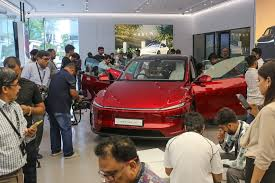
Tesla’s Gurugram hub provides an immersive experience:
- Test drives and showroom interactions
- Hands-on guidance on software updates and vehicle maintenance
- Integrated after-sales service to build trust
Summary: Positive ownership experience is crucial for brand loyalty, particularly in a new market like India.
Lessons from Global EV Adoption
Tesla’s India challenges mirror global EV adoption trends:
- In the U.S., early EV sales were slow due to charging infrastructure and high upfront costs.
- Europe experienced rapid adoption after government subsidies and tax breaks.
- China saw success with localized manufacturing, aggressive marketing, and urban charging networks.
India’s path may follow similar principles: subsidies, infrastructure, and consumer education are key to scaling EV adoption.
Summary: Tesla can leverage global lessons to tailor its India strategy, balancing price, accessibility, and awareness.
The Price Factor: Is Tesla Worth the Investment?
Tesla’s upfront cost is high, but India’s long-term savings are significant:
- Fuel savings over 4 years: up to ₹2 million
- Reduced maintenance via remote software updates
- Lower home charging costs
For tech-savvy or premium buyers, these savings can offset sticker shock. However, price-sensitive buyers may wait for subsidies or reduced pricing.
Summary: While expensive initially, Tesla ownership in India offers substantial long-term cost benefits.
Competitor Comparison: Where Tesla Stands
Other premium EVs have gained traction with Indian buyers:
| Brand | Model | Sales | Competitive Advantage |
|---|---|---|---|
| BMW | iX3 | High | Festive tax cuts, brand loyalty |
| Mercedes | EQC | Moderate | Luxury appeal, service network |
| BYD | Tang EV | High | Aggressive pricing, early adoption |
Tesla faces an uphill battle but premium brand equity and software-driven advantages could differentiate it over time.
Summary: Tesla must leverage technology and brand strength to compete effectively in India’s growing premium EV segment.
Regulatory and Market Hurdles
India’s EV market faces structural barriers:
- High Taxes: Import duties inflate Tesla prices
- Limited Incentives: Government subsidies exist but may not cover premium EVs
- Slow Infrastructure Growth: Current public charging network is sparse
Navigating regulatory frameworks and fostering adoption are critical to Tesla’s India strategy.
Summary: Policy and infrastructure support will heavily influence Tesla’s success in India.
Investor Perspective: Long-Term Play
From an investor viewpoint:
- Tesla is planting seeds for future growth rather than immediate volume.
- Market education, infrastructure development, and early adopters are foundational steps.
- Patience may pay off, as India’s EV market is projected to grow exponentially over the next decade.
Summary: Tesla’s early low sales may be a strategic entry move, focusing on ecosystem development before volume scale.
Future Outlook: What to Expect in 2026–27
Looking ahead, Tesla is likely to:
- Expand delivery hubs in key cities beyond Gurugram
- Partner with Indian firms to improve charging accessibility
- Launch marketing campaigns targeting premium early adopters
- Gradually reduce price barriers, potentially through localized assembly
With government EV targets and increasing consumer awareness, India could become a significant growth market for Tesla.
Summary: Strategic investments, infrastructure expansion, and consumer education are set to drive Tesla’s Indian EV growth.
Conclusion: Is Tesla India a Risk or Opportunity?
Tesla’s India journey illustrates the complexities of entering a new market:
- Slow initial sales do not necessarily indicate failure
- Investments in infrastructure and customer experience are long-term bets
- High upfront costs are offset by future savings and convenience
For tech enthusiasts, premium car buyers, and EV investors, Tesla India represents a strategic opportunity in a market poised for EV adoption.
CTA: Would you consider switching to a Tesla in India despite high upfront costs? Or will you wait for incentives and infrastructure improvements? Share your thoughts below!