Tenneco Clean Air IPO: What’s the deal behind the ₹3,600 cr offer, GMP signals, business strengths & risks — your complete guide to decide.
Have you ever excitedly heard “big IPO coming” and wondered whether you should hop in—or quietly sit it out? That jittery moment when you’re torn between FOMO and caution is all too familiar. Right now, the Tenneco Clean Air India IPO is precisely one of those crossroads for many Indian investors.
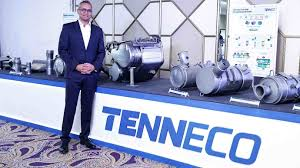
With the auto-components sector re-shuffling, emission norms tightening and aftermarket demand changing, a company at this junction draws interest from both retail & institutional investors. In this blog, we’ll break down everything—from price band to business model, GMP (grey market premium) signals to risks—with the goal of giving you clarity, not hype. Think of this as your friendly mentor guiding you through the IPO maze.
Why the Tenneco Clean Air IPO is Getting Attention
When an IPO makes waves, there’s often a convergence of factors. Let’s unpack what’s fueling the buzz around Tenneco Clean Air.
H3: Strong structural tailwinds
- The company is part of the global Tenneco Inc. group and supplies critical clean-air and suspension components to vehicles. Moneycontrol+3mint+3INDmoney+3
- India is seeing stricter norms on vehicular emissions, and somewhat parallel, premiumisation of vehicles—both favourable for high-tech ancillary firms. INDmoney+1
- According to one review, Tenneco Clean Air holds ~57% commercial truck clean-air market share and ~52% in shock absorbers & struts for passenger vehicles in India. mint+1
Price & grey-market activity
- The issue size is ₹3,600 crore with a price band of ₹378–₹397 per share. mint+2The Financial Express+2
- Even before listing, the grey market premium (GMP) is signalling optimism — ₹50-₹60 over the upper band (implying ~12-16% expected listing gain). mint+2Business Standard+2
- Brokerages are giving a nod to its valuation being reasonable versus peers (e.g., P/E ~29x at upper band). The Economic Times+1
Why this matters for you (the Indian investor)
Think of this like picking a place to shop for your new smartphone: you want a brand that’s trusted, a phone that’s future-proof, and a price that feels fair. Here:
- The “brand” = strong OEM relationships and global backing.
- “Future-proof” = tailwind of auto/clean-air regulations.
- “Fair price” = compared to many IPOs, this one is argued to be reasonably valued.
Key takeaway: The Tenneco Clean Air IPO is not just about hype—it checks several structural boxes. But structural tailwinds alone don’t guarantee success. You’ll still want to dive into the business, risks, and execution.
What the Business Does (in plain language)
Let’s peel back the layers of what Tenneco Clean Air actually makes and why it matters.
Two main divisions
- Clean-Air Solutions: Think of exhaust systems, catalytic converters, mufflers, things that reduce pollution in engines. This is increasingly important due to tighter Bharat Stage norms and global exports. INDmoney+1
- Ride/ Suspension & Shock Absorbers: These make the vehicle ride smoother and safer—especially for passenger vehicles. Tenneco claims ~52% market share in this segment in India. INDmoney+1
Business model & strengths
- The company has ~12 manufacturing plants in India. mint
- Strong relationships with OEMs (original equipment manufacturers) – repeat business, rather than one-off sales. INDmoney
- Good return ratios: For FY25, net profit was ~₹552 crore (on revenue ~₹4,890 crore) even though revenue dipped, showing operational efficiency. mint+1
What investors often like (and what to check)
Likes:
- Leader in niche segments.
- Exposure to exports + domestic demand.
- Reasonable valuation (for the sector) at current pricing.
Check:
- Revenue growth is not explosive — there was a revenue dip even though profit rose. INDmoney+1
- Top customers contribute a large chunk of revenue → concentration risk. The Economic Times+1
- This IPO is a pure Offer-for-Sale (OFS) → the company itself doesn’t get fresh funds for expansion. mint+1
Key takeaway: In simple terms, Tenneco Clean Air is like a reliable seasoned craftsman with good tools and clients—but you’re buying the craftsman’s shares just as he decides to hand over the business rather than reinvesting. So you’re banking on what’s already built plus what can continue—not just new growth magic.
IPO Detail Sheet & What You Should Know
This section acts as your checklist before you decide to apply.
Key numbers at a glance
- Open for subscription: 12-14 November 2025. mint+1
- Price band: ₹378 – ₹397 per share. mint+1
- Issue size: ₹3,600 crore (entirely OFS). The Financial Express+1
- Lot size: 37 shares for retail. Minimum investment ~₹14,689 at upper band. mint+1
- Grey market premium: ~₹50-₹61 (≈12-16%) above upper band pre-listing. mint+1
- Retail allocation: ~35% reserved for retail investors. The Financial Express
What to check before you hit “apply”
- Are you comfortable with the vehicle you’re investing in (auto-components)? The business is tied to vehicle production cycles.
- Since it’s OFS, there’s no fresh capital going to the company—meaning you’re relying on the existing business, not new growth plans.
- Risks: customer concentration, reliance on parent company technology/royalties, auto sector cyclicality, and emerging EV dynamics. The Economic Times+1
Key takeaway: The detail sheet says that while the IPO has many good attributes (brand, sector) it also has clear constraints. It’s best treated as a medium-term play rather than a “quick buck” listing bet.
Grey Market Premium (GMP) – What It Actually Signals
Many of you may have heard of the GMP rising and getting excited. But what does it mean? And should you be guided by it?
What is GMP?
GMP stands for Grey Market Premium – essentially a shadow market for an IPO’s shares before they list. If GMP is +₹60, it means people are willing to pay that much extra (in the unlisted market) above the issue price, expecting a listing gain. INDmoney
For this IPO
- The GMP has been seen around ₹50-₹61 based on latest reports. mint+2INDmoney+2
- Some earlier sources claimed a GMP of ~₹96 i.e., ~24% above upper band. Business Standard
How you should read GMP
- GMP = sentiment gauge, not guarantee.
- If GMP is high, many expect strong listing; if it’s low or negative, expectation is weak.
- Important: The official listing may differ widely from GMP as many factors (market mood, lot size, demand) affect final price.
- Avoid letting GMP alone drive your decision—rather use it as one piece of the puzzle.
Key takeaway: A healthy GMP is like a green traffic signal—it signals positive sentiment, but you still must look at your “car” (business), your “route” (time horizon), and your “destination” (your investment goal) before you drive through.
What Can Go Right — And What Could Go Wrong
When you put your money in, you’re not just buying a share—you’re buying a story plus a bet. Let’s examine the upside and downside.
The Potential Upside
- Being part of a firm with leadership in its niche can mean strong future cash flows if vehicle production and clean-air norms work in its favour.
- The valuation appears reasonable compared to some peers (P/E ~29x) which could provide margin of safety. mint+1
- For medium term investors (3-5 years), the tailwinds in auto components + exports + localisation could play out well.
Risks and Constraints
- Revenue growth has been modest; in fact, revenue declined while profits rose. That means business is under pressure in some respects. mint+1
- Heavy dependence on top clients (top 5 or top 10) means losing one big OEM or order could hurt margin. The Economic Times+1
- Entire IPO is OFS → company doesn’t get fresh funds for growth. That limits how much acceleration happens post-listing.
- Transition to EVs may reduce parts like traditional emission systems over time—this kind of disruption is slow, but worth acknowledging.
- Listing market conditions could dampen listing gains even if business is good.
Key takeaway: Upside exists—but it’s not a slam-dunk. Think of this IPO as a measured bet: the business is good, but you’re not buying a rocket with guaranteed take-off. You’re buying a reliable vehicle that still has to navigate changing roads.
Who Should Apply – And How Much?
Let’s get practical: you’ve read the data, you’ve considered the business, now let’s reflect on whether you should apply.
Fit for which investor?
Apply if you:
- Are comfortable with auto-component business cycles.
- Have a time horizon of at least 2-3 years (not just listing day flip).
- Want exposure to India’s manufacturing/exports story with a globally linked company.
- Can accept moderate risk and don’t expect double-digit gains overnight purely from hype.
Skip or stay cautious if you:
- Are looking for quick listing gains and don’t mind betting entirely on sentiment.
- Have a short horizon (<6-12 months) and low risk tolerance.
- Want capital to go into business expansion (here the company doesn’t get fresh capital).
How much to apply?
- Don’t allocate your entire “IPO budget” to this one deal—diversify across 2-3 IPOs or keep some powder for later.
- Using lot size: Retail minimum is 37 shares (~₹14.7k) at upper band. For a balanced portfolio, ensure this doesn’t constitute more than, say, 5-10% of your incremental risk capital.
- Decide your exit or lock-in strategy: Either hold for the medium term (2-3+ years) or treat it as a listing-gain candidate but with realistic expectations (not full upside).
Key takeaway: Treat applying as “choosing a seat” in a movie—you’re picking a spot that fits your view on the film (business) and how long you plan to sit through. Don’t buy the ticket if you’re going to leave early.
Post-Listing: What to Track & How to Manage
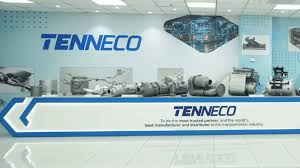
Applying is only the first step. What you do after listing (and in the months after) matters equally.
Things to watch
- Listing day performance: But don’t be swayed solely by listing pop or drop—look at business metrics.
- Quarterly updates: Check revenue growth, margin trends, client diversification.
- OEM order wins/losses: Especially in a concentrated client base scenario.
- Auto sector health: Vehicle production, exports, regulatory changes (like emission norms, EV shift).
- News flow around the company: Technology tie-ups, capex, parent company royalty/licensing changes.
How to manage your position
- If you’re a medium-long term investor: Use dips as possible accumulation points if fundamentals remain intact.
- If you’re in for a shorter horizon: Have stop-loss or exit conditions—e.g., if margin compresses, ask yourself if you still believe the story.
- Remember cost average: If you get allotment, you might not receive full allocation—have clarity on how much you’ll hold, and what you’ll consider “enough gain” or “enough loss”.
Key takeaway: Owning an IPO is like planting a sapling: you apply today, but you must water, weed and watch it grow—or decide if you’d rather transplant it elsewhere.
Conclusion
The Tenneco Clean Air India IPO offers a compelling proposition: a business with strong niche leadership, decent valuation, and structural tailwinds in a manufacturing-and-automotive nation like India. But—and this is important—it is not without risks: industry cyclicality, concentrated business, and the fact that this is a sale of existing shares not a growth capital raise.
As your mentor here, I’d suggest this: If your time horizon is medium (2-5 years), the number of shares you take is modest, and you’re not buying purely for a listing pop, then this IPO makes sense as part of a diversified portfolio. If you’re chasing a flip or expecting a huge overnight gain—then you might be better off watching and waiting.
So here’s a question for you: After reading this, are you leaning towards applying for this IPO, or holding back for now? Why? Share your view and let’s discuss it.