Discover how the Telangana Gig Workers Bill is reshaping rights for platform workers — what it covers, where it falls short, and what it means for you.
Picture this: You deliver meals via a popular app, or ride-share passengers in the city. You pick your hours, hustle through rush hour, pay for fuel, face monthly repairs & unpredictable income. You are a platform or gig worker. Now imagine your state government saying: “We recognise you. We’ll register you, we’ll build a welfare board, you’ll get accident insurance, you’ll have some rights.” That’s what the Telangana gig workers bill promises.
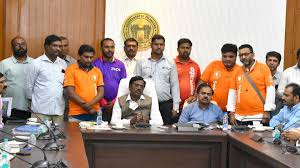
For many of India’s 25–45-year-olds who rely on platforms for income, this isn’t just policy—it’s personal. Whether you’re a delivery rider, a driver, a freelancer on a task platform or an entrepreneur relying on such work, this law could change your day-to-day. In this blog, we dive deep: what the bill covers, what it misses, how it fits the broader gig ecosystem in India, and what you should do next. Think of it as your friendly mentor guiding you through the new terrain of gig-economy regulation.
Why This Bill Now? (The Gig Economy’s Growing Pains)
Growing dependence on gig work
In Telangana alone, there are roughly 4-4.5 lakh gig/ platform workers involved in food-delivery, ride-hailing, logistics, e-commerce fulfilment. MEDIANAMA+5The New Indian Express+5vastavamnews.com+5 These jobs are flexible but often unstable: no paid leave, no pension, frequent deactivations without clarity. Recent data show delivery riders working 10-12 hours a day, facing algorithmic suspensions and variable pay. The Times of India+2Feminism in India+2
Legal gap and the need for formal recognition
While India’s Code on Social Security, 2020 recognises gig and platform workers under unorganised sector frameworks, it hasn’t yet been fully operationalised nationwide. That means state-level laws are stepping in to fill the void. Telangana’s bill is one such attempt: registration, welfare board, fund—all attempts to formalise a previously informal workforce.
What the bill seeks to solve
- Lack of social security: many workers had no accident insurance, no old-age cover.
- Arbitrary platforms practices: sudden deactivations, opaque ratings, algorithmic bias. MEDIANAMA+1
- Invisibilisation: Without registration and ID, workers remain off-the-books. The bill mandates unique IDs and a database. Feminism in India+1
- Funding and welfare: A cess of 1-2 % on aggregator payouts or transactions is proposed to fund the welfare board. Telangana Today+1
Key takeaway: The Telangana bill is a response to real-world pain of gig workers who lack stable rights, and a legal gap in how platform work is treated.
What the Telangana Bill Proposes – A Breakdown
Registration and Database of Workers & Platforms
- The bill defines “gig worker” and “platform worker” (those working outside a traditional employer-employee relationship). PRS Legislative Research
- Platforms/aggregators must register both themselves and the workers, share data. Government will maintain a welfare board and database. Feminism in India+1
- Each worker gets a unique ID. Aggregators have to submit details of payout, number of assignments, etc. MEDIANAMA
Welfare Board & Social Security Fund
- The proposed bill provides for the establishment of the Telangana Gig and Platform Workers Welfare Board.
- A Welfare Fund is created, financed by: (i) a welfare-fund fee (1-2% of payout) charged from platforms; (ii) contributions by workers; and (iii) state grants.
- The Board’s functions: monitor registration, implement social-security schemes (accident insurance, health cover, old age pension), track aggregator compliance.
H3: Rights, Transparency & Algorithms
- The draft mandates platforms to disclose aspects of automated monitoring/algorithmic decision-making (task allocation, ratings, deactivations).
- Platforms must give minimum notice before account deactivation (unless safety issue).
- Provision for grievance redressal mechanisms by the Welfare Board.
Funding Mechanism & Cess
- Platforms or transactions will incur a 1-2 % cess (in some versions consumer may pay) to contribute to the fund.
- The bill places caps, defines how funds should be used: administrative cost is limited; major part must go to worker welfare.
Key takeaway: The bill is ambitious—registration, transparency, board, fund—but notice: it stops short of guaranteeing fixed wages or full employment status.
What It Means for You — Workers, Platforms, Everyday People
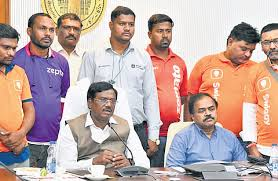
For the gig/platform worker
- From “invisible” to “registered” — You’ll get a unique ID, be recognised and have some institutional backing.
- Accident insurance and social-security access become more likely. For example, Telangana had already issued accident insurance orders for gig workers. The New Indian Express
- Some protection from arbitrary deactivations or opaque algorithmic decisions.
- But: The bill does not guarantee a fixed monthly wage or full employee status. Some unions have flagged this. Business & Human Rights Resource Centre+1
For platforms and aggregators
- New compliance burden: registration, sharing data, contributing to the fund, algorithmic transparency.
- Cost implications: The 1-2% cess may impact margins, especially for smaller operators.
- Potential to build stronger worker-trust, better retention. Those who adapt early may gain reputational advantage.
For Indian consumers & society
- Better working conditions could mean fewer delivery riders burnt out, fewer incidents on road.
- More formalised gig work means stronger social security net, less informal risk.
- As states like Telangana lead, it might spark similar laws elsewhere—raising labour standards across India.
Key takeaway: The bill shifts the power dynamics. Workers gain recognition and voice; platforms face new obligations; society gains stronger protections. But change won’t be overnight.
The Gaps—What the Bill Doesn’t Solve (Yet)
No guaranteed wage or minimum income
Many gig workers demand a minimum wage or income floor. The Telangana draft stops at welfare and registration, not wage guarantee. Unions say this is a major omission.
Classification: Independent Contractor vs Employee
The draft retains the “gig/platform worker” definition outside the traditional employer-employee framework. That means many employment law protections (paid leave, provident fund, etc) are still missing. IRCCL+1
Implementation Risks
- Digital divide: Workers in remote areas or without smartphone access may struggle with registration or redressal.
- Administrative delays: Establishing boards, database, collecting cess, auditing—all could be slow in rollout.
- Data privacy: Platforms will share large data; concerns about privacy, algorithmic fairness remain. Industry groups have flagged this. NASSCOM Community
Enforcement & Monitoring
A law is only as good as its enforcement. The board must meet regularly, spend funds effectively, platforms must comply, and workers must be aware of their rights. Unions point to weak implementation mechanisms. Business Standard
Key takeaway: The bill lays groundwork—but doesn’t yet deliver the full vision of gig-worker rights. Much depends on how it is rolled out and enforced.
How India’s Gig Economy Regulation Landscape Looks
Other States and National Context
- The Rajasthan Government passed the Rajasthan Platform Based Gig Workers (Registration and Welfare) Act, 2023 in July 2023 — one of the earliest state laws. Business & Human Rights Resource Centre
- Karnataka has an ordinance in place; Jharkhand is drafting a bill. Business Standard+1
- At the national level, the Code on Social Security 2020 (still not fully operational) lays framework for gig and platform workers but lacks detailed sectoral regulation. Wikipedia+1
How Telangana Compares
Compared to other states, Telangana’s draft is among the more detailed ones: ID registry, levy, welfare fund, algorithmic transparency. But compared with Karnataka’s proposed obligations (like 14-day notice, higher cess) it is less burdensome on aggregators. Legal500
What this trend means for India
India is moving from unregulated gig-work chaos toward layered regulation. States are experimenting. If successful, these could inform a national model. For Indian professionals in labour law, platform business, or gig workers themselves, this is a pivotal moment.
Key takeaway: Gig economy regulation is still nascent in India. Telangana’s move is significant, but it exists in a broader national and inter-state learning curve.
What You Should Do (If You’re A Worker, Platform, or Citizen)

If you are a gig/platform worker
- Register yourself: When the board or registration portal opens, don’t wait. Your ID gives you access to benefits.
- Keep documentation: assignments, payments, rating logs, deactivations—these can support your grievance claims.
- Understand your rights: you may not have fixed salary but you’ll have grievance redressal, ability to access fund, algorithmic disclosure.
- Join a union or worker group: Collective voice helps when law gets framed or rules laid down.
If you run a platform or aggregator
- Prepare for compliance: Ensure the worker-data infrastructure is ready, payout records clear, algorithmic decision-making documented.
- Build trust: Transparent communications, fair ratings, deactivation policies will build goodwill and help avoid legal friction.
- Engage workers: Consider welfare contributions, safety trainings, access to benefits—early adoption may pay reputationally.
If you’re a consumer or citizen
- Understand the trade-offs: Platforms that treat workers better may cost slightly more—but quality, reliability and ethics improve.
- Support fair business models: As the law puts pressure on platforms to behave fairly, your choices and feedback matter.
- Stay informed: The law is evolving, models will change; your voice matters in public consultations, feedback processes and civic oversight.
Key takeaway: Whether you work, run or use the platforms, proactive action today will put you ahead of mere compliance—but on purpose.
Conclusion
The Telangana gig workers bill is more than a state-law exercise—it is a signal. It says that gig work, previously fluid, informal and largely unprotected, now deserves a place at the table of rights, social security and regulation. For India’s workforce of 300 million plus in informal sectors, this could be the start of a new social contract.
Yet, the journey ahead is long. The bill doesn’t guarantee wages or employment status. It hinges on execution. The platforms, unions, government and society must all pull together.
For you—aged 25–45, working, freelancing, building a business, or simply navigating India’s digital economy—this matters. Because your income, your rights, your daily hustle rely increasingly on rules, not just reflexes.
So here’s a question for you: What one action will you take this week to position yourself in this changing gig-economy landscape—whether that’s registering your work, talking to fellow platform workers, checking your model, or raising your voice?
Share your thought. And if you found this useful, pass it on to a gig worker, a platform founder, or anyone who cares about the future of work.