Young law graduates in India face an AI-driven legal market. Discover what skills matter, how to adapt, and why ethics and tech go hand in hand in the evolving legal profession.
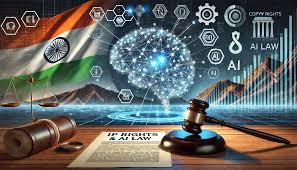
Imagine you’re a freshly-minted law graduate in India. You’ve walked across the dais, accepted your degree, posed for photos, maybe even clinched a gold-medal sponsorship. You’re excited. Welcome to law school seemed easier than the real world ahead. Now picture this: a law office where algorithms scan past judgments in seconds; smart software drafts boiler-plate contracts; courts rely on dashboards and predictive models. That isn’t sci-fi—it’s the near future of the legal profession.
The “AI in legal profession India” isn’t just jargon. It signals a shifting terrain. The world of law you signed up for is changing fast, and it brings both stellar opportunity and serious challenge. This blog speaks to you—young lawyers, fresh grads, anyone wondering: “How do I ride this change rather than be run over by it?”
Let’s talk about what’s changing, why it matters, how you can prepare—and why ethics and human skills still win in the end.
Why AI Is No Longer Optional for Lawyers in India
The scale of change
Once upon a time legal work meant mountains of case-law, libraries full of reporters, endless manual drafting. Today, AI tools are trimming that mountain. In India, firms and courts are using automation for research, drafting, document review. The Legal School+2Khurana And Khurana+2 Globally, a recent survey found that 77 % of legal professionals use AI for document review; 74 % for legal research. legal.thomsonreuters.com
This means two things: first, firms and courts expect faster, leaner workflows. Second, what used to be a differentiator—basic research, drafting—can now be commoditised.
Opportunity and challenge
Opportunity: if you can partner with the machine, you become more productive, leaner, able to handle more matters and add strategic value.
Challenge: if you cling to old methods, you risk getting overtaken by those who use tech well. And the tech doesn’t replace you entirely—but it changes what your value is.
Indian context matters
In India, the legal market is estimated to grow at nearly 20 % annually. (As pointed out by senior judiciary leaders at a recent convocation.) And AI in India’s legal space has to deal with diversity—languages, infrastructure, access. Bar and Bench – Indian Legal news+1
What you should remember: AI is already here in legal practice—ignoring it is not an option. Use it; don’t fear it.
Summary: The future doesn’t wait. Equip yourself now to ride it.
What AI Can Do in Legal Practice—and What It Cannot
Let’s break this down into “what works” and “what still needs the human lawyer”.
What AI is good at
- Legal research automation: AI can scan huge databases, pull precedents, highlight issues in seconds. The Legal School+1
- Contract drafting and review: Tools flag clauses, suggest language, automate standard templates. Khurana And Khurana
- Document and case summarisation: Judicial archives, long judgments, transcriptions—AI can help. upes
- Access to justice: For underserved users, AI chatbots and legal-aid support platforms bring first-line help. Lawvs – Legal Law Jobs portal in Delhi
What AI struggles with
- Human judgment and nuance: Spotting issues of equity, ethics, cultural context or reading between the lines—still human territory. Bar and Bench – Indian Legal news
- Ethical and professional responsibility: AI might hallucinate, mis-cite, act opaque. One Indian panel noted: “AI gives you information, not insight.” ETLegalWorld.com
- Tailored strategy, persuasion, in-court advocacy: Skills like oral argument, negotiation, storytelling—these don’t get fully automated.
What this means for you
Rather than asking, “Will AI replace me?” ask: “How can I work with AI so I become indispensable?”
What you should remember: Use AI tools to handle the grunt work; grow your human edge where machines can’t tread.
Summary: AI elevates—but you must step up in the areas machines can’t manage.
The Law Graduate’s Skillset for the AI Era

If you’re entering the profession now, you’ll need a mix of traditional legal skills and fresh tech-savvy ones.
Core legal skills that still matter
- Legal drafting & impeccable written work: As one senior judge put it: “Perfect drafting alone ensures 50 % of the success in litigation.”
- Oral advocacy, negotiation, client-handling: Your voice, presence, ability to persuade still counts.
- Patience, persistence and a long-game mindset: Law is not a sprint T20 match—it’s a Test match.
New skills for the AI-ready lawyer
- Tech literacy: Understanding how AI tools work, being comfortable with them, knowing their limits.
- Explainability & ethics in legal tech: If an AI tool gives you a contract suggestion, you must validate, understand, explain it.
- Data awareness: Privacy, bias, multilingual challenges in India—they matter.
- Value creation beyond fee-hour billing: With AI doing more, your edge becomes your strategic input, relationships, specialization.
Skill-building roadmap for you
- Start small: Try using an AI-based legal research tool for a moot or project.
- Partner with a mentor: Find someone who uses tech and can show you how.
- Reflect on ethics: Whenever you use a tool, ask: “Who built it? What data? What are its hidden biases?”
- Keep learning: Tech evolves fast—keep up with webinars, certifications.
What you should remember: Hybrid skill = legal + tech + ethical. That’s your high-performance zone.
Summary: Be a lawyer who can write, argue, strategize—and harness AI as a smart ally.
The Ethical and Professional Imperative
The law is more than a job—it’s a mission. As Shivaraj Patil (retired Judge) warned: “When AI enters legal research, contract drafting, judgment translation… this generation holds the responsibility to ensure technology remains a tool of justice—not its substitute.”
Why ethics must lead
- Fairness & equity: AI trained on English data may exclude regional-language clients, under-represented demographics. Khurana And Khurana
- Transparency & trust: If you deploy an AI suggestion, your client must understand what went into it.
- Due process & dignity: Automation must not erode these pillars of justice.
When things go wrong—case examples
The Indian legal system has already seen examples of AI “hallucinations” where tools generated fictitious citations. ETLegalWorld.com If you rely blindly on a tool, you risk professional mistake, client harm, reputational loss.
Your checklist as a legal professional
- Ask: “Was an AI tool used? How? What data?”
- Maintain audit trails when you use software for drafting or research.
- Be ready to explain to a client or court: “This is AI-assisted, here is what I verified.”
What you should remember: You’re not a tech operator—you’re a lawyer bound by ethics. Use tech—but hold the reins.
Summary: Ethical lawyer + smart tool = legal practice that lasts.
Practical Steps to Prepare Right Now

You don’t need to wait for the perfect job or the perfect tool—start now.
Step-by-step action plan
- Map your tech- footprint: What tools (legal-tech, AI) are you aware of? What might you use?
- Skill up: Enrol in a short course on legal tech, read up on AI in law.
- Build a mini-portfolio: Draft a contract using AI assistance; write a blog about what you found—strengths, limits.
- Seek mentorship: Reach out to a lawyer who uses tech and ask for 15 minutes of guidance.
- Embed ethics: Add a line in your practice or student project: “AI assistance used; verification done as per professional standard.”
- Stay curious: Read one article a month on AI in law (India & global) and make it part of your routine.
Mistakes you should avoid
- Relying on AI without verification.
- Believing “AI replaces me” and doing nothing.
- Not brushing up language, drafting, advocacy skills.
What you should remember: Incremental progress beats waiting for perfect. Start small, build deliberately.
Summary: Prepare today. Skills + tool + ethics = your edge tomorrow.
Conclusion
If you’ve made it this far, here’s what I want you to carry in your mind:
The legal profession in India is not being replaced by AI—it’s being reshaped. And the winners will be those who adapt, mix legal mastery with technological awareness, and hold fast to ethical purpose.
Picture the next 5–10 years: You are working on a high-stakes matter, not because you typed faster—but because you bring context, culture, human insight, and you leveraged AI to make that insight sharper.
As one senior leader aptly said: law is not a T20 match—it’s a long, single-innings Test. Use the extra time wisely. Build your foundation. Equip yourself for the change. And let technology serve justice—with you, not instead of you.
Your CTA: What’s the one tech tool you will explore this week? Write a note, try it for a client-problem or moot-paper. Look back next month and see how you’ve changed. Drop a comment below—what excites you most? What scares you most? The conversation begins here.