You’re excited. You’ve seen the ads, you’ve heard friends trading, maybe you even downloaded the app. You’re ready to take your money into the stock market and let it work for you. But pause for a moment — before you press “open account”, type in your bank details, or click that “trade now” button, there are a handful of very real fundamentals you should know.
That’s where Upstox Securities Pvt Ltd comes in. As one of India’s leading online brokers, it promises ease, speed and low cost. But like any “easy” promise, there’s more beneath the surface. In this post, let’s walk together through what you must know about Upstox — its registration, its disclosures, risk statements, complaint process — and how you, as a smart Indian investor (or aspiring one), can use this knowledge to trade confidently.
What is Upstox Securities Pvt Ltd?
You’ll often see the name “Upstox” thrown around in Instagram ads or WhatsApp forwards. But behind the brand is a corporate structure which matters.
The basic identity
- The entity is “Upstox Securities Pvt Ltd” — which the website states is a wholly-owned subsidiary of RKSV Securities India Pvt Ltd. Upstox – Online Stock and Share Trading+2Upstox – Online Stock and Share Trading+2
- Registered address: 809, New Delhi House, Barakhamba Road, Connaught Place, New Delhi – 110001. Bloomberg LEI+1
- It is SEBI-registered (broker registration number present in your input) and is a member of key exchanges.
Why does that structure matter?
Think of this like a car: you see the brand “Upstox” on the bonnet, but the chassis, engine, wiring — that’s the parent company structure, the legal entity, regulatory registration. If something goes wrong, you need to know who you’re dealing with.
For you as an investor: knowing exactly what firm holds your account, custody of your trades, and what entity is responsible gives you power and protection.
Key takeaway: Upstox Securities Pvt Ltd is the legal broker entity you’ll be dealing with. Treat it like your service provider; know its name, address, registration status.
Registration, Compliance & Disclosures – Why They’re Not Just Legal Jargon
What do you see in disclosures?
In the standard disclosure you quoted, you’ve got:
- SEBI registration numbers, Exchange TM codes, CDSL DP registration.
- Corporate identity (CIN).
- Registered address, contact number and email.
- Statement about “Investment in securities market are subject to market risks…”
- Risk disclosures about derivatives (9 out of 10 individual traders lose money) and transaction costs.
- Warning about schemes promising fixed returns, tips via WhatsApp, trading based on unauthorised influencers.
H3: Why this matters for you
Consider you’re about to skate on thin ice: you’d want to know how thick the ice is, how far you can venture, and what happens if it cracks. These disclosures are exactly that—thickness, cracks, rules. They protect you.
Here are things you should check and understand:
- Is the broker registered with SEBI & relevant exchanges? If not, you’re exposed.
- Are the risk disclosures clear? For example: “9 out of 10 individual traders in equity Futures/Options incurred net losses.” If you’re trading derivatives, you must read that.
- Are there warnings about unsolicited tips, guaranteed returns? Because if there are, you know to be suspicious.
Real-world analogy
Imagine you’re buying a motorcycle for the first time. The seller shows the registration certificate, explains the risks (brakes need regular maintenance, accidents happen), and warns you against over-speeding. You’d feel more confident. Think of those disclaimers as the registration certificate and risk instruction manual for trading.
Key takeaway: Reading the broker’s legal disclosures is not optional—it’s your safety helmet in the trading world.
Brokerage, Charges and “What It Will Cost Me?”
It’s tempting: “Zero brokerage,” “low fees,” “free delivery trades” — you’ve seen the memes. But the devil is always in the details.
What we know about Upstox
- Upstox claims a tech-driven, cost-effective model. Vizologi+1
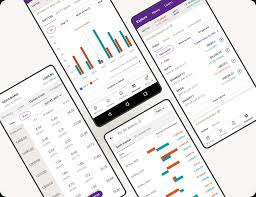
- Their app listing (“Upstox – Stocks & Demat Account”) shows features like options/futures trading, advanced charts, etc. Google Play
- The legal disclosure (from your input) states: “Brokerage will not exceed the SEBI prescribed limit.”
What to ask yourself (and check)
- If the “equity delivery trades” are commission-free (as is claimed by many such brokers), great—but what about intraday, F&O, currency, commodities?
- Are there monthly maintenance charges, demat charges, account inactivity fees?
- Are there higher transaction costs (hidden) in derivatives or leveraged trades? The input states “loss makers expended an additional 28% of net trading losses as transaction costs.” That’s real.
- How transparent is the fee schedule? It should be clearly documented and easily accessible.
Metaphor for clarity
Think of this like shopping for a car — you see “free servicing for first year,” but you check what the higher fuel cost or insurance premium is. In trading, “zero brokerage” might be the headline, but the “fuel cost” could be hidden costs in the fine print.
Key takeaway: Know all the costs—not just the “free delivery trades”—especially when leveraging or trading derivatives.
Know the Risks — Especially When You Trade Derivatives or Options
If you’re only investing in stocks for the long term, the risk profile is different. But if you’re eyeing futures, options, intraday — you must be clear about what you’re getting into.
What the disclosure warns
- “9 out of 10 individual traders in equity Futures and Options Segment, incurred net losses.”
- On average, the loss-makers recorded net losses close to ₹50,000 (as per the disclosure).
- In addition to net trading losses, loss makers incurred an additional 28% of net trading losses as transaction costs.
- Even traders making profits had to give away 15-50% of profits as transaction costs.
These aren’t just statistics—they’re red flags.
H3: Why this matters for you
Many first-time traders think: “I just need one big trade, then I’ll quit.” But data suggests that individual traders overwhelmingly lose money in derivatives.
You need to ask:
- Am I fully trained in F&O trading? Do I understand margin, rollover, expiry, liquidity risk?
- Do I know what happens if the market moves sharply against me?
- Am I prepared to lose? If the disclosures warn of losses, then you must factor that into your mindset.
A relatable analogy
Think of derivatives like driving a high-performance racing car on a busy city road—you might get thrills, but if you don’t know how to handle it, you crash. A simple sedan (long-term equity investment) is safer for many drivers.
Key takeaway: If you’re trading derivatives/options with Upstox (or any broker), assume you can lose—and manage accordingly. Don’t trade blind or just chasing profits.
The Complaint & Redressal Process — Your Rights & Steps
Even with the best broker, things can go sideways: confusion over charges, execution issues, unauthorized trades, customer support not responding. Knowing how to complain and escalate matters.
What the disclosure states
- For any complaints: email at complaints@upstox.com and complaints.mcx@upstox.com (for commodities) (from your input).
- Users are advised to file complaints on the SCORES portal of Securities and Exchange Board of India — mandatory details: Name, PAN, Address, Mobile, Email.
- The broker website states: “If your concern remains unresolved for 5 working days, you may raise it further based on the below escalation matrix.”
What you should do
- As soon as you face an issue (discrepancy in trade, unexplained fees, etc.), note the ticket number from the broker’s support.
- Keep all supporting screenshots, mail trails, trade confirmations.
- If the broker delays or does not respond in 5 working days, escalate to SEBI’s SCORES portal & include the ticket number.
- Check your rights: As a client of a registered broker, you are entitled to execute trades, clear fees schedule, depository rights, etc. If something feels off (like unsolicited tips, promise of guaranteed returns), you have a right to report.
Real-life scenario
Let’s say you placed a trade via Upstox and noticed unexplained brokerage or margin charges. You raise a support ticket; you get no response in 5 days. You then log into SCORES, fill the required fields, attach your ticket number. That puts the regulator into motion.
Think of it like customer escalation in any service: first the brand (Upstox), then if unresolved – the regulator (SEBI). You need both.
Key takeaway: Always know how to complain, when to escalate, and what evidence to keep. Your account is your asset.
Why Understanding the “Terms of Use” and “Privacy Policy” Matters
Most of us tick “I accept” without reading. But these documents include how your data is used, what your rights are, how the broker protects (or doesn’t) your funds, and what changes are coming.
What we found about Upstox
- Their Terms of Use & Privacy Policy mentions: Upstox refers to RKSV Securities India Pvt Ltd, Upstox Securities Pvt Ltd and RKSV Commodities India Pvt Ltd (and affiliates) as “Company”.
- On 22 February 2024 they announced a business-transfer: equity trading business to Upstox Securities Pvt Ltd, commodity business remains with RKSV Commodities India Pvt Ltd.
What you should watch
- Notice any change in banking details (as that transfer notice revealed). These changes can impact deposits, margin accounts.
- What happens to your data if the broker is reorganised? Are you notified?
- Are there clauses about liability, customer funds, what happens in insolvency?
- Are you aware of any escalation or exit rights?
Metaphor to underscore importance
Imagine you sign up for a ride-sharing app and accept the terms without reading; later they change the payment bank and you’re late for a ride because funds didn’t reflect. In trading, that delay might cost you thousands. So reading those documents is your miniature “road-map”.
Key takeaway: Terms & Policy documents are your contract. Understand who you’re contracting with and what happens when things change.
How to Decide if Upstox (or Any Broker) is Right for You
At this point you’ve got the fundamentals. Now you need to ask: “Is it a fit for me?”
Questions to ask yourself
- What is my trading style? Delivery (long-term), intraday, options, commodities? Choose broker accordingly.
- What is my risk-appetite? If you don’t understand F&O yet, maybe start with equity delivery.
- How much capital am I ready to invest (and potentially lose)? The disclosure reminds us a large portion of traders lose money.
- Are the platform features good for my level? Does the app provide training, real-time data, order types you need?
- What is the cost-structure? Including hidden costs when you trade frequently (intraday) or use leverage.
Upstox’s strengths
- Tech-first brokerage, strong user-interface. (see app reviews)
- Transparent registration and disclosure.
- Paperless account opening. 18startup.com+1
Things to monitor/confirm
- Are there service issues reported by users (execution delays, server downtime) — you may check independent reviews.
- If you take leveraged trades, ensure you fully understand margin rules.
- If you’re a beginner, check if broker offers good learning resources.
Simple analogy
You’re choosing a gym membership. You check the equipment, trainers, cost, timing, contract fine-print. A brokerage is no different — check the “machines” (platform), “trainer support” (resources/helpdesk), cost, and contract before you invest your sweat and time.
Key takeaway: Don’t pick a broker because of flashy ads; pick because it aligns with your trading style, risk tolerance, and budget.
Some Smart Investor Tips When Using Upstox
Here are actionable tips to help you use Upstox (or another broker) effectively — not just sign up, but use wisely.
- Enable two-factor authentication (2FA) and set a strong login password. Your account security matters.
- Start with a small amount you’re comfortable losing. Especially if you’re trying trading or F&O.
- Read the “Risk Disclosure Document” the broker refers to (must be provided).
- Use limit orders, stop-loss orders — don’t “market execute” everything blindly.
- Check your monthly statement: brokerage paid, taxes, transaction costs. Reconcile with your own records.
- Don’t believe “guaranteed return” or “insider tip” messages (even if they use Upstox’s name). The disclosure warns against this.
- Keep backup of trade confirmations and emails — in case you need to escalate.
- Learn continuously: make use of Upstox’s “Learning Centre” or any training they provide.
- Be realistic: the disclosure says many individual traders lose money. That means you must trade with awareness, not illusions.
Real-life example
Suppose you’re trading options via Upstox because you read ’trade this nifty strategy, 5X return’. Fine. But you placed a large leveraged trade, market moved against you overnight, you didn’t set stop-loss—results: significant loss plus heavy transaction cost.
If instead you started small, used defined risk, read the brokerage costs, you would have been better protected.
Key takeaway: Use Upstox as a tool—but your mindset, risk control and discipline make the difference.
The Final Word: Is Upstox Safe? And What Does “Safe” Mean?
“Safe” doesn’t mean “zero risk” — trading always has risk. But safe means: you’re on a registered platform, you understand the rules, you use it responsibly.
- Upstox is registered, discloses risk, offers complaint escalation.
- But the risk of trading (especially derivatives) is real: losses are statistically likely for many.
- Your responsibility: educate yourself, trade within your means, understand the platform, costs, and rules.
Think of it like crossing a highway on a pedestrian crossing instead of jaywalking. The crossing (Upstox as registered broker) reduces risk, but you still need to look both ways, wear reflective gear, be alert.
Final takeaway: Upstox is a credible platform — you make the difference in how safely and profitably you use it.
Call to Action
If you found this guide helpful, why not take 15 minutes today to open your Upstox account (or review your existing one) and check: 1) your fee schedule, 2) your risk disclosures, and 3) your complaint escalation process?
Then here’s a question for you: What trading style are you comfortable with — long-term delivery, or active intraday/F&O? Drop a comment below and let’s discuss which approach fits your personality and budget.