India’s exports to the US have plunged 37.5% in 2025 — explore how the US tariff shock hit once-booming sectors, what it means for Indian exporters and how you can adapt.
Imagine you’ve built your business around a reliable highway from India to the United States — every month fresh orders roll in, production hums, workers count on wages and the future looks secure. Now picture that highway suddenly blocked, the tolls skyrocket, and traffic shrinks to a trickle. That’s more or less what has happened to India’s exports to US in 2025.
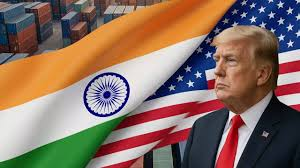
The term “exports to US” boldly enters the headlines because India’s shipments to its biggest export partner have fallen off a cliff — down 37.5 % between May and September 2025. This isn’t some distant problem: it ripples through factories in Surat, Chennai, Bengaluru, the small exporters in Tier-2 cities, and the assembly lines for smartphones, pharma, textiles and gems.
In this blog I’ll walk you through the what, the why and the how of this export slump — with everyday analogies, Indian-context examples, and practical insights for business owners, exporters, job seekers and policy watchers. Think of it as a chat over chai, where we break down a big macro trend into real-life implications and action steps.
How Big is the Drop and Where It Hit
Let’s first unpack the size of the setback and which sectors are reeling.
The Numbers You Should Remember
According to the Delhi-based think-tank Global Trade Research Initiative (GTRI), India’s exports to the US slid 37.5 % between May and September 2025 — from about US $8.8 billion in May to US $5.5 billion in September.
Within this:
- Tariff-free or previously duty-exempt goods plunged by about 47 %.
- Smartphones exports tumbled by 58 % (from US$ 2.29 billion to US$ 884.6 million).
- Labour-intensive sectors like textiles, gems & jewellery, chemicals, machinery fell ~33 %.
H3: Where the Blow Landed
Some sectors absorbed the blow harder than others:
- Smartphones & electronics – Once roaring high growth (197% year-on-year earlier) now jolted by sharp tariff shock. a
- Gems & jewellery – India’s export stronghold suffered nearly 60% collapse in US shipments.
- Textiles, garments, marine/seafood – These labour-heavy industries fell markedly, hitting smaller towns and exporters.
- Metals & auto-components – Some decline (aluminium -37%, copper -25%) but more tied to slowdown in US demand rather than just tariffs.
Why the Drop Feels So Sudden
It’s like you’re driving smoothly then the road ahead gets flooded, you hit the brakes hard and traffic jams. That’s because:
- The US ramped up tariffs rapidly (to 50% for many Indian goods effective August 27) which raised cost margins.
- Exporters had lean margins; a sudden tariff jump meant many shipments became unprofitable overnight.
- Some orders are diverted to countries with better tariff access (e.g., Vietnam, Thailand).
Section takeaway: The exports to US slump is huge, broad-based and hitting sectors that employ millions. It’s not just numbers—it affects people, factories and towns across India.
Why Did This Happen? Unpacking the Causes
We now turn to the “why” behind the decline—what triggered the drop and what structural issues emerged.
Tariffs and Trade Policy: The Immediate Trigger
- The US initiated large tariff increases on Indian products during 2025, culminating in 50% duties on many shipments.
- These tariffs applied even to goods previously duty-free, catching exporters by surprise. For example, the tariff-free slice of trade fell 47%.
- When cost of doing business goes up on a busy export highway, many vehicles (orders) simply turn back.
Export Dependence & Lack of Cushion
- India’s export model to the US had grown large and concentrated. When the access changes, the fall is steeper.
- Labour-intensive sectors (textiles, jewellery, seafood) depend on predictable demand and cost-competitiveness. Sudden tariff changes tip this balance.
- Because of this, even efficient firms faced margin squeeze because the external shock was sudden.
Global Demand & Supply Chain Headwinds
- Some sectors like metals and auto parts fell partly because of weaker US industrial demand—not purely tariffs.
- Supply-chain issues, currency fluctuations and shipping delays add stress to exporters already facing tariff shock.
- The metaphor: You build a factory next to a major road, but then the trucks carrying raw materials slow down and your buyers reduce orders—you get hit from both ends.
Competitors Seizing the Moment
- As India’s access to the US market weakened, other countries (Vietnam, Thailand, Mexico) picked up export share. India risked losing customers permanently.
- Export markets are like spectators in a cricket match — if you fumble once, another team (country) might grab that fan (export order) forever.
Section takeaway: The exports to US collapse is due to a mix of sudden tariff hikes, structural vulnerabilities in India’s export model, and global demand/supply chain pressures. The shock exposed long-standing dependencies and weak cushions.
What It Means for Indian Businesses, Workers & Policy Makers
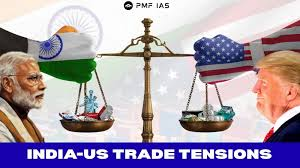
The drop in exports to the US is not just a statistic—its consequences ripple across ecosystems.
For Small & Medium Exporters
- Many MSME exporters now face cash-flow stress: fewer orders, thin margins, possible defaults.
- Shifts from US orders may require re‐engineering product specs, pricing or customer mix.
- Survival tip: diversify client-base (not just US), move up value chain (make not just basic goods), strengthen finances.
For Workers & Regions Dependent on Exports
- Towns relying on textile, jewellery, seafood exports (think Surat, Coimbatore, coastal fishing hubs) will feel the shock.
- Employment may decline, factories may idle or shut temporarily. The human cost is real.
- Regions must prepare for transition: skilling, alternate industries, government relief.
For Policy Makers & Strategic Vision
- This is a wake-up call: India must diversify export destinations and products. Relying heavily on one market (US) is risky.
- Export infrastructure, finance support (e.g., duty remission, interest equalisation) need strengthening.
- Value chain integration and competitiveness matter: cheaper raw materials, faster logistics, better technology adoption.
- Long-term vision: Make India an indispensable supplier, not just a cost-based exporter.
For Investors & Industry Watchers
- Export-oriented firms with heavy US exposure may face margin pressure; counter by tracking firms with diversified destination mix.
- Sectors like gems & jewellery or marine/seafood may need caution; look for firms pivoting wisely.
- In contrast, firms proactively moving into Southeast Asia/Africa may gain.
Section takeaway: The fall in exports to US has struck exporters, workers and policy makers alike. For India to respond, businesses must adapt and the state must re-think export strategy and support systems.
How to Bounce Back — Strategies for Exporters & Stakeholders
Let’s focus on what can be done. If you are an exporter, business owner or relevant stakeholder, here are practical steps.
Diversify Markets and Customers
- Don’t keep all eggs in the US basket. Explore markets in Africa, Latin America, Southeast Asia, Middle East.
- Example: If you’re a textile exporter shipping 80% to US, consider building relationships with buyers in Turkey or UAE.
- Think of it as not just “which market is open today,” but “which markets will be reliable in next 5-10 years”.
Add Value & Move Up the Chain
- Instead of competing solely on cost (which tariffs erode quickly), differentiate via design, branding, quality, speed.
- Analogy: A street-food stall doing 100 dinners a night is good; a fine-dine place offering unique flavour is harder to dislodge.
- For Indian firms: Use “Make in India” PLI schemes, design capabilities, product certification (organic, fair-trade) to raise value.
Strengthen Financial Resilience & Workflow
- Build buffer for tariff/demand shocks: working capital access, alternate sales channels, flexible production.
- Use hedging, tighter cost control, lean inventory so you are not over-exposed when demand collapses.
- If you have heavy fixed‐cost machinery designed for US shipments only, consider making them more versatile.
Embrace Digital, Supply-Chain Resilience & Localisation
- Use technology to improve efficiency—AI/analytics for demand forecasting, digital platforms to reach global buyers.
- Build alternate sourcing of raw materials, diversify suppliers so single country risk reduces.
- Policy ask: Push for better export infrastructure (ports, logistics, customs) so turnaround times drop and you become more competitive.
Engage Government & Policy Support
- Track relief schemes: interest equalisation, duty remission, export credit, incentives for diversifying markets.
- Develop industry-level clusters to boost export readiness (common infrastructure, shared warehousing, international marketing hubs).
- Advocacy: With government, push for better trade agreements, market access negotiations and export diplomacy.
Section takeaway: Exporters who diversify markets, upscale product value, strengthen financial resilience and adopt technology will stand a better chance of weathering the storm of the exports to US slump.
The Bigger Picture — Why This Shift Matters for India’s Future
Let’s see the longer-term ramifications beyond the immediate drop in exports to US.
Export Strategy Re-Set
- India cannot assume growth via one market. The exports to US slump forces a strategic re-set: broader markets, diversified product baskets, deeper value chains.
- If India nails this pivot, it could become more resilient and globally competitive.
Value Chain & Industrial Upgradation
- As tariffs erode cost-based advantage, India must evolve into knowledge-driven manufacturing: design, smart manufacturing, higher margins.
- This is crucial for job creation of today and tomorrow—not just labour‐intensive, low‐value tasks.
Geopolitics and Trade Realities
- The export slump is tied to trade policy and geopolitics: US tariffs, supply-chain shifts, trade alliances matter. India must align with global value chains strategically.
- For Indian stakeholders: Think of exports not just as sales, but as part of global networks, supply-chain clout and strategic partnerships.
Section takeaway: The issue of exports to US decline is a wake-up call for India’s trade, manufacturing and growth model. If handled well, the pivot could make India stronger; if ignored, the country risks losing ground.
Quick Summary — What to Remember
- India’s exports to the US slumped 37.5 % between May and September 2025, from US$ 8.8 billion to US$ 5.5 billion.
- The drop affected key sectors: smartphones, gems & jewellery, textiles, metals.
- The causes: steep US tariffs, structural export vulnerabilities, and global demand/supply chain drag.
- Impact: Exporters and workers face stress; India’s trade strategy must adapt quickly.
- Action: Diversify markets, move up value chain, strengthen resilience, leverage technology.
- Big picture: This slump is not just a short-term blip—it signals a necessary transformation in India’s export and manufacturing model.