“Discover how the Delhi High Court’s landmark ruling on attendance reshapes legal education — key take-aways for students and institutions.”

Imagine you’re a law student deep in your third year, juggling internships, assignments, perhaps even helping family from home. You’ve missed more classes than the institution allows. You’re stressed, anxious, worried you’ll be barred from your exam just because your attendance is short. Now imagine the relief when a court steps in and says: “No — you cannot be barred simply on this ground.” This is the heart of the matter surrounding the law students attendance exams rule, where the Delhi High Court (Delhi HC) has issued a landmark ruling for law colleges and students across India.
In a landscape where educational pressure and rigid rules have weighed heavily on students, this judgement offers a fresh perspective and a roadmap for change. Let’s decode what happened, why it matters, how students and institutions should respond — and what you, whether as a student, parent or educator, should take away.
What Exactly Did the Delhi HC Rule?
The Case At Hand
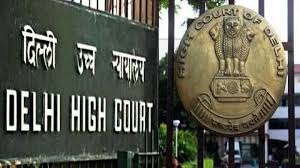
In a suo motu case (on the court’s own motion), triggered by the tragic death of a law student, Sushant Rohilla, in 2016 — who reportedly faced detention from exams because of low attendance — the Delhi HC revisited the mandatory attendance norms for law colleges
The division bench of Justices Prathiba M. Singh and Amit Sharma held: No student enrolled in a recognised law institution shall be prevented from appearing for examinations or furthering their academic career purely on account of shortage of minimum attendance.
Key Guidelines Issued
- Law colleges and universities cannot impose attendance norms over and above those prescribed by the Bar Council of India (BCI).
- Even if a student falls short of the prescribed attendance, they must be allowed to sit for semester exams.
- Their promotion to the next semester cannot be withheld just because of low attendance.
- If a college awards percentage marks, then for attendance shortfall the maximum deduction in final marks can be 5%, or in CGPA systems, 0.33%.
- Colleges should implement mechanisms: weekly notification of attendance, monthly alert to student/parents if attendance is low, extra physical or online classes to make up shortfall.
- The BCI is directed to conduct stakeholder consultations (including students), and to revise conditions of affiliation to include counsellors/psychologists.
H3 Summary of section:
In essence: the court has taken a strong stand that attendance should not become a blocking gate for exams or progress in legal education — shifting the emphasis to student welfare, fairness and meaningful learning rather than rigid presence-counting.
Why This Shift is Important — Context & Implications
Why Did the Court Take This Step?
There were several pressures building up:
- The tragic case of Sushant Rohilla raised serious concerns: he was barred from his semester due to attendance shortfall, and his death highlighted mental-health consequences.
- The court saw that strict attendance norms, especially in professional programs like law, can lead to “mental trauma of students” and in worst cases, death.
- The nature of legal education is changing: practical exposure, moot courts, internships, online learning have become more prevalent. The old model of “sit in class x % of the time” may not fully capture it. L
- Review of regulations: Attendance norms were mostly uniform but the pandemic and online classes changed dynamics — making the court question whether rigid thresholds make sense.
Implications for Law Students and Institutions
- For students: You now have a stronger right to appear for your exams even if your attendance record is below the previous norm. That reduces one major anxiety.
- For institutions: Colleges must revisit their attendance policies, ensure alerts and remediation mechanisms, and avoid blocking students from exams purely on attendance grounds.
- For governance in education: The judgement signals an increased emphasis on student rights, mental-health, flexibility in learning and holistic legal education — including internships, moot courts, online learning.
- For the legal-education ecosystem: The BCI’s role becomes critical in consultation, rewriting norms, and ensuring that colleges adapt to a more dynamic mode of legal training rather than just attendance policing.
Summary of section:
This isn’t just about attendance being relaxed. It’s a structural shift in how legal education is viewed: from “hours in class” to “quality of learning and progression”, and from punitive to supportive frameworks.
What Should Students Do Now? Practical Steps for You

Whether you’re a law student or in a college admin role, here’s how you can navigate this change.
For Students
- Keep track of your attendance — even if norms are changing, you should be aware of your current status.
- Use the extra classes/remediation options that your college may now provide when you fall short — the court directed such measures.
- Focus on holistic learning — beyond attendance: engage in moot courts, practical legal aid clinics, internships, online modules. The court itself pointed out that legal learning isn’t simply about physical presence.
- If you’re blocked from exam despite this ruling, you can ask for:
- the college to follow court-guidelines
- explanation of additional attendance norms (if any) being enforced
- redressal through the Grievance Redressal Committee your institution must have.
- Mind your mental health — this ruling arises partly because rigid attendance norms caused severe stress. Use counselling services, speak to mentors.
For Institutions & Educators
- Update attendance policies to align with the Delhi HC guidelines: avoid extra attendance norms that go beyond BCI prescriptions.
- Publish regular attendance reports to students and guardians (weekly/monthly) as directed.
- Arrange extra sessions (physical or online) for students who lag, rather than simply bar them from exams.
- Set up or strengthen Grievance Redressal Committees (GRCs) with student representation (2–3 student nominees) and mental-health counsellors.
- Update internship/moot-court/intern-link programmes and make them visible. The court asked BCI to publish lists of senior advocates/law firms for internships.
Summary of section:
Think of this change as a reset: students now have breathing room and institutions have a new roadmap. Your best move is to be proactive — track, engage, and use this as a platform for smarter learning, not just attendance survival.
Common Mistakes & Misconceptions to Avoid
Believing attendance no longer matters
Just because you cannot be barred from the exam doesn’t mean attending classes is redundant. Valuable concepts, discussions, networking, internships occur in class and outside. Attendance is still a factor of engagement and performance.
Assuming all colleges will immediately mirror the change
Some colleges may delay policy updates. Ensure your college communicates changes clearly; if not, engage with student forums or GRC.
Using low attendance as an excuse for poor planning
Think of attendance as one instrument among many. Just because barrier is relaxed doesn’t mean you can slack off; exam readiness, learning outcomes, skill-building still matter.
Underestimating remedial responsibility
Even with the ruling, the court specified remedial classes and extra support for low-attendance students. If you fall behind, you must take the initiative.
Summary of section:
Relaxation of attendance barriers is a milestone — but it isn’t a free pass. The spirit of the ruling is enhanced learning, not avoidance of class. Stay active, engaged and informed.
Bigger Picture: How Legal Education is Evolving & Why This Matters
The Shift from Time-Based to Outcome-Based Learning
Legal education is no longer purely about sitting in a classroom for a set number of hours. The court has emphasised that legal training includes – moot courts, internships, court hearings, online modules.
It’s akin to a medical student not just attending lectures but also doing clinical rounds, lab work and practical exposure.
Aligning with NEP 2020 and Digital Learning
The court referenced the National Education Policy 2020 (NEP 2020) which advocates flexibility, multi-disciplinary studies, online modes. This ruling resonates with that vision.
Law colleges that adopt blended/hybrid models, experiential learning, will be better placed.
Mental-Health & Student Welfare Focus
One of the vivid considerations was student mental-health: the court emphasised that mandatory norms should not cause “mental trauma of students” or become a factor in suicides.
This signals a paradigm: students are served as humans with lives, not just as attendees of a classroom.
Summary of section:
The attendance judgment is a marker of a deeper shift. Legal education is transitioning from rote presence to meaningful participation — digital, practical, humane.
What This Means for Your Future — Students, Parents & Educators
For Students (25-45 age range, India)
If you’re pursuing law now or planning to, this ruling gives courage and clarity: you don’t become an “exam-outlaw” just because you missed some classes. It underscores the value of your overall journey — internships, practical exposure, digital classes — over mere seat-marks.
Use this as motivation to participate more widely. View attendance as a platform, not a mandate.
For Parents & Guardians
If you were worried about your ward being held back for attendance, this ruling provides relief. But also understand: the aim is not to reduce discipline but to ensure fairness and flexibility. Encourage holistic engagement: help them prioritise quality of learning, not just quantity of hours.
For Law Colleges & Educators
This is a wake-up call. Institutions must update policy, improve tracking and support mechanisms, and shift from “attendance police” to “learning facilitators”. A college that adapts will stand out and attract better students.
For the Legal Profession
In the medium term, this could mean that law graduates are better equipped: having had flexibility, practical exposure, and less stress about attendance may translate into more engaged, more creative lawyers.
For the regulatory bodies like BCI, this is a blueprint for revisiting outdated norms — a chance to shape future-ready legal education.
Call to Action
If you’re a law student: check your college’s revised attendance policy, and ask whether remedial classes/alerts are in place.
If you’re a parent: talk to your ward about how they’re engaging in moot courts, internships and online modules — not just class attendance.
If you’re an educator: review your attendance-policy for compliance with the new guidelines and ask: “Does this policy truly help students learn, or just track seats?”
Here’s a question for you: What would you change in your college’s attendance policy today if you were in charge — to make it fairer, flexible and focused on learning? Let me know your thoughts.