China’s New Law: A Lesson for India?
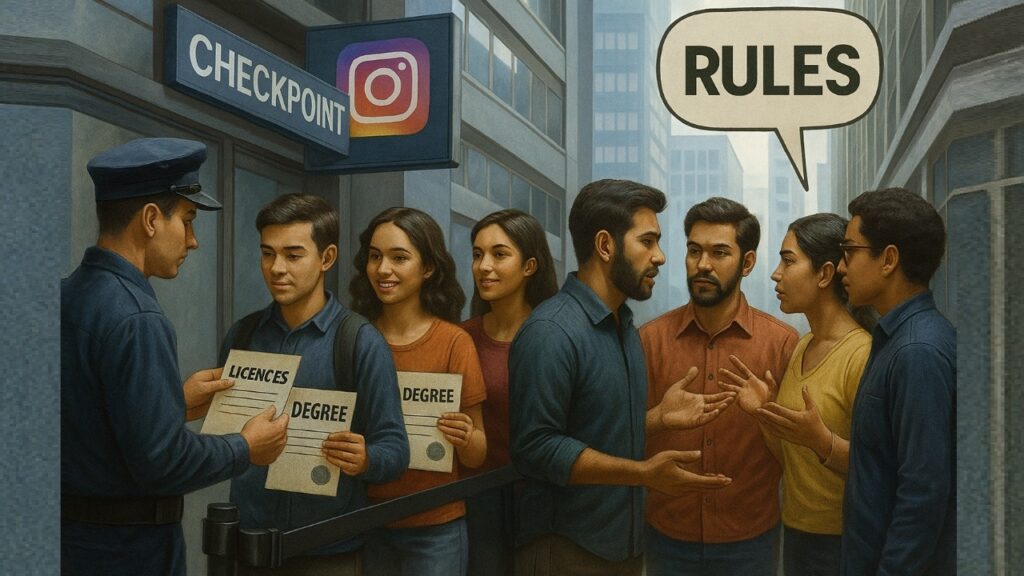
From October 25, 2025, China’s internet regulator, the Cyberspace Administration of China (CAC), began requiring social-media influencers who comment on fields like medicine, law, education or finance to show proof that they’re qualified — such as a degree, licence or professional certification.
Why India Should Watch
Much like in China, social media in India is a mass medium — YouTube, Instagram and short-video apps reach tens of crores daily. Creators regularly give guidance on finances, health cures, diet plans, insurance, exam prep, legal rights and more. Some are viewed as experts despite minimal or no formal training.
During Covid-19, popular and sponsored health suggestions drew criticism for oversimplifying cures or discouraging professional treatment. India is no stranger to the problem of viral misinformation; for many, this is reason enough to consider whether credentials should be required in sensitive, high-stakes domains.
Health Influencers and India’s ‘WhatsApp University’
Health influencers in India frequently push content like: ‘Onions pull toxins through your feet’, ‘Cucumbers cure glaucoma’, ‘This diet will beat cancer’. Fact-checkers say these posts rarely have scientific basis, but they spread fast, blending wellness language with promises of miracle healing.
The pattern shows how influencers with millions of followers can unintentionally encourage people to delay treatment, self-medicate, or ignore medical advice. Even without naming names, the trend illustrates why ‘expert-only’ rules might look appealing to policymakers.
The Rise of ‘Finfluencers’
India’s market watchdog, SEBI, has already stepped in. In late 2024, SEBI banned prominent influencers such as Ravindra Balu Bharti and Nasiruddin Ansari for allegedly giving misleading stock tips, failing to disclose partnerships, and contributing to price manipulation.
Reports also suggest that 63% of finfluencers do not reveal sponsorships, and only 2% are SEBI-registered despite regularly giving stock or trading advice. This reveals real public harm: one wrong stock tip can wipe savings, mislead first-time investors, and create systemic mistrust.
Legal Influencers and Over-Promising
The Bar Council of India (BCI) has warned lawyers and legal-education influencers to avoid treating social media as promotional advertising. Some accounts are accused of promising guaranteed case wins, offering simplistic legal advice without full context, or using aggressive sales tactics.
Courts and legal analysts warn that unverified legal guidance, especially when delivered confidently, can mislead people into making poor decisions around marriage, property, or criminal defence. This shows how ‘expert’ content risks harming the public when poorly regulated.
So, Should India Require Degrees for Influencers Like China?
Here are the potential upsides to the plan: Better accountability, consumer protection, and higher-quality educational content. However, there are also potential risks: Where’s the line? Credibility doesn’t always come with just a degree, freedom of expression, implementation challenges, and selective enforcement.
For more information on India stock market news, you can visit our website. We also provide information on SEBI guidelines for influencers and social media influencer marketing.
How a Model Could Work, If India Ever Tried
Apart from the issues listed above, regulating social media content and speech of influencers who may have political interests or backing is quite complex. That’s partly why simply ‘copying China’ is neither practical nor desirable.
If India were to consider a credential-first framework for social media influencers, it might: Apply only to high-impact topics, require disclosure, not prohibition, create a voluntary registry, and use tiered rules.
Impact on Creators and Industry
The creator economy has become a major source of income for young Indians amid rising layoffs and unemployment issues. Over-regulation could stifle opportunity, especially for small-town talent without elite degrees but with valuable lived perspective.
If the situation is handled well, rules could raise trust and credibility. But if handled poorly, they could limit innovation, discourage new voices, or widen inequality. For more information on creator economy in India, you can visit our website.
Bottom Line
China’s move is bold. You can speak about medicine, law or finance only if you’re formally qualified. India might be tempted to draw inspiration, especially with the rise of finfluencers, wellness advice, unverified legal tips and mass misinformation.
But India’s context is fundamentally different. Any regulation must balance public safety, creator freedom, platform growth, free speech rights, and practical enforcement. Perhaps a softer pathway with disclosures, platform labelling, and targeted guardrails may be more realistic than China-style credential mandates.
So the question for India isn’t ‘Should we copy China?’ It is: How do we protect people without shutting down the vibrant, diverse creator economy? For more information on regulating social media influencers, you can visit our website.