Delhi HC issues notice on plea against law barring teachers from private tuition. Here’s how the case could reshape India’s education policy and teacher autonomy.
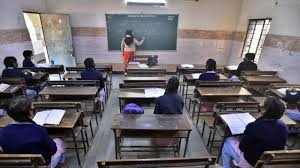
Can a government school teacher teach outside school hours for extra income?
That simple question has now reached the Delhi High Court — and the answer could redefine how India views teacher autonomy, accountability, and the intersection between public duty and private livelihood.
The Delhi High Court’s recent notice to the city government on a plea challenging the rule that bars government school teachers from taking private tuitions has reignited a long-standing debate.
At its core lies a clash between ethics and economics, governance and freedom — should teachers working for the government be allowed to earn from private tutoring when they are already publicly funded?
This isn’t just a Delhi story. It’s a national question — one that touches the financial survival of thousands of teachers and the integrity of India’s public education system.
The Legal Flashpoint: Why the Case Matters
The Delhi Education Act and its service rules currently prohibit government teachers from taking private tuitions. The rationale: avoid conflicts of interest and ensure full focus on classroom teaching.
However, a recent petition filed by a Delhi government school teacher argues that the rule violates fundamental rights — particularly Article 19(1)(g) (the right to practice any profession) and Article 21 (the right to livelihood).
The Delhi High Court has now issued a notice to the Directorate of Education (DoE), seeking its response. While the final verdict is pending, the move signals judicial willingness to re-examine an old rule in a changing social and economic context.
What makes this case particularly significant is its timing. With rising inflation, increased workload, and the widening gap between public and private schooling outcomes, many teachers feel the rule is outdated and punitive. Others argue it’s essential for maintaining educational ethics.
The Rule Explained: What Exactly Is Banned?
Under the Central Civil Services (Conduct) Rules, government employees — including teachers — are generally barred from engaging in private employment or business without prior permission.
Delhi’s education rules go a step further: they explicitly prohibit government school teachers from offering paid private tuitions to students.
The logic behind the ban is rooted in fairness and duty:
- A teacher paid by taxpayers shouldn’t divert energy to private gain.
- Allowing tuitions could create perverse incentives — neglecting weaker students in class to attract them to paid sessions.
- It helps maintain trust and equality in the classroom — every student gets equal attention.
Yet, the opposing argument is equally compelling:
In a city where living costs have skyrocketed and salaries haven’t kept pace, the ban feels more moralistic than practical.
Economic Reality: Why Teachers Turn to Private Tuitions
Across India, private tutoring has become a parallel education industry — valued at over ₹1.8 lakh crore as of 2024. From Kota’s engineering hubs to Delhi’s neighbourhood coaching centers, the tuition culture is no longer optional; it’s mainstream.
For many government school teachers:
- Their average salary, though stable, often fails to match private-sector peers.
- They face rising household expenses, education costs for their own children, and limited opportunities for side income.
- The tuition ban feels like a restriction not just on work, but on dignity and choice.
A teacher interviewed by Hindustan Times reportedly said,
“We spend extra hours mentoring children after school anyway. When we help others in return for fees, it shouldn’t be treated as misconduct — it’s an extension of our skill.”
It’s a statement that captures the emotional weight behind this policy battle — the feeling of being punished for being passionate.
Governance Rationale: Why the Government Defends the Ban

From the government’s standpoint, the ban protects public trust.
A few core arguments shape this stance:
- Preventing exploitation:
Without a ban, some teachers might intentionally underperform in classrooms to push students into paid tutoring. - Maintaining fairness:
Government education is meant to be free and equitable. Paid tutoring by the same teachers blurs that line. - Ensuring accountability:
Teachers’ full-time duty is toward the school system that employs them. Divided attention weakens outcomes.
Education administrators often argue that ethical duty overrides economic arguments in public service professions — much like how a judge or bureaucrat can’t freelance for private gain.
Still, the challenge lies in balance: ensuring discipline without suppressing livelihoods.
A Look Beyond Delhi: How Other States Handle It
Delhi isn’t alone in this regulatory tightrope.
Here’s how other Indian states have approached the issue:
- West Bengal — Banned private tuitions by government school teachers since 2009; violators face suspension.
- Maharashtra — Allows private tuitions with prior approval, under strict conditions.
- Tamil Nadu & Kerala — Permit coaching outside school hours but discourage teaching one’s own students privately.
- Uttar Pradesh — Similar to Delhi’s ban, but enforcement remains inconsistent.
The variations show that India lacks a uniform policy — reflecting how each state balances governance with ground realities.
The Global Perspective: How Other Countries Handle Teacher Side Jobs
In several developed countries, teachers are often allowed to take private tuitions — but under clear disclosure norms.
For instance:
- United Kingdom: Teachers can take private tutoring as long as it doesn’t interfere with school duties.
- Singapore: Allows private tutoring, but teachers must declare details to the Ministry of Education.
- Japan & South Korea: Encourage after-school “juku” programs, often run by the same teachers, integrated into formal systems.
India’s restrictive model, by comparison, stems from a colonial-era bureaucratic mindset, where teachers were treated as government officers first, educators second.
Ethical Dilemma: Between Public Duty and Personal Freedom
The moral tension here runs deep.
Is teaching a calling that demands full-time devotion — or a profession that deserves flexibility like any other?
Both views carry merit.
Supporters of the ban argue that teaching is a public trust, not a trade. A government-paid educator owes undivided loyalty to public students.
Opponents counter that autonomy and fairness should apply equally — after all, doctors, lawyers, and civil servants can often take on private work under regulation.
This case therefore isn’t just about tuitions. It’s about how India defines professional freedom in public service.
Judicial Precedents: What Courts Have Said Before
The issue of teachers taking private tuitions has reached Indian courts before.
- In 1990 (Bihar Education Service Case), the Patna High Court upheld disciplinary action against a teacher taking private classes, citing “conflict of interest.”
- The Supreme Court, in earlier service-related judgments, has maintained that government servants must seek permission before engaging in side professions.
However, none of these cases deeply examined the constitutional argument of livelihood and equality in the post-pandemic, gig-economy context — which makes the Delhi HC case particularly timely.
Public Sentiment: The Growing Divide
On social media and teacher forums, the debate has polarized opinion.
- Parents and activists often support the ban, arguing that school hours should suffice for quality education.
- Teachers’ unions have criticized the rule as unfair, demanding either salary revisions or permission for after-hours teaching.
The sentiment reflects a broader truth: the public education ecosystem is under strain, and private tuitions have become a symptom, not the cause.
What This Means for Policy: Rethinking Teacher Autonomy
This case might push policymakers to revisit how teacher professionalism is structured in India.
If the court rules in favor of teachers, it could:
- Set a national precedent for other states.
- Encourage the DoE to create regulated permission systems instead of blanket bans.
- Spark conversations about teacher pay parity and motivation.
If the ban is upheld, it reinforces the principle of public duty over private profit, but also risks alienating thousands of educators who feel undervalued.
The ideal middle ground may lie in controlled flexibility — where teachers can offer private classes under transparent conditions, without compromising their public roles.
Broader Implications: Education Equity and Market Realities

At the heart of this issue lies an uncomfortable paradox —
India’s public education system depends on the dedication of teachers, yet often underpays them; meanwhile, the private tutoring industry thrives on the very gaps public schools fail to fill.
This legal debate exposes a deeper question:
Can India afford to moralize about private tuitions when the systemic gaps that fuel them remain unaddressed?
Until those structural inequities are fixed — teacher-student ratios, classroom infrastructure, learning outcomes — such bans will remain reactive rather than reformative.
Opinion: The Way Forward
The Delhi HC’s notice isn’t a verdict — it’s an opportunity.
An opportunity to modernize an old rule that no longer fits the socioeconomic fabric of India’s teaching community.
Rather than blanket bans, Delhi (and India) could explore:
- Declaration-based systems — teachers disclose private teaching engagements.
- Conflict-of-interest guidelines — bar teaching one’s own students, not all tuitions.
- Performance-linked accountability — ensure classroom outcomes don’t suffer.
In the long run, empowering teachers with both responsibility and reasonable freedom will strengthen, not weaken, India’s education system.
“A teacher’s integrity should be judged by their impact in the classroom — not by how they sustain themselves after it.”