Intel Q3 2025 results beat expectations and stock jumped — this article breaks down what it means, why it matters for Indian investors, and the risks ahead.
Have you ever watched a company struggle in silence, then suddenly hear the roar of a turnaround and thought, “I wish I’d noticed earlier”? That’s exactly the moment we’re seeing with the primary keyword Intel stock. Intel’s third-quarter performance is turning heads — and if you’re in India, thinking of global exposure, this could matter more than you expect.
In this blog, we’ll walk through what Intel reported, why the stock jumped, what this means for the broader chip/AI space, and how you – a professional in your 30s or 40s – can think about it. No jargon, no fluff. Just actionable insights, foreign-stock context adapted for Indian investors, and a mentor-style breakdown you’ll remember.
What Happened in Q3? ( Intel Q3 2025 earnings, Intel revenue Q3)
Let’s start by looking at the numbers—because the figures tell a story, and then we’ll decode that story.
The Numbers in Plain English
- Intel reported revenue of US$13.7 billion, up ~3% year-on-year.
- The company posted a net income of approx US$4.1 billion, compared to a huge loss of US$16.6 billion a year ago.
- Gross margin jumped to ~38% (from ~15% a year ago) — a massive improvement.
- Non-GAAP EPS: US$0.23 per share vs a loss last year.
- For the next quarter, Intel guided revenue in the US$12.8-13.8 billion range.
Why These Figures Matter
Think of the company as a big ship that was listing badly, and now it’s finally upright and sailing again. The revenue gain is modest (3%), but the margin improvement and return to profitability signal a turnaround. In investing terms: the ship isn’t completely steady yet, but it’s stopped taking on water.
Summary
Intel’s Q3 numbers show a real step forward: turning a previous big loss into a profit, improving margins and meeting modest growth. For investors, it’s the “beginning of the comeback” phase, not the end.
Why the Stock Jumped ( Intel stock jump)
When numbers like these show up, the market reacts. But let’s break down why the jump occurred — it’s not just the profit, it’s the signals.
Signals Behind the Surge
- The stock rose nearly 10% in Europe and about 7% after hours in the US following the earnings release.
- Investors were encouraged by high-profile backing: the US government, large tech firms, and major restructuring moves.
- The margin improvement suggests cost controls and product mix are getting better — which means more future flexibility.
- The market smells momentum: in sectors like chips and AI, expectation often matters as much as current performance.
The Indian Investor Angle
For someone in India who looks at global stocks:
- The jump means companies like Intel can once again feature in global tech portfolios.
- It opens a door to “chip/AI exposure” by proxy — not just via domestic stocks, but via a major international player.
- But remember: currencies, geopolitical risk, and sector cycles differ — so manage accordingly.
Summary
The jump in Intel stock is more about hope and proof of progress than just the one quarter. For you as investor, it’s a green light to investigate — not a guarantee of outperformance.
What’s Driving the Change? (Intel turnaround strategy, Intel AI chip business)

Behind the numbers and the stock move are strategic shifts. Let’s dig into what Intel is doing differently — and why it matters for the future.
H3: Strategic Moves
- Intel emphasised AI demand: its core x86 platforms, accelerators, and foundry services are now aligned with the AI wave. I
- The company built a new fab (Fab 52 in Arizona) using “18A” process technology — part of its long-term manufacturing bet.
- Significant investments and partnerships: e.g., major stake-buying, system-level collaboration with other tech giants.
- A sharper cost structure: the dramatic margin expansion above shows the “fixing the plumbing” phase is underway.
Why This Matters to You
Imagine you’ve been working for someone who always promised a new product next year. Finally the prototype works, the investment is clear, and the manufacturing line is set up. That’s the moment investors like you want to see. It signals potential rather than just promise.
Summary
Intel’s strategic shift — from being a laggard to being a contender in AI and advanced manufacturing — is the catalyst behind the turnaround. For you, the question is: will this execution sustain?
Risks & What Could Trip Ups Lie Ahead (Intel stock risks, Intel guidance Q4)
No turnaround comes without potholes. As a cautious investor, especially from India with global exposure, you’ll want to be aware of what could go wrong.
Key Risk Areas
- Guidance for Q4 is modest: revenue expected between US$12.8-13.8 billion — not a blockbuster jump.
- Macro/Geopolitical threats: Chips are subject to supply-chain issues, trade tensions (US vs China), currency fluctuations.
- Execution risk: Manufacturing (fabs) take years to bear fruit. If demand slows or cost overruns happen, the improvements may reverse.
- Competition & innovation: Intel competes with Taiwan Semiconductor Manufacturing Company (TSMC), Advanced Micro Devices (AMD), NVIDIA Corporation etc.—one mis-step can hurt.
- Valuation risk: The market may have priced in the turnaround already — if actual future growth disappoints, the stock can fall.
Indian Investor Specific Considerations
- Currency risk: Returns in USD may get impacted when converted to INR.
- Tax/treatment for overseas stocks: Ensure you understand how global equities are treated for your portfolio.
- Over-exposure: If you already have high beta/global tech stocks, adding Intel may amplify risk, not diversify.
Summary
The comeback story is compelling, but you’re investing into a company with many moving parts. Recognise the risks, and don’t assume the good times will automatically continue.
What Should Indian Investors Do? (Investing in Intel stock)
So, given all this context — what actionable steps can you as an Indian investor take? Let’s treat this like planning a long road trip: check the route, maintain your vehicle, and set expectations.
Thought Process for You
- Align with your goals: If you’re investing for 3-5+ years and want exposure to global AI/chips, Intel could be part of the mix.
- Position size matters: Consider what fraction of your portfolio you’re comfortable allocating to such a bet. A smaller, thoughtful exposure may make sense.
- Understand currency & platform: Depending on how you buy (ADR, foreign broker), understand fees, tax implications, currency conversion.
- Set realistic expectations: The numbers show improvement, but the growth isn’t explosive yet. Be patient.
- Stay updated: Watch for next quarter’s results, guidance updates, and global chip/manufacturing news—they will impact the stock more than this one quarter now.
- Use surges to reflect, not chase: The stock has already rallied significantly in 2025 — “buying the top” is a familiar risk.
Common Mistakes to Avoid
- Chasing the stock solely because it’s “hot”.
- Ignoring the global macro risk: war, supply chain, regulation.
- Assuming Indian stock behaviour applies identically to US tech stocks.
- Expecting instant returns: turnarounds take time.
Summary
For Indian investors, Intel offers an interesting gateway into the global chip/AI space—but only if you approach it with discipline, realistic time-horizon and full awareness of risks.
The Bigger Picture – Why This Matters Beyond Intel (global chip industry outlook, AI chip demand)
Let’s zoom out and see why Intel’s story feels bigger than just one company.
The Chip/AI Ecosystem Is Shifting
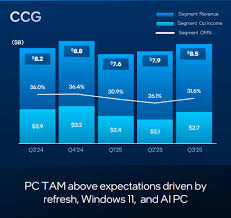
- AI is driving demand for high-compute chips; companies want more power, efficiency, and scale. Intel is signalling it wants to be part of that future.
- Manufacturing is coming back home: countries want domestic chip production. Intel’s US-based fabs play into that geopolitical trend.
- For Indian investors this means: exposure to this structural trend (AI + semiconductors) doesn’t just come via domestic companies — global plays matter.
- The narrative matters: When a major company like Intel shows turnaround signs, the sector gets re-rated. That opens investor interest, which can benefit peer companies too.
How This Relates to You in India
- You might consider diversified tech exposure: global chip cycles can influence Indian tech stocks, export businesses, software services.
- If you are thinking of long-term growth (10-20 yrs) rather than short-term speculation, this global lens becomes valuable.
- Be aware of ETFs, global funds, ADRs: sometimes easier to access than single-stocks and offer diversification.
Summary
Intel’s turnaround isn’t just good for Intel — it’s a signal that the chip/AI wave is real, global and not confined to Silicon Valley. As an Indian investor, tapping into that wave means thinking broadly, not just locally.
CTA
What do you think: will Intel complete the comeback and become a long-term winner, or is the rally reflecting hope more than reality? Drop your view below—whether you’re planning to consider Intel for your portfolio or just watching the global chip story unfold. Share this post with friends who are eyeing global stocks from India.