“Tata Trusts governance: How a bold condition and lifetime trusteeship are reshaping India’s most powerful philanthropic organisation.”
Imagine stepping into the boardroom of one of India’s most influential philanthropic institutions and overhearing whispers of division. The stakes aren’t just internal—they ripple across the economy and into the heart of the Tata Trusts-led empire. The here is Tata Trusts governance, and it’s not just corporate speak—it’s real power, real tension, and real consequence for India’s business landscape.
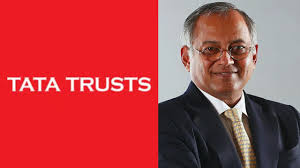
For years, the Tata Trusts (specifically the Sir Dorabji Tata Trust and the Sir Ratan Tata Trust) have held the reins of the Tata Sons group, guiding strategy, legacy, and structure. But now, a bold condition by one trustee—Mehli Mistry—is testing the bedrock of the governance model. And the other major player, Venu Srinivasan, has just been reappointed as a life-trustee in a move that signal shifts in power.
If you care about how corporate governance shapes India’s economic future, stick around. We’ll unpack what’s really happening at the Tata Trusts, why it matters, what the risks are—and why you should keep watching.
Why the Tata Trusts Governance Issue Matters
The Tata Trusts aren’t just charitable bodies—they hold the lion’s share of Tata Sons, making them indirectly architects of some of India’s biggest companies. With great power comes great scrutiny. The current turbulence signals more than a boardroom spat.
The stakes are high
- Tata Trusts collectively hold roughly 66 % of Tata Sons—a massive share.
- Decisions here impact everything from strategic direction, listing calls, governance norms, to how the group is perceived by investors, markets and regulators.
- A breakdown in unanimity at this level raises questions about stability, transparency and the group’s ability to act decisively.
A shift from tradition
Historically, Tata Trusts operated in a culture of consensus and long tenures. In recent days:
- A resolution passed on 17 October 2024 removed tenure limits for trustees, effectively enabling lifetime appointments when renewed.
- But the condition? Renewal still must happen—and it must be unanimous according to some practices. It’s like giving a cook the oven for life if the sous-chefs all agree to it. Key takeaway: Power isn’t just given—it’s conditional.
What’s Happening Now: The Two Key Players
Venu Srinivasan: The steady hand
His three-year term at Sir Dorabji Tata Trust (SDTT) was set to end in late October 2025—but the board approved his renewal before it expired.
With unanimous approval, he moved into a lifetime trusteeship under the new framework.
Why does his case matter? Because it sets precedent: the lifetime tenure model is now alive.
Srinivasan’s renewal signals the model of lifetime trusteeship is operational; continuity is being prioritised.
Mehli Mistry: The suspense remains
- His term at the two core trusts ends on 28 October 2025.
- He’s set a clear pre-condition for his reappointment: every trustee renewal from now on must be unanimous, including his own.
- This move is rare in the history of these trusts and suggests that Mistry is using his leverage to redefine how trustee appointments will happen. Mistry’s condition introduces a checks-and-balances twist into what was previously more straightforward renewal practice.
Decoding the Condition: Why Does It Matter?
Mistry’s email to his fellow trustees on 21 October 2025 made his stance clear: if any trustee refuses a future unanimous renewal resolution, he reserves the right not to support the reappointment of the relevant trustee.
From the outside, it might look like board-game strategy. But let’s dig deeper.
What this could do
- It raises the bar for renewal from mere formality to an active, consensus-driven event.
- It gives any trustee veto-like power over peers, increasing influence (and arguably accountability) for each trustee.
- It signals that internal cohesion matters—any rogue vote creates risk of stalemate.
Risks and benefits
| Benefits | Risks |
|---|---|
| Ensures greater alignment among trustees and forces conversation rather than rubber-stamp renewals. | Could introduce deadlock—if consensus fails, renewal may get delayed or blocked. |
| Adds visible governance discipline—important given public-interest and media attention. | Might invite factionalism; if one trustee feels ostracised, it may spill into group dysfunction. |
| Signals to external stakeholders (regulators, investors) that the Trusts are tightening governance. | Could slow decision-making in urgent matters if unanimity becomes too rigid. |
Mistry’s move could strengthen governance but also carries the danger of gridlock. The balance will matter.
Legacy, Power and the Broader Implications

This is less about two individuals and more about the future of one of India’s foundational institutions.
Legacy under pressure
The late Ratan N. Tata left behind not just a conglomerate but a governance culture emphasising trust, consensus and long-term stewardship. The changes now reflect both continuity and evolution:
- They preserve long tenures (continuity) but up the ante on how consensus works (evolution).
- The new framework sets lifetime tenures (once renewed), hinting at stable governance.
- But debates around nominee directors on the Tata Sons board, listing of Tata Sons, and the role of external investors highlight the latent power dynamics.
Corporate-India ripple effects
- With Tata Trusts controlling a major swath of India’s business footprint, governance issues here reflect on corporate India’s transparency, investor perceptions, and risk profiles.
- A high-profile rift or mis-governance could dent the image of the Tata group, which has long been seen as a model of ethical business.
- The recent meeting of top government officials with Tata Trusts leadership illustrates that this isn’t just internal—it’s of national interest. he governance model of Tata Trusts is being watched not just as a business story, but as part of India’s institutional narrative.
What Happens Next? The Watch-List
Here are key trigger points to monitor, acting like the traffic lights at a busy intersection.
- Mehli Mistry’s renewal outcome
Will the board approve his term seamlessly, or will his condition spark pushback?
— If approved smoothly, lifetime tenure becomes standard.
— If contested, it may open a fissure in the trust house. - Board nomination process at Tata Sons
Who the trustees nominate to Tata Sons’ board is a subtle but powerful lever of influence. Reports note that Mistry was disappointed at being denied directorship support. - Application of the lifetime-tenure resolution
Now that the framework is in place, will other trustees also move into lifetime status quietly, and will renewal become more contested or formalised? - External pressures: listing, shareholding and regulation
With regulators watching the Tata group for its size and impact, internal stability will feed external confidence—and vice versa. The next few weeks will reveal whether the new governance model is robust or brittle.
Lessons for Corporate Governance (India Edition)
If you strip away the names and jargon, what are the take-aways for anyone interested in governance, board rooms or institutional continuity?
- Unanimity matters—but it can be a double-edge sword. Requiring unanimous approval for renewals raises collective responsibility but also slows things down.
- Lifetime tenures may bring stability—but also inertia. Once leadership is locked-in, fresh ideas may struggle to surface.
- Legacy matters—but adaptability wins. Institutions built on past norms must evolve without losing their core values.
- Power isn’t just in appointment—it’s in renewal. Renewal processes offer moments of reset—if treated as mere formality, they lose value.
- Public trust hinges on perception. When major corporate-charity entities have internal friction, it affects stakeholder confidence broadly.
Governance isn’t just about structures—it’s about the culture, the renewal moment and the willingness to adapt while staying true.
Common Mistakes Institutions Make—and What Tata Trusts Could Avoid
- Treating renewal like a rubber-stamp. If renewal loses its meaningfulness, accountability suffers.
- Over-centralising power without checks. Lifetime tenures can lessen oversight if peer review disappears.
- Ignoring culture in favour of rules. Formal rules matter, but culture (consensus, respect, dialogue) drives sustainable governance.
- Failing to manage visible conflict. Internal rifts can become public, affecting reputation and stakeholder trust.
- Neglecting succession planning. Even lifetime trusteeships must have thought about “what next”.
The best governance blends formal structures with evolving, healthy culture—and avoids resting on past laurels.
Final Thoughts
The story unfolding at Tata Trusts is a live case study about power, legacy, governance and change. On one hand we see a heavyweight industrialist being smoothly transitioned into a lifetime trusteeship; on the other we see the same institution grappling openly with its internal dynamics, conditions and renewal processes. For India’s corporate environment, this is more than a drama—it’s a blueprint of sorts.
What you do with this? If you’re an investor, a governance student, a board member or simply a curious watcher of India’s corporate stage—watch this space. The way Tata Trusts resolves this will echo far beyond the boardroom.
Call to action: What’s your take—does requiring unanimous trustee renewal raise standards, or risk paralysis? Share your thoughts below.