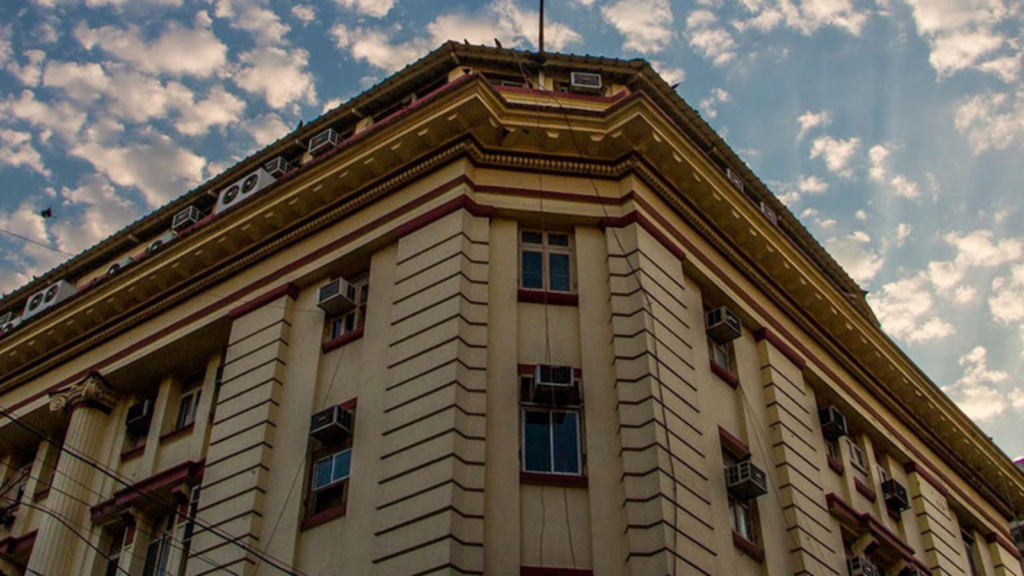
Calcutta Stock Exchange Closing Down After 117 Years: A Look Back at Its History
The Calcutta Stock Exchange (CSE), one of India’s oldest stock exchanges, is preparing to bid farewell as it moves towards a voluntary exit after years of regulatory hurdles and legal challenges. Founded in 1908, the CSE was once a formidable rival to the Bombay Stock Exchange (BSE), dominating trade volumes and serving as the financial nerve centre of Kolkata’s Lyons Range.
The Rise and Fall of the Calcutta Stock Exchange
The CSE’s decline began after the Rs 120-crore Ketan Parekh scam, which led to broker defaults and dealt a severe blow to investor confidence. Trading activity steadily declined over the years during the 2000s, leading to the Securities and Exchange Board of India (SEBI) suspending the operations in 2013 following repeated non-compliance. The CSE made many attempts to resume operations and contest SEBI’s decisions in court, but ultimately decided to seek a voluntary exit.
What Led to the Calcutta Stock Exchange’s Closure?
According to a report by PTI, the CSE is moving towards a voluntary exit following years of legal struggles and regulatory woes. The exchange’s board decided to withdraw all ongoing cases pending before the Calcutta High Court and the Supreme Court, choosing instead to seek a voluntary exit. The exchange formally applied to SEBI on February 18, receiving shareholder approval on April 25. As part of its restructuring, the CSE launched a Voluntary Retirement Scheme (VRS) for all employees, offering a one-time payout of Rs 20.95 crore.
Implications for Indian Investors
The CSE’s closure marks the end of an era for India’s regional stock exchanges, which once thrived before trading activity consolidated around Mumbai’s electronic platforms. Indian investors who had invested in stocks listed on the CSE will need to take note of the developments and consider their options. The CSE has said that it will issue an official statement after Diwali, and investors can visit the Calcutta Stock Exchange website for updates. Investors can also track the latest stock market news and SEBI updates to stay informed.
What’s Next for the Calcutta Stock Exchange?
If SEBI gives its nod, the CSE will remain a holding company with its subsidiary, CSE Capital Markets Pvt. Ltd. (CCMPL), carrying on broking business on the National Stock Exchange (NSE) and BSE. The CSE’s closure will also lead to a reduction in costs, with the VRS expected to save around Rs 10 crore annually. However, the closure will also mark the end of an era for the CSE, which was once a prominent player in the Indian stock market.
Conclusion
The Calcutta Stock Exchange’s closure is a significant development in the Indian stock market, marking the end of an era for regional stock exchanges. Indian investors will need to take note of the developments and consider their options. As the Indian stock market continues to evolve, it’s essential for investors to stay informed and up-to-date with the latest stock market tips and investing strategies. By visiting the Indian stock market page, investors can access a wealth of information and resources to help them make informed investment decisions.