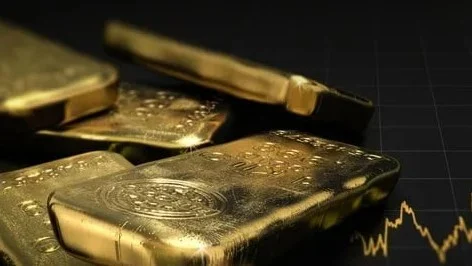
Introduction to Gold’s Enduring Power
At the recent NDTV Profit IGNITE conclave, gold was a subject of discussion among experts, including veteran investor Ramesh Damani and Manish Chokhani of Enam Holdings. The debate centered around gold’s ability to maintain its value in a world flooded with debt and cheap money.
Ramesh Damani’s View on Gold
Damani appeared dismissive of gold, pointing to its muted returns over the long term. “Over the past 150 years, gold has given subpar returns of about 3% per annum,” he said. However, he acknowledged the recent outperformance of gold, saying, “if you’re a trader (and you rode the wave), hats off to you.” Damani’s view is rooted in the classical value investing approach, which evaluates assets based on their cash flow. Gold, having no cash flow, does not fit into this framework. As Warren Buffett aptly puts it, “Gold is constantly dug out of the ground in Africa, or someplace. Then we melt it down, dig another hole, bury it again and pay people to stand around guarding it.”
A Brief History of Gold
Gold’s appeal can be understood by looking at its history. Currencies function best when they have a touch of scarcity. Too much money creation can lead to an abundance of demand, sending prices soaring. Gold, being scarce, malleable, immune to rust, and irresistibly lustrous, served as a medium of exchange for large parts of human history. However, gold was not without its flaws, including being impractical for small transactions and subject to inflation or deflation based on new discoveries or shortages.
Manish Chokhani’s Counterpoint
Chokhani challenged Damani’s view, pointing out that while gold may have a poor long-term record, it has an excellent ultra-long-term record, beating the Sensex over each of the past five, ten, and fifteen-year periods. He also highlighted an oft-overlooked facet of investing in gold, which is its ability to act as a hedge against a weakening currency. Between 1981 and 1999, gold gave zero returns in US dollar terms, but because the rupee fell against the dollar during that time, gold became more expensive in India, effectively acting as an inflation hedge.
The Current State of Global Economies
Since the global financial crisis, and especially after the Covid pandemic, western economies have been on a debt binge, with debt-to-GDP ratios crossing 100% for many countries, including the US. This additional debt flows into the money supply, which in theory triggers inflation, effectively debasing currencies such as the dollar. The market’s way of punishing those who hold the debt is through inflation, and some argue that western economies are trying to “print their way out of the debt crisis” by intentionally devaluing their currencies.
Gold’s Price Action and Its Implications
The recent explosion in gold prices has sparked nervous chatter, with the shorthand being that gold’s price action suggests the US dollar could be staring at a credibility crisis. Gold has value not only because it was a store of value in the past but also because enough people believe it still is. Even Warren Buffett, gold-phobic as ever, recently noted that gold has become a favorite of investors “who fear almost all other assets, especially paper money — of whose value they are rightful to be fearful.” Central banks are set to net-purchase more than 1,000 tonnes of gold for the fourth straight year, with China, Russia, India, and Turkey among the top buyers.
Implications for Investors
So, should investors be afraid and buy gold as insurance? The world of the past thirty years, characterized by rising broad-based prosperity, free trade, and open immigration, has suddenly changed character. Fear isn’t always irrational; sometimes it’s insurance. In that sense, buying gold isn’t about believing in its shine — it’s about admitting the world can still lose its nerve. For more insights on investing in gold and understanding its role in a diversified portfolio, visit our website.
Conclusion
In conclusion, gold’s enduring power is rooted in its historical significance, its ability to act as a hedge against inflation and currency devaluation, and its perceived value as a store of wealth. As investors navigate the complex landscape of global economies and financial markets, understanding the role of gold can provide valuable insights into the collective fear and memory that drive its price. Whether or not to be afraid and buy gold is a personal decision, but being informed about its implications is crucial for making smart investment choices. For further reading on gold prices and their impact on the economy, check out our market analysis section.