Titan Q2 FY26 results: Titan delivered ~20% YoY growth across consumer businesses. Explore key drivers, segment performance & investor takeaways.
Picture this: it’s festival season in India, and jewellery shops are glittering while shoppers decide whether to buy or wait. Suddenly, a trusted brand drops a quarterly update that surprises everyone—Titan just recorded 20% YoY growth in its core consumer businesses in Q2 FY26. The reaction? A sharp stock jump, investor whispers, and mainstream media scrambling to decode what’s happening behind the scenes.
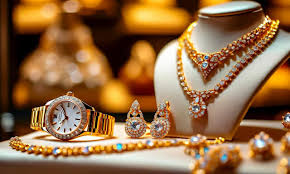
That 20% figure (or thereabouts) is the outcome of many moving parts—gold prices, changing consumer behavior, store expansion, and even international markets pulling weight. In this post, I’ll peel back those layers, translate what analysts mean into everyday terms, and show you how Titan’s Q2 FY26 tells a story that goes well beyond the balance sheet.
Titan Q2 FY26: Big Picture First
Before diving segment by segment, here’s where Titan stands as of Q2 FY26:
- Titan’s consumer businesses grew ~20% YoY in Q2 FY26. mint+3The Economic Times+3Moneycontrol+3
- The company added 55 new stores in the quarter, lifting its total retail footprint to 3,377 stores. Screener+3The Economic Times+3mint+3
- The domestic jewellery segment (its mainstay) grew ~19%. mint+3Moneycontrol+3Business Standard+3
- Other divisions: watches +12%, eyewear +9%. Storyboard18+2mint+2
- Its international business shot up ~86% YoY, largely driven by Tanishq’s expansion. The Economic Times+2Storyboard18+2
- The stock responded: shares jumped ~4%+ intraday after the update. Upstox – Online Stock and Share Trading+3mint+3Moneycontrol+3
So, the topline is strong. But what’s happening under the hood? Let’s break it down.
Segment-wise Performance & Insights
Domestic Jewellery – The Core Engine
The jewellery segment remains Titan’s engine, contributing around 85–90% of revenues historically. Screener+2Moneycontrol+2 In Q2 FY26:
- ~19% YoY growth, despite elevated gold prices. Moneycontrol+2Business Standard+2
- Stability in demand: While buyer count was marginally down, average ticket size rose (i.e. people buying fewer but more expensive items) due to rising gold prices. Business Standard+3Storyboard18+3mint+3
- Stability in mix: Studded jewellery (i.e. pieces with diamonds, gems) grew in mid-teens and outpaced plain gold jewellery. Storyboard18
- Store additions: Brands like Tanishq, Mia, Zoya added ~24 new stores. CaratLane (Titan’s online + omnichannel jewellery arm) grew ~30% YoY and added 10 stores. Storyboard18
Analogy: Think of jewellery sales like selling apples. If apples become costlier, some customers buy fewer apples but choose premium ones (organic, rarer variety). Titan’s response: increase premium mix and expand reach so more people can access you when they’re ready to buy.
Key takeaway: Domestic jewellery, even in a high-gold-price environment, held its ground via premiumization, store expansion, and smarter product mix.
Watches & Wearables
Titan didn’t put all its chips in jewellery. The watches & wearables vertical is its supporting cast. In Q2 FY26:
- Watches (domestic) grew ~12% YoY. Moneycontrol+3Business Standard+3mint+3
- Analog watches, especially, did well (~17% YoY). Storyboard18
- Wearables (smart) declined ~23% YoY. Storyboard18
This divergence (analog up, smart wearables down) suggests that Titan is currently riding on the strength of traditional, trusted mechanical/analog products, while not fully capturing the smart segment perhaps due to competition and technology demands.
Key takeaway: Titan’s core watch business is stable and growing, but the smart wearables space remains a challenge.
Eyewear, Emerging Businesses & Other Verticals
Titan’s ambition extends beyond jewellery and watches. In Q2 FY26:
- Eyewear (EyeCare division) grew ~9% domestically, bolstered by Sunglasses, E-commerce, and brand licensing. Storyboard18+1
- Emerging businesses (fragrances, women’s bags, ethnic wear) showed eye-catching growth:
- Fragrances: +48% YoY Storyboard18
- Women’s bags: +90% YoY Storyboard18
- Taneira (ethnic wear): +13% YoY Storyboard18
These verticals are Titan’s bets to transform from “a jewellery + watch company” into a broader lifestyle conglomerate. While still small in absolute terms, rapid growth helps diversify risk, especially if gold or jewellery cycles turn.
Key takeaway: Emerging verticals are growth engines in the making—still small, but demonstrating the agility and potential of Titan’s ecosystem.
International Operations – The Overlooked Growth Lever
Perhaps the most eye-catching number: 86% YoY growth in international business. The Economic Times+2Storyboard18+2 Titan cited strong expansion in the US & GCC (Gulf Cooperation Council) markets, including a new store in Virginia, USA. Storyboard18+1
Why this matters:
- It reduces dependence on Indian gold-price volatility and domestic cycles.
- It pushes Titan into the global luxury/jewellery conversation.
- It provides insights (on consumer tastes, pricing, branding) that may feed back into domestic strategy.
Key takeaway: International growth isn’t just a vanity metric; it’s a strategic hedge and a testing ground for Titan’s future ambitions.
Key Growth Drivers & Challenges
Understanding why Titan posted these numbers helps us see where it can sustain or struggle.
Drivers of Growth
- Festive pull-forward
The early onset of festivals in September (versus October in the prior year) gave Titan a timing advantage. Storyboard18+1 - Promotions and marketing
Exchange offers, branding campaigns, smart marketing helped drive footfall even in a price-sensitive environment. Storyboard18 - Premiumization & product mix
As gold prices rise, customers move toward studded jewellery or more expensive designs—Titan seems to have ridden this shift.
Lesson: When raw material costs hike, don’t resist. Move up in value. - Retail expansion
More point-of-presence = more chances to convert the “I might buy” into “I will buy.” 55 new stores is a considerable push. The Economic Times+2mint+2 - Diversification of verticals
While jewellery is the engine, fragrance, bags, ethnic wear, eyewear all give complementary growth buffer. - Global expansion as optionality
The 86% growth abroad helps Titan scale ideas, reduce exposure to domestic risk, and build brand equity internationally.
Challenges & Headwinds
- Gold price volatility
The higher the gold price, the more ticket sizes increase—but demand elasticity is tricky. At some point, customers may delay purchases. Indeed, buyer count was marginally negative. Storyboard18 - Margin compression
Gold coins (a high-volume, low-margin product) and rising costs can squeeze margins. Reuters+1 - Smart wearables drag
Decline in that segment suggests either competition is stiff or Titan hasn’t yet carved a strong identity there. Storyboard18 - High base effect
Q2 FY25 had strong growth thanks to gold duty cuts which propped up demand—so comparisons are tough. Moneycontrol+1 - Overexpansion risk
Opening many new stores brings fixed costs (rent, staff, infrastructure). If footfall doesn’t catch up, these become financial burdens. - Brand perception in global markets
Titan is a strong Indian brand; abroad, it needs to compete against entrenched names with heritage.
Stock Market & Investor View
Unsurprisingly, the market cheered. Titan’s shares jumped over 4% intraday following the update. The Economic Times+3mint+3Moneycontrol+3 Analysts affirmed bullish views—some even raising target prices. The Economic Times+3Business Standard+3mint+3
A few noteworthy views:
- Antique Stock Broking expects jewellery EBIT margins to expand from ~9.7% (FY25) toward ~11.8% by FY28. mint+1
- JM Financial upgraded Titan to “Buy” and raised the target price to ₹3,725. The Economic Times
From an investor’s lens:
- Titan carries some premium valuation, so future growth must justify it.
- The business is not one-trick (jewellery); success across verticals stabilizes risk.
- Watch closely how margins hold up in coming quarters.
What Titan Q2 FY26 Teaches Us (Practical Lessons)
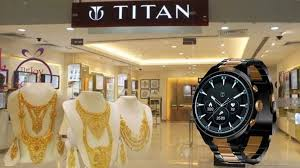
Here are real-world takeaways—whether you’re an entrepreneur, investor, or strategic thinker:
- Don’t lean solely on legacy strength
Yes, jewellery is older Titan’s bedrock. But watch what happens when you invest in new verticals (fragrance, bags). That’s where optional growth lies. - Premiumization as a buffer
In commodity-driven businesses (here, gold), the pure cost game is a losing war. Moving “up the pyramid” (design, customization, brand experience) adds resilience. - Timing & seasonality matter
Realising that festive demand can shift, Titan’s early push shows that positioning is not just “what you sell” but “when you reach your customer.” - International markets as a stress test
If you can win a market where brand awareness is low, that discipline helps sharpen your entire product, supply, and pricing equation. - Be wary of overextension
Expansion, especially retail, has hidden costs. Walk before you run when scaling.
Conclusion & Moving Forward
Titan’s Q2 FY26 results are impressive not just for the ~20% growth, but for the robustness underneath: domestic jewellery held up even as gold soared; niche verticals scaled rapidly; international markets are contributing meaningfully; and the core watch business stayed stable.
However, this is not a victory lap. The coming quarters will test margin resilience, smart wearables recovery (or pivot), effectiveness of new store investments, and sustained traction in international markets.
🔎 To reflect: If you were running Titan, which vertical would you double down on? Emerging ones like fragrance & bags—or the global push? Let me know what you think—and any metrics or angles you want me to dig into next.