Explore the most important stock market trends in India right now, including crude oil, AI, FII flows, IT stocks, SEBI reforms and corporate earnings.
The Indian stock market is no longer being driven by one story.
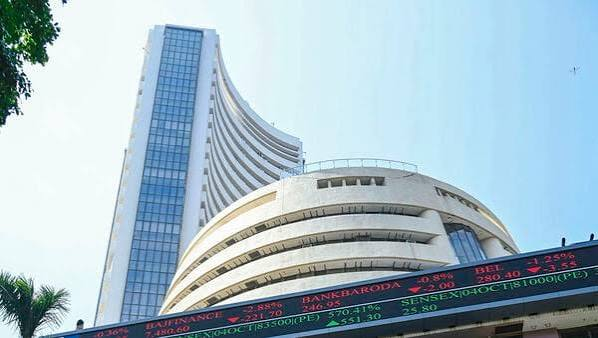
One day, investors are talking about crude oil. The next, it is AI and semiconductor stocks. Then comes FII selling, corporate earnings, the rupee, US interest rates or a SEBI announcement.
That is exactly what makes the current market interesting—and difficult.
On August 17, 2026, the Sensex fell around 281 points to 77,728, while Nifty closed below 24,300, extending its losing streak. IT stocks were among the biggest drags, while metals and realty outperformed.
But today’s decline is only one piece of the puzzle.
For investors, the bigger question is:
What are the important trends shaping the stock market right now—and which ones could matter beyond the next trading session?
Here are the five stories worth watching.
1. Crude Oil Is Back as India’s Biggest Macro Risk
If there is one commodity Indian investors should keep on their radar, it is crude oil.
India imports a large portion of its crude requirement. That makes oil prices closely connected to inflation, the rupee, government finances and corporate profitability.
And right now, crude is uncomfortable.
Oil prices have remained elevated as uncertainty surrounding the Iran-US situation continues. Today’s market commentary also highlighted crude near the $89-a-barrel region as one of the reasons for pressure on Indian equities.
The concern becomes bigger if prices move substantially higher.
CareEdge estimates that crude around $115 a barrel could push the operating profit of an integrated Indian oil marketing company into negative territory, highlighting how sensitive some businesses are to oil prices.
Why should an equity investor care?
Because the impact doesn’t stop with oil companies.
Higher crude can mean:
Higher import bill → pressure on rupee → inflation concerns → higher input costs → margin pressure → weaker earnings expectations.
Industries such as aviation, paints, chemicals, logistics and transportation can be particularly sensitive.
On the other hand, companies that benefit from lower energy costs could see relief if crude falls.
What investors should watch
Don’t simply ask, “Is crude rising?”
Ask:
- Is the move temporary or structural?
- Is the rise caused by geopolitics?
- Is supply actually being disrupted?
- How is the rupee responding?
- Are inflation expectations changing?
The takeaway: For Indian markets, crude oil isn’t just an energy story. It is an earnings, inflation and currency story.
2. The AI Boom Is Moving From Hype to a Stock-Picking Game
The second major theme is artificial intelligence.
But the AI story is changing.
A couple of years ago, almost anything connected with AI could attract investor attention.
Today, markets are becoming more selective.
Investors increasingly want to know:
Who is actually making money from AI?
The global market continues to reward semiconductor and AI-linked companies, with chip stocks helping the Nasdaq remain relatively resilient even as oil-related concerns weighed on broader sentiment.
China and Hong Kong technology stocks have also been supported by strong semiconductor earnings, while the global AI investment debate is increasingly shifting from simply tracking spending to identifying sustainable winners.
That is an important change.
The AI trade is moving from:
“AI will be huge.”
to:
“Which companies will capture the profits?”
The AI investment chain
Think about AI as an ecosystem rather than one sector.
There are:
- Semiconductor manufacturers
- Memory-chip companies
- Data-centre operators
- Cloud companies
- Power companies
- Networking businesses
- Software companies
- AI model developers
- IT service providers
This creates opportunities far beyond the obvious technology names.
For Indian investors, the question is whether India’s IT companies, electronics manufacturers, semiconductor ecosystem and power infrastructure can capture part of this global spending cycle.
The risk
AI valuations can become expensive very quickly.
A great technology doesn’t automatically make every stock a great investment.
The takeaway: The AI boom is still powerful, but the market is becoming more selective. Investors need to separate genuine earnings growth from AI-related excitement.
3. FII Flows Are Still a Major Market Driver
Another trend investors should watch is the battle between foreign institutional investors and domestic investors.
Foreign money can have a significant impact on Indian equities because global investors constantly compare India with other emerging markets.
Their decisions depend on:
- US interest rates
- Dollar strength
- Emerging-market valuations
- Geopolitical risk
- Global growth
- India’s earnings outlook
Today’s market data showed foreign institutional investors as net sellers, with provisional selling of around ₹2,535 crore.
That selling pressure matters.
But there is another side of the story.
Domestic institutional investors have become an increasingly important source of market liquidity.
The NSE’s latest available FII/DII data shows that both groups remain highly active in the cash market, demonstrating how large institutional flows have become in India’s market structure.
Why this matters
Imagine Nifty as a large boat.
FII flows are one powerful current.
Domestic flows are another.
If both push in the same direction, the market can move sharply.
If FIIs sell while domestic investors buy, the market can become more balanced.
This is one reason India’s market has become more resilient despite periods of foreign selling.
The takeaway: Don’t look at FII selling alone. Watch the relationship between foreign selling and domestic buying.
4. Indian IT Stocks Are Facing a New Question
The IT sector has become one of the most interesting parts of the market.
But the debate is changing.
Earlier, investors mainly worried about whether US companies would increase or decrease technology spending.
Now there is another question:
How will AI change the economics of IT services?
Today’s market showed the pressure clearly. The IT index fell nearly 2%, with major names including Infosys, HCLTech and TCS among the notable Nifty decliners.
The irony is fascinating.
AI is creating enormous global technology spending.
Yet some traditional IT businesses can still face uncertainty.
Why?
Because AI can simultaneously:
Create new demand
and
reduce the amount of human effort required for certain tasks.
That creates both opportunity and disruption.
What investors should track
For IT companies, look beyond quarterly revenue.
Watch:
- Large deal wins
- AI-related revenue
- Employee utilisation
- Margins
- US demand
- Client spending
- Automation impact
- Management commentary
The winners may not simply be the companies with the biggest AI announcements.
They may be the companies that convert AI into higher productivity and sustainable profits.
The takeaway: India’s IT sector isn’t disappearing because of AI. But its business model is changing—and investors need to understand who adapts fastest.
5. SEBI Is Quietly Changing How the Market Works
While investors spend most of their time watching Nifty, another transformation is happening underneath the market:
regulation.
SEBI has been introducing and reviewing several changes covering market structure, derivatives, mutual funds, buybacks and price discovery.
One important recent development is the Closing Auction Session, designed to improve the way closing prices are discovered.
SEBI has also brought back the framework for open-market buybacks, while continuing to evolve regulations around derivatives and other market segments.
These may sound like technical changes.
They aren’t.
Regulation eventually affects:
How companies raise capital.
How investors trade.
How mutual funds operate.
How prices are discovered.
How companies return money to shareholders.
And that makes SEBI one of the most important forces shaping India’s capital markets.
Why retail investors should care
You don’t need to read every circular.
But you should understand the rules that directly affect your investments.
If you trade F&O, follow derivatives regulation.
If you invest in mutual funds, understand scheme changes.
If you own companies conducting buybacks, understand the structure.
If you follow market influencers, verify whether advice is coming from a properly regulated source where required.
The takeaway: Regulation may not move Nifty every day, but it can permanently change how the market operates.
The Hidden Trend: Market Leadership Is Rotating
One of the most interesting signals in today’s market is that not every sector is falling together.
IT, pharma and FMCG were under pressure, while metals and realty performed better.
This is called sector rotation.
Money doesn’t always leave the stock market completely.
Sometimes it simply moves from one pocket to another.
Think of it like a cricket team changing its batting order.
If one sector loses momentum, another can take over.
For investors, this creates an important opportunity.
Instead of asking:
“Is the market bullish or bearish?”
Ask:
“Where is the money moving?”
That question can reveal much more.
What About the Rupee?
The rupee remains another important variable.
Higher crude prices can increase India’s import bill.
A stronger dollar can also make emerging-market assets less attractive.
For Indian companies, currency movements create both winners and losers.
Exporters can benefit from a weaker rupee.
Import-heavy companies can face higher costs.
That’s why investors should watch USD/INR alongside crude oil.
The combination can provide an early warning about inflation and corporate margins.
The Market’s Next Big Test: Earnings
Eventually, every market story comes back to one thing:
profits.
AI can be exciting.
Crude can be scary.
FII flows can move markets.
SEBI can change regulations.
But over the long term, corporate earnings remain one of the strongest foundations of equity valuations.
That’s why investors should pay attention to:
Revenue growth
Profit growth
Margins
Cash flow
Debt
Management guidance
A company can have a fantastic story and still deliver disappointing returns if investors pay too much for that story.
Five Questions Every Investor Should Ask Right Now
Instead of trying to follow hundreds of headlines every day, build a simple checklist.
1. What is crude oil doing?
Rising oil can create macro pressure.
2. What are FIIs doing?
Large foreign flows can influence market momentum.
3. Which sectors are outperforming?
Sector rotation often reveals where institutional money is moving.
4. Are earnings improving?
Ultimately, profits support valuations.
5. Is the global AI rally sustainable?
Technology and semiconductor strength can influence global risk appetite and Indian tech stocks.
These five questions can give you a much clearer picture of the market than watching every breaking-news notification.
What This Means for Retail Investors
The current market isn’t necessarily a market to fear.
But it is a market that demands discipline.
If you’re a long-term investor, don’t let short-term volatility force unnecessary decisions.
If you’re a trader, respect risk.
If you’re investing in individual stocks, don’t confuse a falling price with a cheap valuation.
And if you’re a beginner, don’t try to trade every headline.
The market will always produce another headline tomorrow.
Your capital doesn’t have to react to every one.
Final Takeaway: The Market Is Changing, Not Ending
The Indian stock market is currently being shaped by several powerful forces at the same time:
Crude oil is influencing inflation and margins.
AI is reshaping global technology leadership.
FII and DII flows are determining liquidity.
IT companies are adapting to a new technological reality.
SEBI is redesigning parts of the market structure.
And beneath all of this, corporate earnings remain the ultimate test.
Today’s market decline—with Nifty below 24,300 and IT stocks under pressure—may grab the headline.
But investors should look beyond one day’s movement.
The bigger opportunity is understanding where capital is moving, which businesses are gaining pricing power, which sectors are adapting to disruption and which companies are actually converting trends into profits.
Because in the stock market, the biggest returns rarely come from simply knowing what is trending.
They come from understanding why it is trending—and whether the trend can last.