Discover how wars affect stock markets, crude oil, gold, inflation, currencies, defence stocks, and the global economy. Learn what investors should watch.
Wars dominate headlines with images of destruction, diplomacy, and military operations. But behind every conflict, another battle unfolds quietly—the battle inside global financial markets.
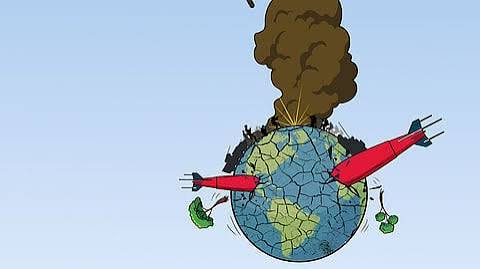
Investors don’t just monitor troop movements. They watch oil prices, shipping routes, currencies, defence spending, inflation, and central bank decisions. A single geopolitical event can influence stock markets across continents within hours.
This is why wars are not just political events. They are economic events that reshape industries, investment trends, and global capital flows.
Why Do Financial Markets React So Quickly?
Financial markets dislike one thing more than anything else—uncertainty.
When a conflict breaks out, investors immediately begin asking difficult questions.
Will global trade be disrupted?
Will oil supplies be affected?
Will inflation rise again?
Will central banks delay interest-rate cuts?
Will companies report weaker earnings?
Since markets are forward-looking, prices adjust long before the full economic impact becomes visible.
That is why stock markets often become volatile during geopolitical crises.
Oil Is Usually the First Market to React
One of the biggest consequences of any major conflict is its impact on energy markets.
If a war involves important oil-producing regions or critical shipping routes, crude oil prices can move sharply within days.
Higher crude oil prices increase transportation costs, manufacturing expenses, aviation fuel prices, and logistics costs.
These higher costs eventually flow through the economy, influencing inflation and consumer spending.
For countries like India, which import a large portion of their crude oil requirements, sustained increases in oil prices can widen the import bill and put pressure on the rupee.
Some Sectors Struggle While Others Benefit
Every conflict creates winners and losers in financial markets.
Sectors that often face pressure include:
- Airlines
- Tourism
- Logistics
- Automobile manufacturers
- Chemical companies dependent on imported raw materials
At the same time, some industries may benefit from increased government spending or changing demand.
These include:
- Defence manufacturing
- Cybersecurity
- Energy companies
- Commodity producers
- Precious metals such as gold
This doesn’t mean investors should chase short-term headlines. Instead, it highlights how different industries respond differently to global events.
Gold Becomes the Market’s Safe Haven
Whenever uncertainty rises, investors often shift money toward assets perceived as relatively stable.
Gold has historically played this role.
During periods of geopolitical tension, demand for gold frequently increases as investors seek protection from market volatility.
This explains why gold prices often move higher during periods of international conflict.
For many investors, gold acts as portfolio insurance rather than a tool for aggressive returns.
Currencies Tell an Important Story
Wars don’t only affect commodities.
They also influence global currencies.
Investors generally move capital toward currencies considered relatively safer during uncertain periods.
A stronger US dollar can create additional challenges for emerging economies by making imports more expensive and increasing financing costs.
Currency movements may appear technical, but they directly affect businesses involved in exports, imports, and international trade.
Governments Often Increase Defence Spending
One noticeable consequence of prolonged geopolitical tensions is higher defence expenditure.
Countries strengthen military preparedness, modernize equipment, and invest in domestic manufacturing.
For investors, this can create long-term opportunities in sectors such as:
- Defence manufacturing
- Aerospace
- Electronics
- Shipbuilding
- Drone technology
- Communication systems
India has increasingly focused on domestic defence production, making the sector an important area to watch over the coming years.
Should Investors Panic During Wars?
History offers an important lesson.
Wars often create short-term uncertainty.
But markets eventually shift their attention back to earnings, economic growth, and corporate fundamentals.
Several major conflicts over the past few decades caused temporary market corrections, yet many global equity markets recovered as businesses adapted and uncertainty declined.
Emotional decisions made during periods of fear have often proven more damaging than the conflicts themselves.
Long-term investing requires patience, discipline, and perspective.
What Should Investors Watch Instead of Headlines?
Rather than reacting to every breaking news alert, investors should monitor broader economic indicators:
- Crude oil prices
- Inflation trends
- Central bank decisions
- Bond yields
- Currency movements
- Corporate earnings
- Government policy responses
These factors often have a more lasting impact on investment portfolios than daily geopolitical headlines.
Understanding the economic consequences of conflict is more valuable than trying to predict military developments.
The Bigger Picture
Wars reshape more than borders.
They influence supply chains.
Trade relationships.
Energy security.
Government budgets.
Technology development.
Industrial policy.
Capital allocation.
Many of today’s investment themes—including defence manufacturing, energy security, semiconductor production, and supply chain diversification—have gained momentum partly because countries are preparing for an increasingly uncertain geopolitical environment.
The Bottom Line
No investor hopes for conflict.
But every investor should understand how geopolitical events influence financial markets.
Wars create uncertainty, but they also accelerate changes that may shape economies for decades.
Successful investors avoid emotional reactions.
Instead, they focus on long-term trends, diversified portfolios, and businesses capable of navigating changing global conditions.
Markets may react sharply to headlines.
But history repeatedly shows that disciplined investing often outlasts short-term uncertainty.