Can India become the world’s next manufacturing superpower? Discover the opportunities, challenges, and industries driving India’s manufacturing revolution.
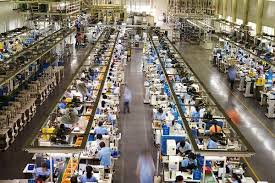
A few decades ago, whenever someone looked at a product label, there was a good chance it said “Made in Japan.” Later, the world shifted to “Made in China.” Today, a new question is being asked by investors, economists, and business leaders across the globe:
Could the next label read “Made in India”?
It is a fascinating question because manufacturing has historically transformed nations. Japan used manufacturing to rebuild after World War II. South Korea used it to become a technology powerhouse. China used it to lift hundreds of millions out of poverty and become the world’s second-largest economy.
Now India stands at a unique crossroads.
With a population exceeding 1.4 billion, a young workforce, rising infrastructure investment, and growing global interest from multinational corporations, India has perhaps the biggest manufacturing opportunity in its modern history.
But becoming a manufacturing superpower is easier said than done.
The journey requires more than ambition. It requires execution, infrastructure, policy support, skilled labor, and global competitiveness.
The real question is not whether India wants to become a manufacturing giant.
The real question is whether India can successfully seize this historic opportunity.
Why Manufacturing Matters So Much
Many people think economic growth comes mainly from technology or financial services.
While those sectors are important, manufacturing creates something unique.
It generates:
- Large-scale employment
- Export earnings
- Supply chain development
- Technology transfer
- Industrial growth
- Rising incomes
Manufacturing often creates opportunities for workers across multiple skill levels.
Unlike software or finance, manufacturing can absorb millions of workers into productive jobs.
This is especially important for a country like India, where millions of young people enter the workforce every year.
Think of manufacturing like the engine of a train.
Technology, services, and consumption are important compartments, but manufacturing often provides the pulling power that moves the entire economy forward.
What You Should Remember
Manufacturing is not just about factories. It is about jobs, exports, income growth, and long-term economic development.
Why Global Companies Are Looking Beyond China
For decades, China dominated global manufacturing.
Its advantages included:
- Massive infrastructure
- Skilled labor
- Efficient logistics
- Strong supply chains
- Export competitiveness
But the global landscape is changing.
Several factors are encouraging companies to diversify manufacturing operations:
Rising Labor Costs
As China’s economy matured, labor costs increased significantly.
Geopolitical Tensions
Trade disputes and strategic competition have encouraged businesses to reduce dependence on a single country.
Supply Chain Resilience
The pandemic exposed vulnerabilities in concentrated supply chains.
Many corporations now prefer a “China Plus One” strategy, where manufacturing is spread across multiple countries.
India has emerged as one of the strongest candidates to benefit from this shift.
What You Should Remember
India’s manufacturing opportunity is not happening in isolation. It is being supported by major global supply chain changes.
India’s Biggest Manufacturing Advantages
India possesses several strengths that few countries can match.
Massive Workforce
India has one of the youngest populations in the world.
Millions of people are entering working age every year.
This demographic advantage could support manufacturing growth for decades.
Large Domestic Market
Unlike many export-focused economies, India offers a huge domestic consumer base.
Manufacturers can serve both local and international demand.
Government Support
Initiatives such as:
- Make in India
- Production Linked Incentive (PLI) schemes
- Infrastructure expansion
- Industrial corridors
are designed to encourage manufacturing investment.
Growing Infrastructure
India has significantly increased spending on:
- Highways
- Ports
- Railways
- Airports
- Logistics networks
Better infrastructure reduces costs and improves competitiveness.
What You Should Remember
Few countries combine population scale, market size, and policy support the way India does today.
Industries That Could Drive India’s Manufacturing Boom
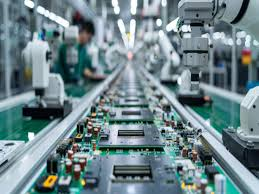
Electronics Manufacturing
India is rapidly emerging as a major electronics production hub.
Smartphones, consumer electronics, and components are increasingly being manufactured domestically.
Several global companies are expanding production facilities in India.
Semiconductor Manufacturing
Semiconductors have become the backbone of the digital economy.
India is investing heavily in developing a domestic semiconductor ecosystem.
While the journey will take time, success in this area could transform India’s industrial future.
Defense Manufacturing
India is focusing on reducing import dependence and boosting indigenous defense production.
Defense manufacturing creates high-value jobs and technological capabilities.
Electric Vehicles
The EV revolution presents a massive opportunity.
India can potentially become a major producer of:
- Electric vehicles
- Batteries
- Components
- Charging infrastructure
Renewable Energy Equipment
As global demand for clean energy grows, manufacturing solar panels, batteries, and related equipment could become significant growth drivers.
What You Should Remember
India’s manufacturing opportunity extends far beyond traditional industries. Future growth will likely come from advanced manufacturing sectors.
The Challenges India Must Overcome
Despite enormous potential, several challenges remain.
Logistics Costs
India’s logistics costs remain higher than many competing economies.
Reducing transportation and supply chain costs is critical.
Skill Development
A large workforce alone is not enough.
Manufacturing increasingly requires:
- Technical skills
- Automation expertise
- Engineering capabilities
Continuous skill development will be essential.
Regulatory Complexity
Simplifying regulations and improving ease of doing business remain important priorities.
Supply Chain Ecosystems
Successful manufacturing requires entire ecosystems of suppliers, vendors, and supporting industries.
Building these ecosystems takes time.
What You Should Remember
Potential creates opportunity, but execution determines outcomes.
Lessons from China, Japan, and South Korea
History offers valuable lessons.
China did not become a manufacturing giant overnight.
Neither did Japan or South Korea.
Their success was built on:
- Long-term planning
- Infrastructure investment
- Export competitiveness
- Education
- Industrial policy
India’s manufacturing transformation will likely follow a similar path.
Patience and consistency will be critical.
There may not be dramatic changes every year.
But small improvements compounded over decades can create extraordinary results.
What You Should Remember
Manufacturing success is usually the result of sustained effort, not overnight miracles.
Why Investors Are Watching Manufacturing Closely
Many investors believe India’s manufacturing story could become one of the defining investment themes of the next decade.
Why?
Because manufacturing growth can create opportunities across multiple sectors:
- Industrials
- Logistics
- Capital goods
- Infrastructure
- Engineering
- Banking
- Technology
As factories expand, demand increases for machinery, transportation, financing, and digital solutions.
The impact extends far beyond manufacturing companies themselves.
What You Should Remember
Manufacturing growth creates ripple effects throughout the economy.
Could India Really Become the Next Manufacturing Superpower?
The honest answer is:
Yes, but not automatically.
India possesses many ingredients necessary for success:
- Population scale
- Policy support
- Infrastructure investment
- Global interest
- Entrepreneurial energy
However, success depends on consistent execution.
If India continues improving:
- Infrastructure
- Skills
- Ease of doing business
- Industrial competitiveness
the country could become one of the world’s most important manufacturing destinations over the next two decades.
The opportunity is real.
The challenge is equally real.
Final Thoughts
India’s manufacturing journey may become one of the most important economic stories of the 21st century.
The world is searching for diversified supply chains. Companies are looking for alternative production hubs. Technology is creating new manufacturing opportunities. Governments are supporting industrial growth.
For India, these trends have aligned at a potentially historic moment.
Will India replace China completely?
Probably not.
But India does not need to replace anyone to succeed.
If the country captures even a meaningful share of global manufacturing growth, the impact on jobs, incomes, exports, and economic development could be transformational.
The next manufacturing superpower may not emerge overnight.
But the foundations are being built today.
And that is why investors, businesses, and policymakers around the world are watching India more closely than ever before.