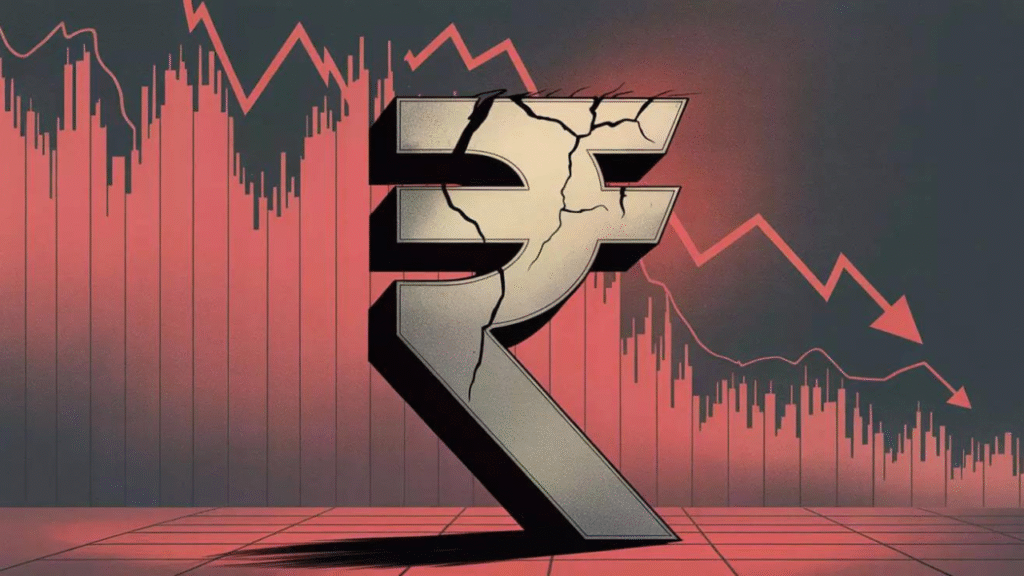
Rupee Sinks to All-Time Low: A New Era for Indian Investors
The Indian rupee has plunged to an all-time low of 93.71 against the US dollar, weighed down by persistent foreign fund outflows and a sharp rise in global crude oil prices amid mounting geopolitical tensions. This significant decline has sent shockwaves through the Indian economy, leaving investors and traders wondering what the future holds.
Understanding the Reasons Behind the Rupee’s Decline
According to forex traders, the domestic currency remained under intense pressure due to elevated energy prices and a shift towards risk aversion, which dented investor sentiment. The rupee’s decline can be attributed to several factors, including foreign fund outflows and the ongoing geopolitical tensions in West Asia.
The crude oil prices have also played a significant role in the rupee’s decline. With Brent crude rising by 1.84% to USD 110.7 per barrel in futures trade, the Indian economy is likely to feel the heat. As a net importer of oil, India’s trade deficit is expected to widen, which could lead to higher inflation and further pressure on the rupee.
Impact on Indian Investors and the Economy
The rupee’s decline is likely to have far-reaching consequences for Indian investors and the economy. With the dollar index trading 0.35% higher at 99.58, the rupee’s decline is expected to continue. This could lead to higher import costs, which could negatively impact various sectors, including IT and pharmaceuticals.
On the other hand, the decline in the rupee could benefit export-oriented sectors, such as textiles and leather. However, the overall impact on the economy is likely to be negative, at least in the short term.
What’s Next for the Rupee?
According to Anuj Choudhary, Research Analyst, Commodities Research, Mirae Asset Sharekhan, the rupee is expected to trade with a negative bias due to escalating geopolitical tensions and rising crude oil prices. The USD-INR spot rate is likely to move in the range of Rs 93.20–93.80.
As the situation continues to unfold, Indian investors and traders will be closely watching the developments in the forex market. With the NSE Nifty and BSE Sensex recovering from the previous session’s losses, the focus will shift to the upcoming Q1 earnings season.
Conclusion
In conclusion, the rupee’s decline to an all-time low against the US dollar is a significant development that will have far-reaching consequences for Indian investors and the economy. As the situation continues to unfold, it’s essential for investors and traders to stay informed and adapt to the changing market conditions.
To stay ahead of the curve, it’s crucial to keep an eye on the latest developments in the forex market, including the rupee vs dollar exchange rate. With the right information and insights, Indian investors can navigate the challenges and opportunities presented by the current market scenario.