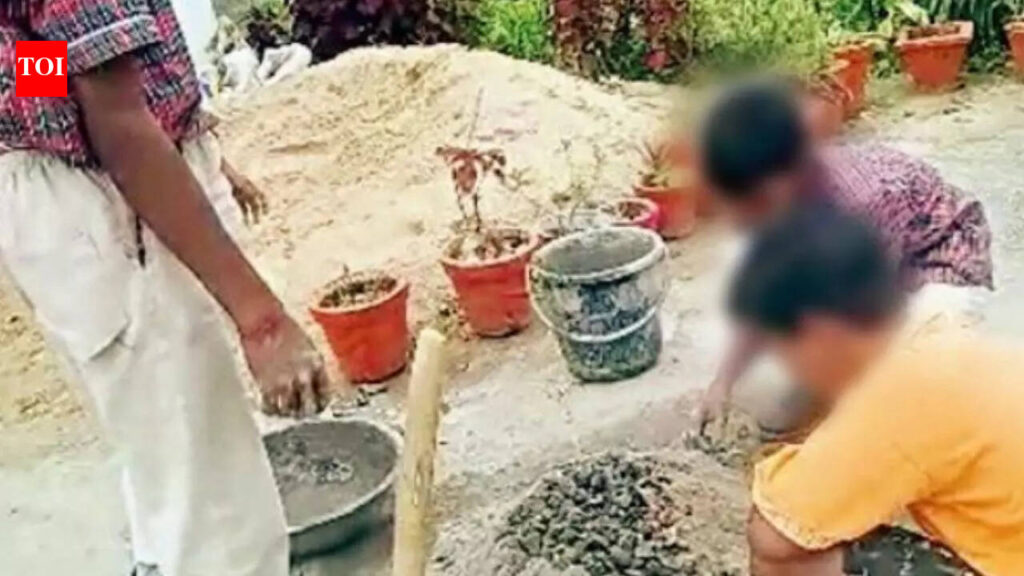
RTE Students Forced into Labour: Chhattisgarh High Court Seeks Affidavit
The Chhattisgarh High Court has taken a significant step in addressing the exploitation of students enrolled under the Right to Education (RTE) Act. The court has directed the state school education secretary to file a personal affidavit in response to reports of RTE students being forced into construction and painting work at a school in Surajpur district.
Background of the Case
The incident came to light through news reports, which highlighted the plight of RTE students at the Mukhya Mantri DAV Public School in Tilsiva, Surajpur district. According to the reports, the school principal compelled these students to undertake physical labour, including carrying cement and sand, and painting classrooms. The principal allegedly threatened the students with expulsion if they refused to work.
When parents confronted the school administration, the principal dismissed their concerns, stating that since the children received free bags, books, and uniforms under the RTE quota, parents had no grounds for complaint. This response not only indicates a lack of understanding of the RTE Act’s provisions but also a blatant disregard for the well-being and rights of the students.
Chhattisgarh High Court’s Response
A division bench comprising Chief Justice Ramesh Sinha and Justice Ravindra Kumar Agrawal took suo motu cognizance of the news reports and directed the state school education secretary to file a personal affidavit by March 11. The court’s decision to take up the matter immediately, despite related public interest litigation and petitions being listed for a later date, underscores the gravity of the allegations and the need for swift action.
The court’s move is significant, as it reflects a commitment to upholding the rights of marginalized students and ensuring that they are not exploited. The RTE Act, which came into effect in 2010, aims to provide free and compulsory education to all children between the ages of 6 and 14. However, instances of exploitation and abuse of RTE students have been reported in various parts of the country, highlighting the need for stricter implementation and monitoring of the Act’s provisions.
Investigation and Affidavit
Appearing for the state, additional advocate general Shashank Thakur informed the court that a three-member committee had been constituted to investigate the incident and verify facts. The committee’s findings will be crucial in determining the course of action to be taken against the school administration and in ensuring that such incidents do not recur in the future.
The school education secretary’s affidavit will provide further insight into the actions taken by the state government to address the issue and prevent similar instances of exploitation. It will also highlight the measures being taken to ensure that RTE students are protected and their rights are upheld.
Implications and Way Forward
The Chhattisgarh High Court’s decision to seek an affidavit from the state school education secretary is a step in the right direction. It sends a strong message that the exploitation of RTE students will not be tolerated and that those responsible will be held accountable.
However, the incident also highlights the need for greater awareness and sensitization among school administrators, teachers, and parents about the provisions of the RTE Act and the rights of RTE students. It is essential to create a supportive and inclusive environment that allows these students to thrive and reach their full potential.
For more information on the RTE Act and its provisions, readers can visit our website. We also provide updates on education news and Indian law, including developments related to the Chhattisgarh High Court.