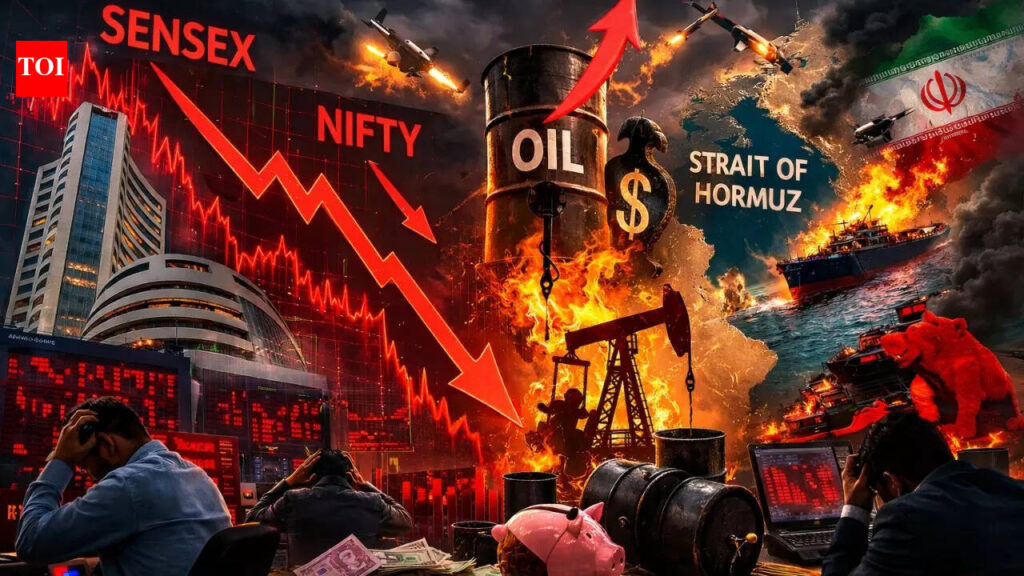
Crude Oil Shock: Indian Stock Markets Lose Rs 34 Lakh Crore Since US-Iran War
Indian equity markets have witnessed a ‘crude’ shock! The US-Iran war and rising oil prices have spooked investors globally, and Sensex and Nifty are feeling the heat. The closure of Strait of Hormuz is hitting not just oil and LPG supply, but also other trade, which may ultimately hit across sectors in India.
Impact on Indian Economy
The rising oil prices are expected to have a significant impact on the Indian economy, which is heavily dependent on crude oil imports. The increase in oil prices will lead to higher fuel costs, which will have a cascading effect on the entire economy. The transportation sector, which is a significant contributor to the country’s GDP, will be particularly affected.
Furthermore, the closure of Strait of Hormuz will disrupt trade flows, which will have a ripple effect on the Indian economy. The country’s exports, which are already facing challenges due to the global economic slowdown, will be further affected. The imports, on the other hand, will become more expensive, leading to higher prices for consumers.
Stock Market Check: Is the Long-Term Growth Story Intact?
Despite the short-term volatility, the long-term growth story of the Indian economy remains intact. The country’s demographic dividend, coupled with the government’s efforts to improve the business environment, will continue to drive growth. However, investors need to be cautious and adapt to the changing market conditions.
According to Thomas V Abraham, a seasoned market expert, investors should focus on defensives, such as pharma and FMCG, which are less affected by the oil price volatility. He recommends an allocation of 60-70% to defensives, 20-30% to opportunistic investments, and 10% to hedges.
For more information on Pharma sector in India, please visit our website. We also have a detailed analysis of the FMCG industry in India, which can help you make informed investment decisions.
What Should Investors Do?
Investors should remain calm and not make any rash decisions based on short-term market fluctuations. Instead, they should focus on their long-term investment goals and adjust their portfolios accordingly. It is essential to have a diversified portfolio, with a mix of low-risk and high-risk investments, to mitigate the impact of market volatility.
For those looking to invest in the stock market, it is crucial to have a thorough understanding of the stock market analysis and the various factors that affect it. Our website has a comprehensive guide on how to invest in stock market, which can help you get started.
Opportunistic Investments
The current market conditions provide a good opportunity to accumulate large cap companies, such as RIL, at a lower valuation. These companies have a strong track record and are well-positioned to benefit from the long-term growth story of the Indian economy.
For more information on large cap companies in India, please visit our website. We also have a detailed analysis of the RIL stock performance, which can help you make informed investment decisions.
Hedges
Investors should also consider hedging their portfolios to mitigate the impact of market volatility. Gold, gold ETFs, and sovereign bonds are good options, as they tend to perform well during times of uncertainty. Additionally, investing in 3-6 month FDs yielding 7-8% can provide liquidity and returns.
For more information on gold investment in India, please visit our website. We also have a detailed analysis of the sovereign bonds in India, which can help you make informed investment decisions.
Conclusion
In conclusion, the crude oil shock has had a significant impact on the Indian stock markets, resulting in a loss of Rs 34 lakh crore for investors. However, the long-term growth story of the Indian economy remains intact, and investors should focus on their long-term investment goals and adjust their portfolios accordingly. By diversifying their portfolios and considering opportunistic investments and hedges, investors can mitigate the impact of market volatility and achieve their investment objectives.