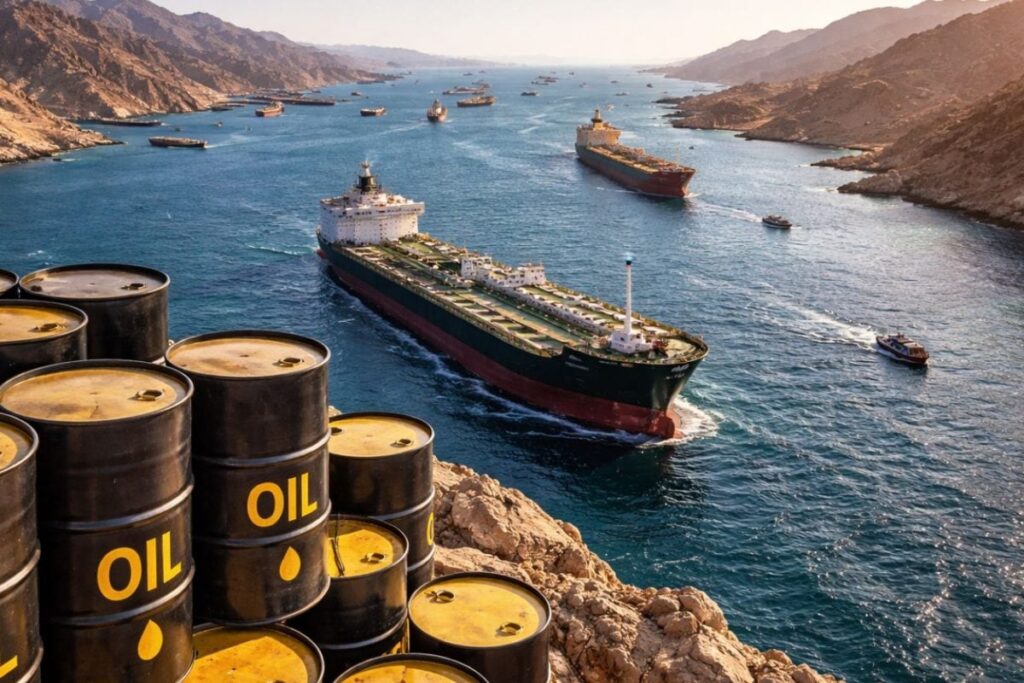
Crude Oil At $100: Understanding the Impact of Iran-US Tensions
Brent crude oil prices have been hovering around $100 per barrel as the Iran-US war continues to escalate, with no signs of de-escalation in sight. The conflict has thrown the entire Middle East region into chaos, disrupting air flights and prompting a flight of foreign workers.
The recent spike in oil prices has been attributed to the killing of Iran’s Supreme Leader Ali Khamenei in a joint operation known as ‘Epic Fury’. This has led to a sharp increase in tensions between Iran and the US, with both parties remaining adamant to continue operations against each other.
The Strait of Hormuz: A Critical Chokepoint
In his first statement since the US-Israeli war against Tehran, Iranian Supreme Leader Mojtaba Khamenei sent a defiant message to Washington, calling for the Strait of Hormuz to remain closed and for Gulf countries to immediately close all US military bases. This move is likely to throw the nations dependent on oil exports into further turmoil and crunch.
The Strait of Hormuz is a critical chokepoint through which 20-30% of global oil trade happens. Iran has also ramped up its efforts to attack oil tankers attempting to cross the Strait of Hormuz, which could lead to further disruptions in the global oil supply.
Impact on Indian Investors
So, what does this mean for Indian investors? The surge in crude oil prices is likely to have a significant impact on the Indian economy, particularly on the country’s trade deficit and inflation. India is one of the largest importers of crude oil, and a rise in oil prices could lead to an increase in the cost of production, which could eventually be passed on to consumers.
For investors, this could be a challenging time, particularly those who have invested in oil-related stocks or have exposure to the energy sector. However, it’s also an opportunity for investors to diversify their portfolios and look for opportunities in other sectors that may benefit from the current situation.
Indian investors can consider investing in defensive stocks or sectors that are less dependent on oil imports, such as pharmaceuticals or information technology.
Global Economic Implications
The current situation in the Middle East has significant implications for the global economy. The rise in crude oil prices could lead to an increase in inflation and slow down economic growth in major economies. According to Capital Economics, as quoted by CNN Business, oil prices in the $90-100 a barrel range, if sustained, may risk driving up inflation and slowing economic growth.
This could have a ripple effect on the global economy, particularly on countries that are heavily dependent on oil imports. The International Energy Agency’s (IEA) proposal to release a record level strategic oil reserve of 400 million barrels may help to alleviate some of the pressure, but it’s unlikely to have a significant impact on the current situation.
Conclusion
In conclusion, the current situation in the Middle East has significant implications for Indian investors and the economy. The surge in crude oil prices is likely to have a significant impact on the country’s trade deficit and inflation, and investors need to be cautious and diversify their portfolios to minimize their risks.
As the situation continues to unfold, it’s essential for investors to stay informed and up-to-date with the latest developments. By doing so, they can make informed investment decisions and navigate the challenges posed by the current situation.
For more information on investing in oil stocks or to learn more about the impact of oil prices on the economy, please visit our website.