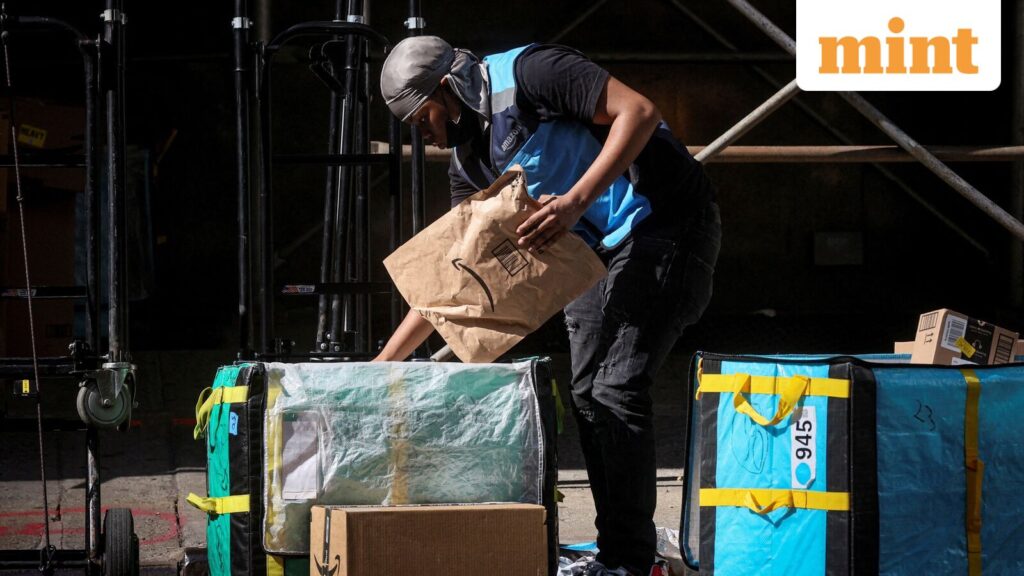
Amazon Abu Dhabi Warehouse Closure: A New Challenge for Global Supply Chains
Amazon has closed down its fulfillment centre in Abu Dhabi and suspended deliveries across the region as the e-commerce giant responds to the escalating instability in the Middle East. This move has created ripples across the region and the world, affecting not only Amazon’s operations but also its customers and third-party sellers.
Background: Amazon’s Expansion in the Middle East
Amazon expanded its logistics footprint in the Middle East following its $600 million acquisition of Souq.com in 2017. The UAE serves as the backbone of this network, which also comprises Amazon marketplaces in Saudi Arabia, Egypt, and Turkey. The company’s decision to close its Abu Dhabi warehouse and suspend deliveries is a significant setback for its operations in the region.
For Indian investors interested in global e-commerce trends, this development is a reminder of the importance of diversifying investments and being aware of geopolitical risks. The Middle East conflict has already had a significant impact on global markets, and its effects are being felt across various industries.
Impact on Customers and Third-Party Sellers
The closure of Amazon’s Abu Dhabi warehouse has resulted in delays in deliveries and returns for customers in the region. Many Amazon employees across the region have transitioned to a work-from-home model, and the company has halted any business travel to Israel and Lebanon. The memo also mentioned that Amazon employees in Saudi Arabia and Jordan have been instructed to remain indoors.
Third-party sellers are also facing shipment delays and potential order cancellations with the logistics channels tightening. Nearly 3 lakh third-party sellers in the Middle East are affected, and many of them depend on Amazon’s infrastructure for cross-border shipping across the Gulf region.
For Indian traders and investors interested in e-commerce logistics, this development highlights the importance of having a robust and flexible supply chain. The ability to adapt to changing circumstances and navigate complex geopolitical situations is crucial for success in the e-commerce industry.
Geopolitical Tensions and Global Supply Chains
The disruption caused by the Middle East conflict serves as a reminder of how quickly geopolitical tensions can cause strain on global supply chains. The conflict has already had a significant impact on various industries, including oil and gas, and its effects are being felt across the globe.
For Indian investors and traders, it is essential to stay informed about geopolitical risk management and its impact on global markets. By understanding the complexities of global supply chains and the potential risks associated with them, investors can make informed decisions and navigate complex market situations.
Conclusion: Navigating the New Normal
The closure of Amazon’s Abu Dhabi warehouse and the suspension of deliveries across the Gulf region are significant developments that highlight the importance of being aware of geopolitical risks and their impact on global supply chains. For Indian investors and traders, it is essential to stay informed and adapt to changing circumstances to navigate the new normal.
By understanding the complexities of global e-commerce trends, e-commerce logistics, and geopolitical risk management, investors can make informed decisions and succeed in the ever-changing world of global markets. For more information on Indian stock market trends and global market analysis, visit our website.