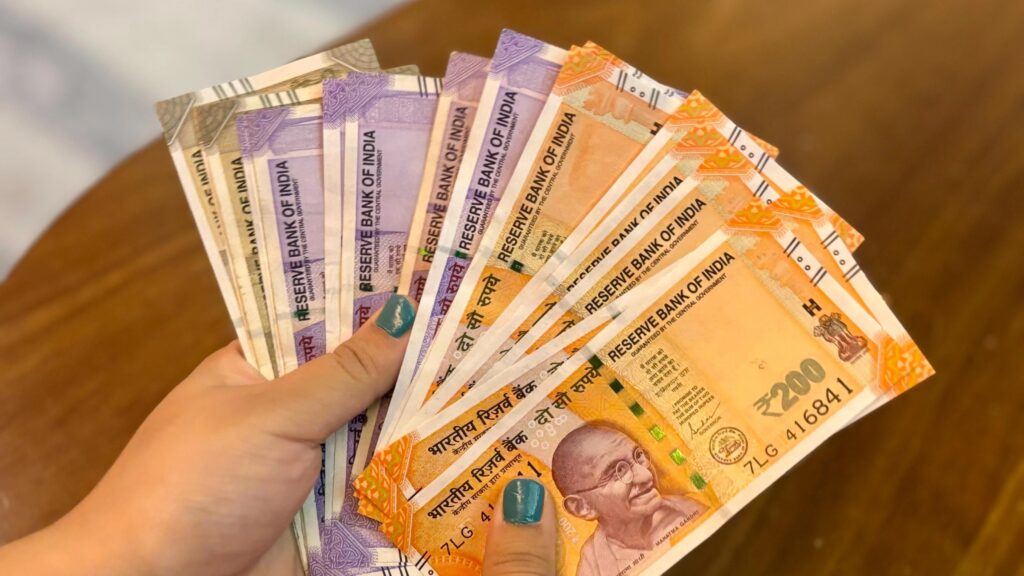
Rupee Slips 4 Paise, Ends At 90.21 Against US Dollar
The Indian rupee declined by 4 paise to close at 90.21 (provisional) against the US dollar on Tuesday, weighed down by a combination of factors including higher crude oil prices, a firm American currency, and the incessant outflow of foreign funds. According to analysts, geopolitical tensions and weak equity markets also played a significant role in pressuring the Indian currency.
Factors Influencing the Rupee’s Decline
The decline of the rupee can be attributed to several key factors. Firstly, the increase in crude oil prices has a direct impact on India’s import bill, as the country is heavily reliant on oil imports. This not only affects the trade deficit but also puts pressure on the rupee. Secondly, the strength of the US dollar, influenced by expectations of interest rate hikes by the Federal Reserve, makes the dollar more attractive to investors, leading to capital outflows from emerging markets like India.
Furthermore, the outflow of foreign funds from the Indian equity markets has been a persistent issue. Foreign institutional investors (FIIs) have been net sellers in the Indian markets, which has resulted in a decrease in demand for the rupee and consequently, a decline in its value. The geopolitical tensions, especially those related to the Russia-Ukraine conflict, have also contributed to the volatility in the currency markets, making investors more risk-averse and seeking safer havens like the US dollar.
Impact on Indian Economy and Investors
The depreciation of the rupee has significant implications for the Indian economy and investors. For importers, a weaker rupee means higher costs, as they have to pay more in rupees to import the same quantity of goods. This could lead to higher inflation, as companies may pass on the increased costs to consumers. On the other hand, exporters could benefit from a weaker rupee, as their products become cheaper for foreign buyers, potentially leading to an increase in exports.
For investors, the volatility in the currency market, coupled with the uncertainty in the equity markets, presents a challenging environment. The outflow of foreign funds could lead to a decline in stock prices, affecting investor sentiment. However, a weaker rupee could also make Indian stocks more attractive to foreign investors in the long term, as the cheaper currency could make Indian assets more competitive.
Strategy for Indian Investors
In this scenario, Indian investors need to adopt a cautious approach. It is essential to keep a close eye on the movements in the currency and equity markets. Investors looking to invest in foreign assets or import goods may consider hedging their currency risk to mitigate potential losses due to the volatility in the rupee.
Moreover, investors should focus on fundamentally strong companies that are less affected by currency fluctuations. Stock market analysis and investment strategies that account for such macroeconomic factors can help in navigating these challenging times.
Way Forward
The path ahead for the rupee and the Indian economy is fraught with challenges. The ongoing geopolitical tensions, the trajectory of crude oil prices, and the decisions of foreign investors will continue to influence the currency and equity markets. It is crucial for policymakers to implement measures that can attract foreign investment, reduce the trade deficit, and stabilize the currency.
For Indian investors and traders, staying informed about the latest stock market news and economic updates is vital. Adopting a long-term perspective, diversifying investments, and seeking advice from financial experts can help in making informed investment decisions amidst the current volatility.