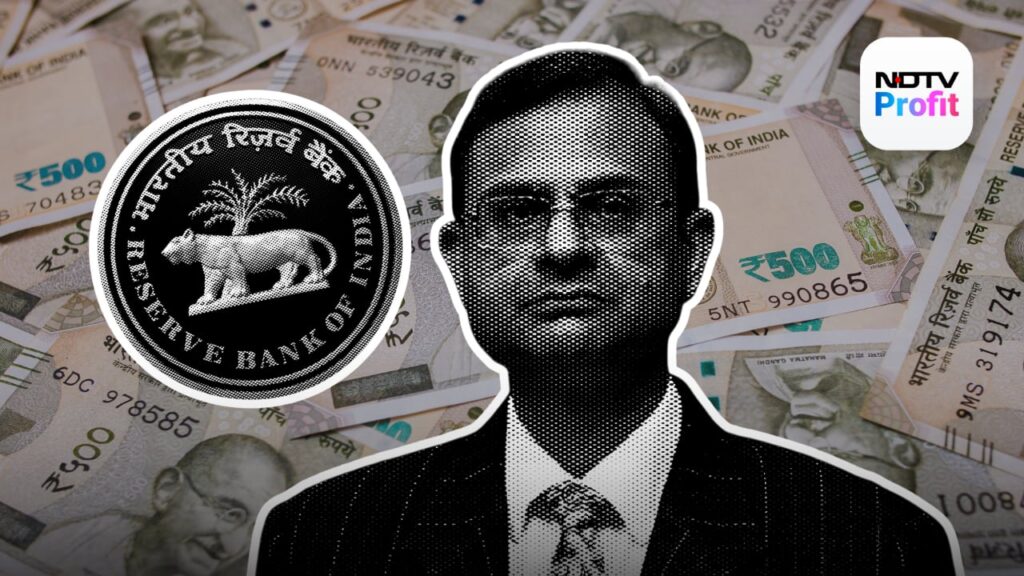
RBI Governor Sanjay Malhotra: No Red Line For The Rupee At 90 Or 91
In an exclusive conversation with NDTV Profit, RBI Governor Sanjay Malhotra stated that the central bank does not target any specific rupee level, including 90 to the dollar, and intervenes in the currency market only to curb excessive volatility, not to defend or weaken the currency. This statement comes amid concerns about the rupee’s value amid geopolitical turbulence.
Consistent Exchange Rate Policy
Malhotra emphasized that India’s exchange rate policy has remained consistent for years, with markets determining prices while the RBI focuses on financial stability and orderly movement in the currency. The RBI governor noted that the central bank does not pursue or target any price level, any band, and steps in only to curb undue or excessive volatility, whether due to sharp depreciation or appreciation.
For instance, the RBI may intervene in the currency market to prevent a sudden and significant decline in the rupee’s value, which could have a negative impact on the Indian economy. However, this intervention is not aimed at defending a specific level, such as 90 or 91 to the dollar, but rather at maintaining financial stability and preventing excessive volatility.
Strong Macroeconomic Fundamentals
Malhotra highlighted that India’s macroeconomic fundamentals remain strong, citing high growth, low inflation, foreign exchange reserves of about $690 billion, and a manageable current account deficit. The RBI governor noted that on the whole, on the external front, India is very comfortable, with a strong economy that is well-positioned to withstand global headwinds.
These strong fundamentals are a result of the government’s and the RBI’s efforts to maintain a stable and growth-oriented economy. For example, the government’s policies have focused on promoting economic growth, reducing inflation, and increasing foreign exchange reserves. The RBI has also played a crucial role in maintaining financial stability, through its monetary policy decisions and interventions in the currency market.
Natural Depreciation of the Rupee
Over the long term, Malhotra stated that the rupee has depreciated by about 3% on average, which he described as natural, given that inflation in India is typically higher than in advanced economies. In the current calendar year, the rupee has depreciated about 5%, compared with 2.5% in the previous year, keeping the average at around 3.5%.
This natural depreciation of the rupee is a result of the differences in inflation rates between India and advanced economies. As India’s economy grows and inflation rises, the rupee’s value tends to depreciate against other currencies. However, this depreciation is not necessarily a cause for concern, as it can make Indian exports more competitive in the global market.
RBI’s Role in Maintaining Financial Stability
The RBI governor reiterated that the RBI does not intervene to defend any specific level, such as 90 or 91 to the dollar, and that its actions are only aimed at preventing abnormal or excessive moves in either direction. This approach is designed to maintain financial stability and prevent undue volatility in the currency market.
For example, if the rupee were to suddenly depreciate by a significant amount, the RBI may intervene to prevent a further decline, by selling dollars and buying rupees. This would help to stabilize the currency market and prevent excessive volatility. However, this intervention would not be aimed at defending a specific level, such as 90 or 91 to the dollar, but rather at maintaining financial stability.
Goldilocks Phase of the Indian Economy
Malhotra described the current phase of the Indian economy as a “Goldilocks” phase, reflecting a balance between growth and stability. This phase is characterized by a stable economy, with low inflation and high growth, making it an ideal time for investors to invest in the Indian market.
For instance, the Indian stock market has been performing well, with the Sensex today reaching new highs. The Nifty levels have also been stable, with the index trading in a narrow range. This stability in the stock market is a result of the strong macroeconomic fundamentals and the RBI’s efforts to maintain financial stability.
Investor Sentiment and Market Trends
The RBI governor’s statement has had a positive impact on investor sentiment, with the Indian stock market reacting positively to the news. The Indian stock market news has been dominated by the RBI’s decision to maintain its accommodative monetary policy stance, which has boosted investor confidence.
For example, the Q1 results of Indian companies have been strong, with many companies reporting high profits and revenue growth. This has led to an increase in investor sentiment, with many investors looking to invest in the Indian market. The stock market tips and investment advice from experts have also been positive, with many advising investors to invest in the Indian market for the long term.
Conclusion
In conclusion, the RBI Governor Sanjay Malhotra’s statement has clarified the central bank’s stance on the rupee, emphasizing that there is no specific target level, including 90 to the dollar, and that interventions are aimed at curbing excessive volatility. The strong macroeconomic fundamentals and the RBI’s efforts to maintain financial stability have made the Indian economy an attractive destination for investors.
As the Indian economy continues to grow and stabilize, investors can look forward to a positive and stable market environment. The Indian economy news and market trends will continue to be driven by the strong fundamentals and the RBI’s efforts to maintain financial stability. Investors can stay up-to-date with the latest news and trends by following the stock market updates and financial news from reliable sources.