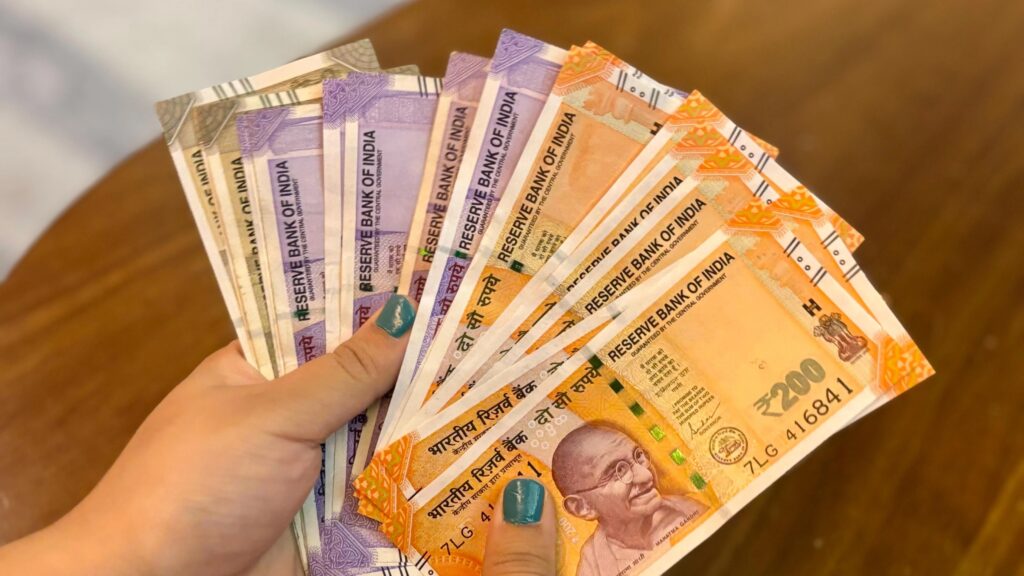
Rupee Slumps to 90.16 Against US Dollar: What’s Behind the Decline?
The Indian rupee declined 26 paise to settle at 90.16 against the US dollar on Friday, weighed down by elevated global crude oil prices and persistent foreign fund outflows amid rising geopolitical tensions.
Key Factors Contributing to the Rupee’s Decline
A stronger greenback and weak sentiment in domestic equity markets are putting further pressure on the local unit, according to forex traders. The rupee opened higher at 89.88 but lost ground through the day to settle at 90.16 (provisional) against the US dollar, down 26 paise from its previous close.
During the day, the local currency traded between 89.88 and 90.25. On Thursday, the rupee settled 3 paise lower at 89.90 against the US dollar.
Expert Insights
Anil Kumar Bhansali, Head of Treasury and Executive Director, Finrex Treasury Advisors LLP, said, ‘The rupee opened higher at 89.88, but as stock markets started to fall again and it fell to 90.25. The US Supreme Court’s decision on the tariffs was scheduled for Friday, and we await the decision, which could affect Indian stocks and the rupee on Monday.’
Anuj Choudhary, Research Analyst, Mirae Asset ShareKhan, noted that ‘we expect the rupee to trade with a negative bias on tempered geopolitical tensions leading to risk aversion in global markets. Strength in the US Dollar and a surge in global crude oil prices may also pressurise the rupee.’
Impact of Global Crude Oil Prices
Brent crude, the global oil benchmark, was trading 0.56% higher at $62.34 per barrel in futures trade. Elevated crude oil prices can have a significant impact on the Indian economy, as the country relies heavily on imports to meet its energy needs.
For more information on how to navigate the Indian stock market, visit our website. We provide detailed analysis and insights on the latest market trends and news.
Geopolitical Tensions and Their Effect on the Rupee
Rising geopolitical tensions can lead to risk aversion in global markets, causing investors to seek safe-haven assets such as the US dollar. This can result in a strengthening of the dollar and a weakening of the rupee.
To stay up-to-date with the latest news and analysis on the impact of geopolitical tensions on the rupee, follow our blog.
Dollar Index and Its Impact on the Rupee
The dollar index, which measures the greenback’s strength against a basket of six currencies, was trading 0.11% higher at 99.04. A stronger dollar can make imports more expensive for India, leading to a widening trade deficit and putting pressure on the rupee.
For more information on how the dollar index affects the rupee, read our in-depth analysis.
Domestic Equity Market Front
On the domestic equity market front, the 30-share benchmark index Sensex plunged 604.72 points to settle at 83,576.24, while the Nifty was down 193.55 points to 25,683.30.
Foreign institutional investors offloaded equities worth Rs 3,367.12 crore on Thursday, according to exchange data. This can lead to a decline in investor sentiment and put further pressure on the rupee.
To learn more about the latest trends in the Sensex and Nifty, visit our website.
Conclusion
In conclusion, the rupee’s decline to 90.16 against the US dollar can be attributed to a combination of factors, including elevated global crude oil prices, persistent foreign fund outflows, and rising geopolitical tensions.
As an investor, it is essential to stay informed about the latest market trends and news. For more information on how to navigate the Indian stock market, visit our website.