If you looked only at Friday’s closing bell, you’d think Hong Kong’s stock market was back in full celebration mode.
The Hang Seng Index surged 1.75% to close at 25,976.79, driven by strong gains in tech, financials, and infrastructure stocks. The screens were green, volumes were up, and optimism briefly returned to Asia’s most watched financial hub.
But zoom out just a little, and the picture becomes more complicated.
Despite Friday’s rally, Hong Kong markets still ended the week in the red, snapping a short-lived recovery amid mixed signals from China’s economy and rising global geopolitical noise. For investors — especially those in India tracking global cues — this was a reminder that markets often move on emotion in the short term and fundamentals in the long term.
So what really pushed the Hang Seng higher? Why did money flow back in after weeks of hesitation? And more importantly — is this rally something to trust, or just another pause in a longer consolidation?
Let’s unpack the story behind Hong Kong’s market surge — calmly, clearly, and without the noise.
🌏 Hang Seng Index Gains: What Drove the Market Higher?
Friday’s rally wasn’t a random spike. It was the result of several forces aligning at the same time, like traffic lights turning green after days of congestion.
🔹 Broad-Based Buying Across Key Sectors
Unlike narrow rallies led by just one or two heavyweight stocks, this move was broad and healthy:
- Tech stocks pushed the Hang Seng Tech Index up 1.87%
- Chinese state-linked firms lifted the Hang Seng China Enterprises Index by 1.62%
- Financials, insurers, and infrastructure companies outperformed
This kind of breadth matters. It signals that investors weren’t just chasing momentum — they were repositioning portfolios.
🔹 Renewed Optimism Around Beijing’s Policy Signals
Markets are forward-looking by nature. Even before official data drops, investors try to read between the lines.
Recent signals from Beijing suggested:
- Continued support for economic stability
- A reluctance to tighten liquidity too aggressively
- Willingness to support key growth engines like technology and infrastructure
For Hong Kong — which acts as China’s offshore financial mirror — these signals matter enormously.
🔹 Strong Market Turnover Signals Returning Confidence
Turnover crossed HK$2.4 billion, a notable jump after weeks of thinning volumes.
Higher volumes don’t guarantee sustainability, but they do indicate conviction. When money flows back after weakness, it often reflects institutional participation rather than retail speculation.
🧠 What You Should Remember
A strong Hang Seng rally driven by multiple sectors and higher volumes is more meaningful than a single-stock spike — but it still needs follow-through.
💻 Hang Seng Tech Index: Why Technology Stocks Led the Charge
Technology stocks have been Hong Kong’s most volatile passengers — exciting on good days, nerve-wracking on bad ones.
So why did they lead this rally?
📱 Valuations Had Become Too Cheap to Ignore
After months of underperformance:
- Many Chinese tech giants were trading at multi-year valuation discounts
- Earnings expectations had already been reset lower
- Regulatory fears, while not gone, had stabilized
For long-term investors, this was like spotting a quality apartment during a temporary market slowdown.
🌐 Global Tech Sentiment Helped
Positive cues from global tech markets — particularly U.S. and Asian peers — also supported sentiment.
For Indian investors familiar with IT cycles, this felt similar to moments when beaten-down IT stocks suddenly attract value buyers.
🧠 Policy Stability > Policy Stimulus
Importantly, markets weren’t reacting to massive stimulus promises. They were reacting to policy predictability — something markets love even more than freebies.
🧠 What You Should Remember
Tech stocks rose not because of hype, but because uncertainty eased and valuations became attractive.
🏦 Financials, Insurers, and Infrastructure: The Quiet Winners
While tech grabbed headlines, old-economy stocks quietly stole the show.
🛣️ Infrastructure as a Safe Bet
Infrastructure firms benefit from:
- Long-term government spending
- Stable cash flows
- Lower regulatory surprises
In uncertain macro environments, these stocks act like defensive all-rounders — not flashy, but reliable.
🛡️ Insurers Attract Long-Term Capital
Blue-chip insurers outperformed as investors sought:
- Predictable earnings
- Exposure to rising household savings
- Lower volatility compared to tech
For Indian readers, this mirrors the way LIC or large private insurers gain traction during market uncertainty.
🧠 What You Should Remember
When insurers and infrastructure lead, it usually signals cautious optimism — not reckless risk-taking.
📉 Weekly Decline: Why the Market Still Ended Lower
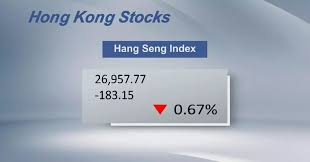
Here’s the uncomfortable truth: one strong day doesn’t erase a cautious week.
📊 China’s Economic Data Still Looms Large
Investors remain wary ahead of:
- Industrial output numbers
- Retail sales data
- Property sector updates
China’s economy is not collapsing — but it’s also not accelerating fast enough to silence doubts.
⚖️ Global Macro Crosswinds Persist
Rising U.S. bond yields, uncertain rate-cut timelines, and geopolitical risks continue to cap enthusiasm.
This is why Friday’s rally felt more like relief buying than the start of a runaway bull market.
🧠 What You Should Remember
Weekly declines despite strong closes often signal consolidation — not trend reversals.
🌍 Geopolitics Enters the Picture: Trump, Thailand, and Cambodia
Interestingly, global sentiment was also influenced by unexpected geopolitical news.
Former U.S. President Donald Trump announced that Thailand and Cambodia agreed to cease all shooting, easing fears of regional instability in Southeast Asia.
Why This Matters for Markets
- Reduced regional conflict lowers risk premiums
- Trade routes and supply chains feel safer
- Asian markets respond positively to stability
While this news didn’t directly move Hong Kong stocks, it helped stabilize Asian risk sentiment, especially after days of uncertainty.
For markets, peace doesn’t create rallies — but conflict certainly destroys them.
🧠 What You Should Remember
Geopolitical calm doesn’t drive bull markets, but it prevents panic sell-offs.
🇮🇳 What Indian Investors Can Learn from Hong Kong’s Market Move
Even if you don’t invest directly in Hong Kong stocks, this rally offers valuable lessons.
📌 Lesson 1: Markets Move on Expectations, Not Headlines
By the time good news is obvious, markets have often already priced it in.
📌 Lesson 2: Breadth Matters More Than Speed
Slow, broad-based rallies are healthier than sharp, narrow spikes.
📌 Lesson 3: Global Markets Are Emotionally Connected
What happens in Beijing, Washington, or Bangkok can quietly influence Dalal Street sentiment too.
🧠 What You Should Remember
Global markets behave like a relay race — sentiment passes from one region to another faster than most investors realize.
🔮 What Comes Next for the Hang Seng Index?
The next few weeks will test whether Friday’s rally has legs.
🔍 Key Things to Watch
- China’s upcoming economic data
- Sustained trading volumes above recent averages
- Policy clarity from Beijing
- Global interest rate expectations
Without these aligning, the Hang Seng may continue moving sideways — frustrating traders but offering selective opportunities for long-term investors.
🧠 What You Should Remember
Sustainable rallies need data confirmation, not just optimism.
📣 Final Thoughts: Optimism with Eyes Wide Open
Hong Kong’s strong close was encouraging — no doubt about that.
But markets are not movies. Happy endings don’t arrive in one dramatic scene. They unfold slowly, often painfully, through data, discipline, and patience.
For now, the Hang Seng Index has reminded investors that confidence isn’t dead — it’s just cautious.
And sometimes, that’s exactly how healthy recoveries begin.